2026 CW14 - First Spring Rains
First Spring Rains
There is a specific kind of magic that happens in a Southern garden right after a heavy, soaking rain. The air in Mobile gets thick with the scent of wet earth, the humidity finally serves a purpose, and if you stand still long enough, you can almost hear the plants sighing in relief.
After weeks of careful planting and checking the forecast with the intensity of storm chasers, the skies finally opened up for us. This wasn't just a drizzle; it was the kind of deep, restorative bath the garden has been begging for. We took a walk through the yard with our camera to document the transformation, and it’s clear that the "First Spring Rains" have officially flipped the switch. From the first tiny fruits appearing on the vines to the roses absolutely exploding in color, the garden has shifted from "surviving" to "thriving" overnight.
Join us for a quick tour of what’s currently waking up, leafing out, and—in the case of our potatoes—attempting to take over the entire neighborhood.
The Rose Report: A Tale of Three Queens
If the garden is currently a chaotic theater of war staged by the local caterpillar population, the roses are undoubtedly the leading ladies. We have three very different varieties staking their claims, and after this spring rain, they’ve never looked more regal—or more competitive.
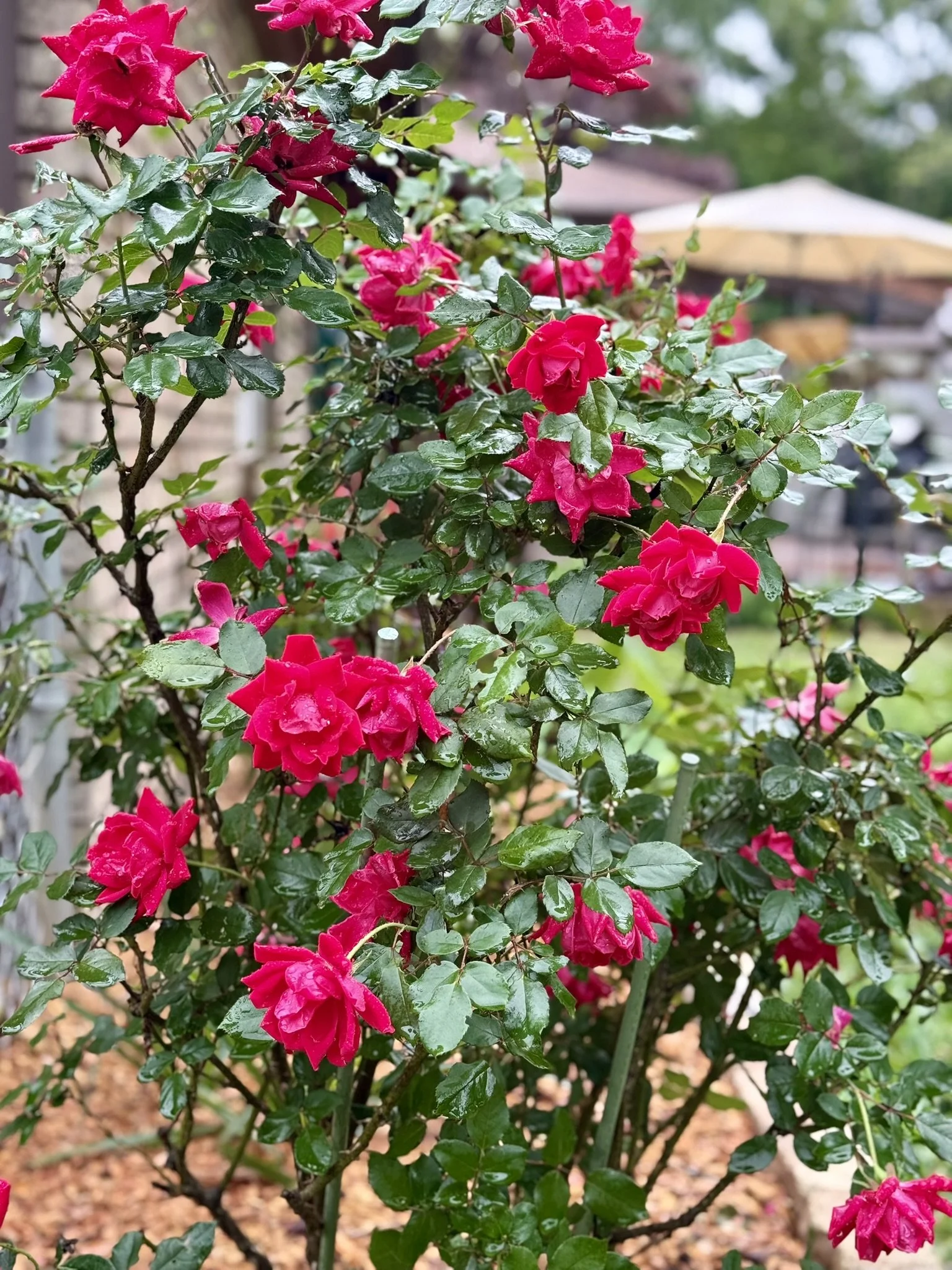
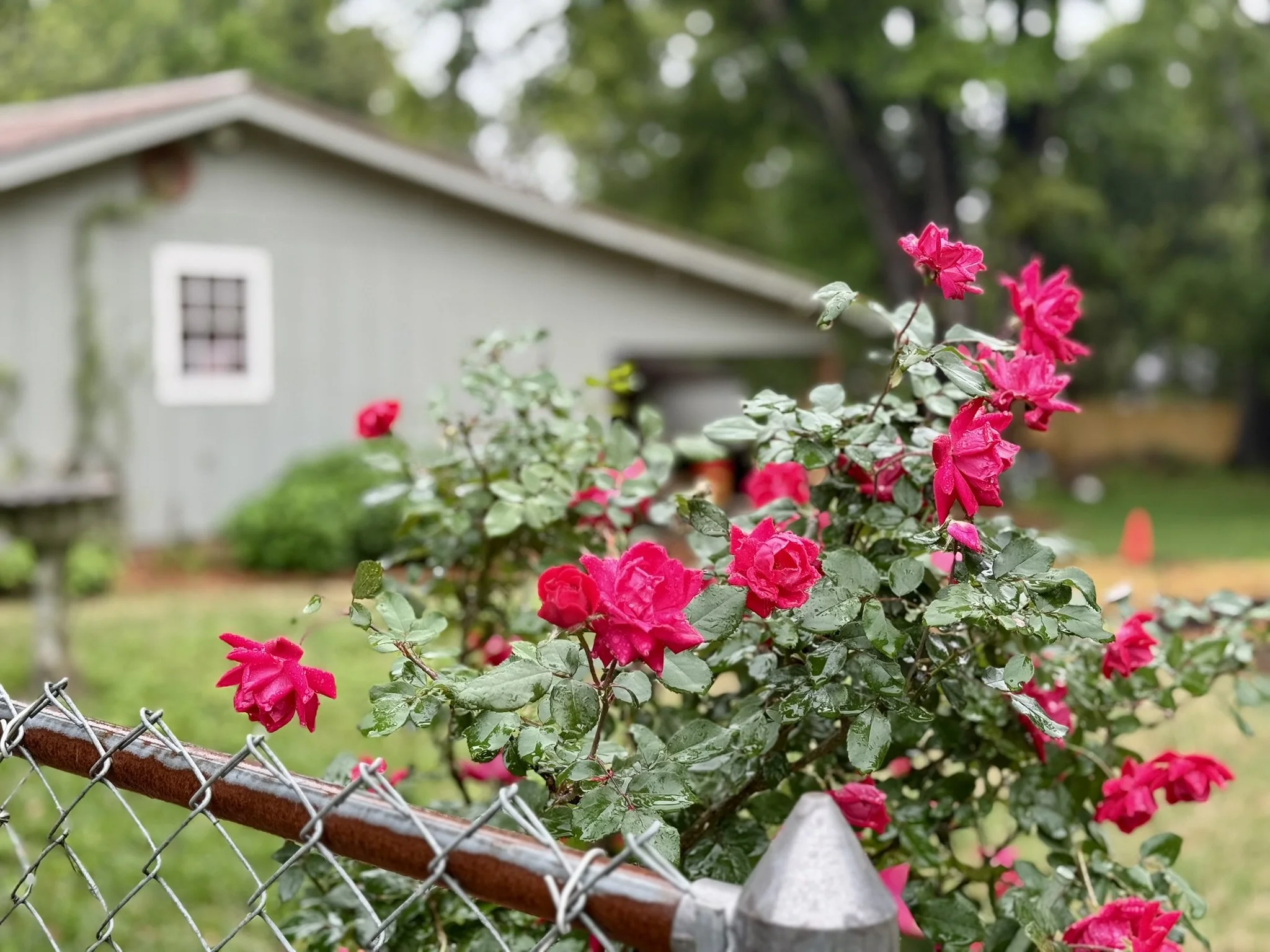
On one side of the ring, we have the modern workhorse: the Double Red Knock Out. If you’ve spent any time gardening in the Mobile area, you know these are essentially the "Ironmen of the South." While other roses are busy catching every fungus known to man in our relentless humidity, the Knock Out is out here working a 9-to-5, producing saturated red blooms like it’s getting paid overtime. Seeing the rain beads resting on those extra layers of petals makes them look like they’re wearing royal jewelry. They have a certain "I’m beautiful and I know it" energy that makes them the perfect, reliable anchor for the yard.
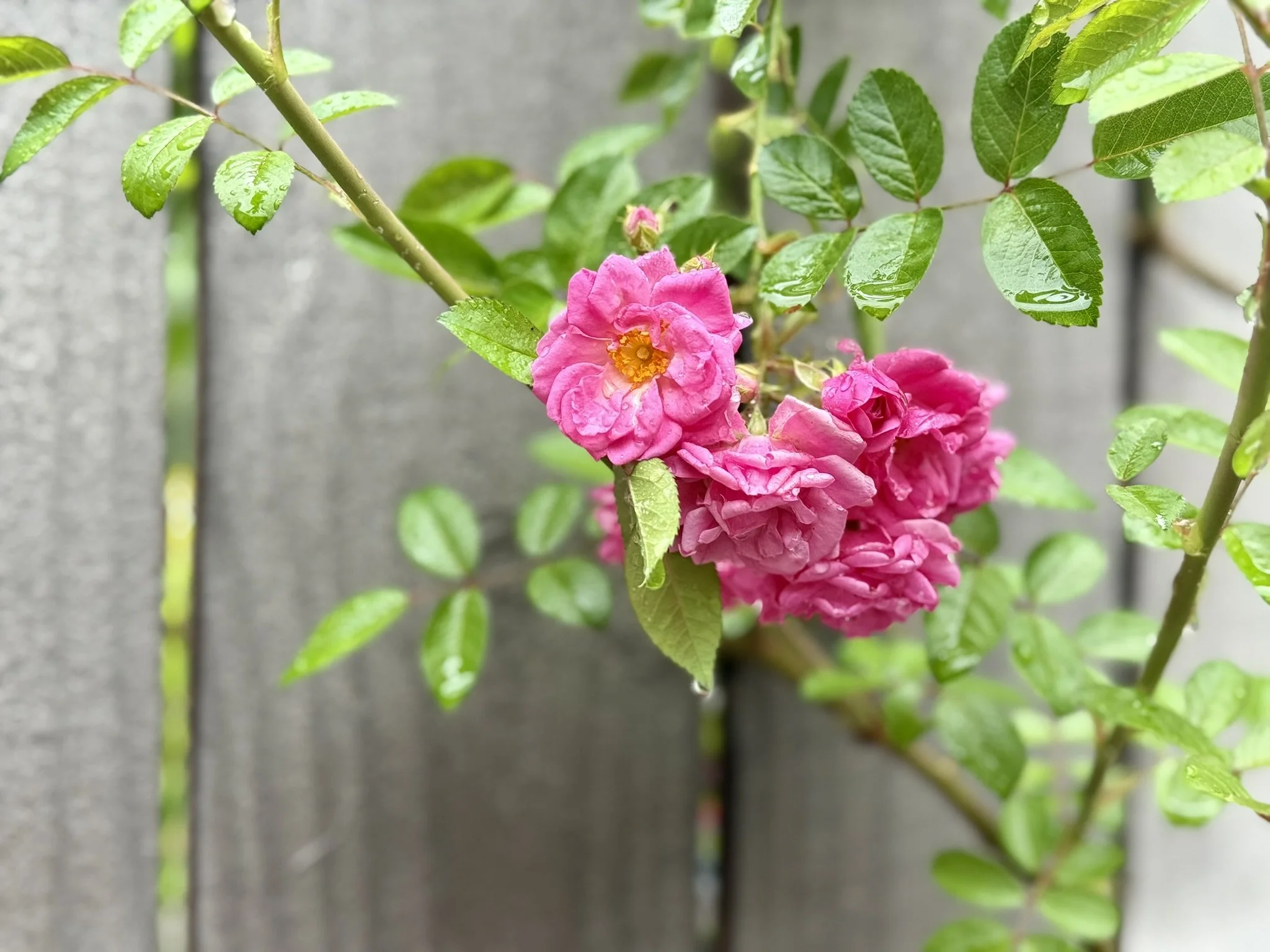
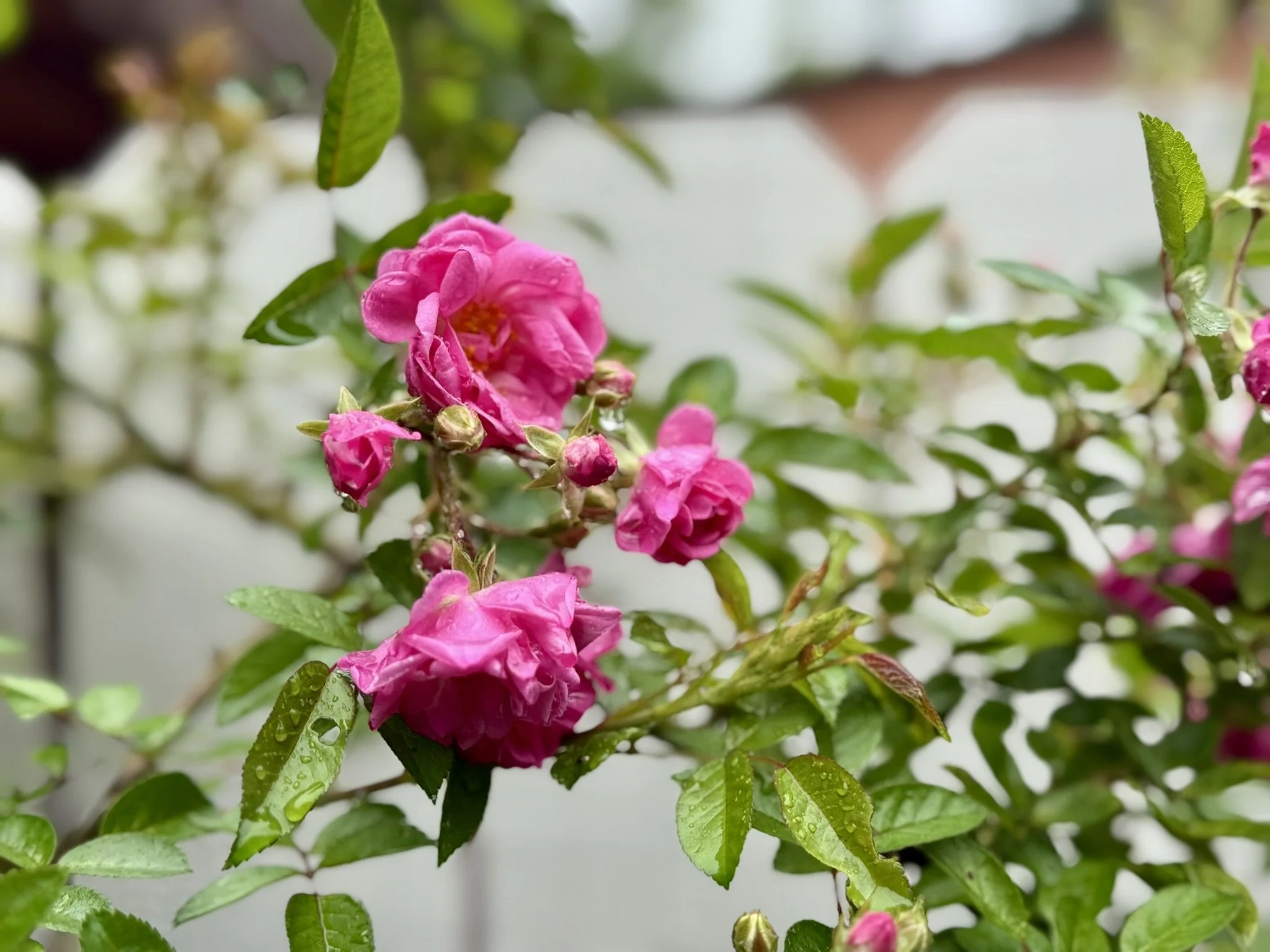
Then, there’s the Southern legend: the Peggy Martin climbing rose. This isn't just a plant; it’s a living piece of Gulf Coast history. Famously dubbed the "Hurricane Katrina Rose" after surviving the saltwater floods in New Orleans, this climber is basically immortal. In our garden, she’s currently sending out those signature long, graceful canes draped in clusters of vibrant pink flowers. Unlike the more structured look of our other bushes, the Peggy Martin is romantic, slightly wild, and entirely unfazed by wet feet. She doesn't just tolerate our spring downpours; she seems to thrive on the challenge, as if to remind us she's seen much worse and is still here to tell the story.
Finally, while the red and pink are currently fighting for the spotlight, there is a new contender waiting in the wings: a young Madame Alfred Carrière. She’s currently too small for her own glamour shot, but she’s officially staked her claim on a wood trellis against the house. If Peggy Martin is the "Survivor," the Madame is the "Socialite." Eventually, she’ll be draped in creamy white, fragrant blooms that should make the backyard smell like a high-end perfumery. For now, she’s just soaking up these rains and quietly plotting her ascent—consider this her "quiet before the storm" phase while she builds up the strength to take over that wall.
Curb Appeal: The Front Baskets and Entry Pots
While the back garden is currently a battleground of "man vs. nature," the front porch is keeping up appearances with some seriously sophisticated color coordination.
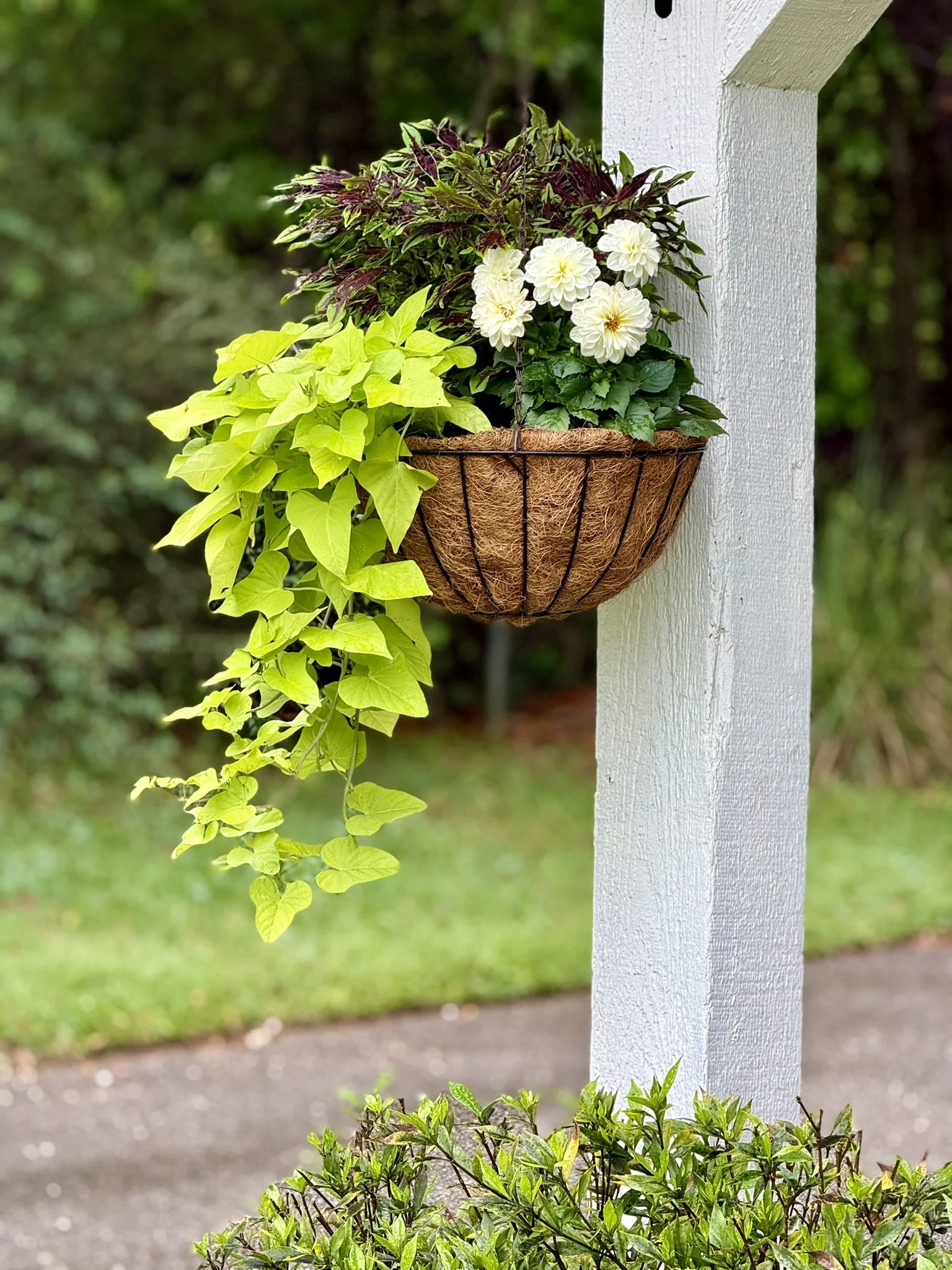
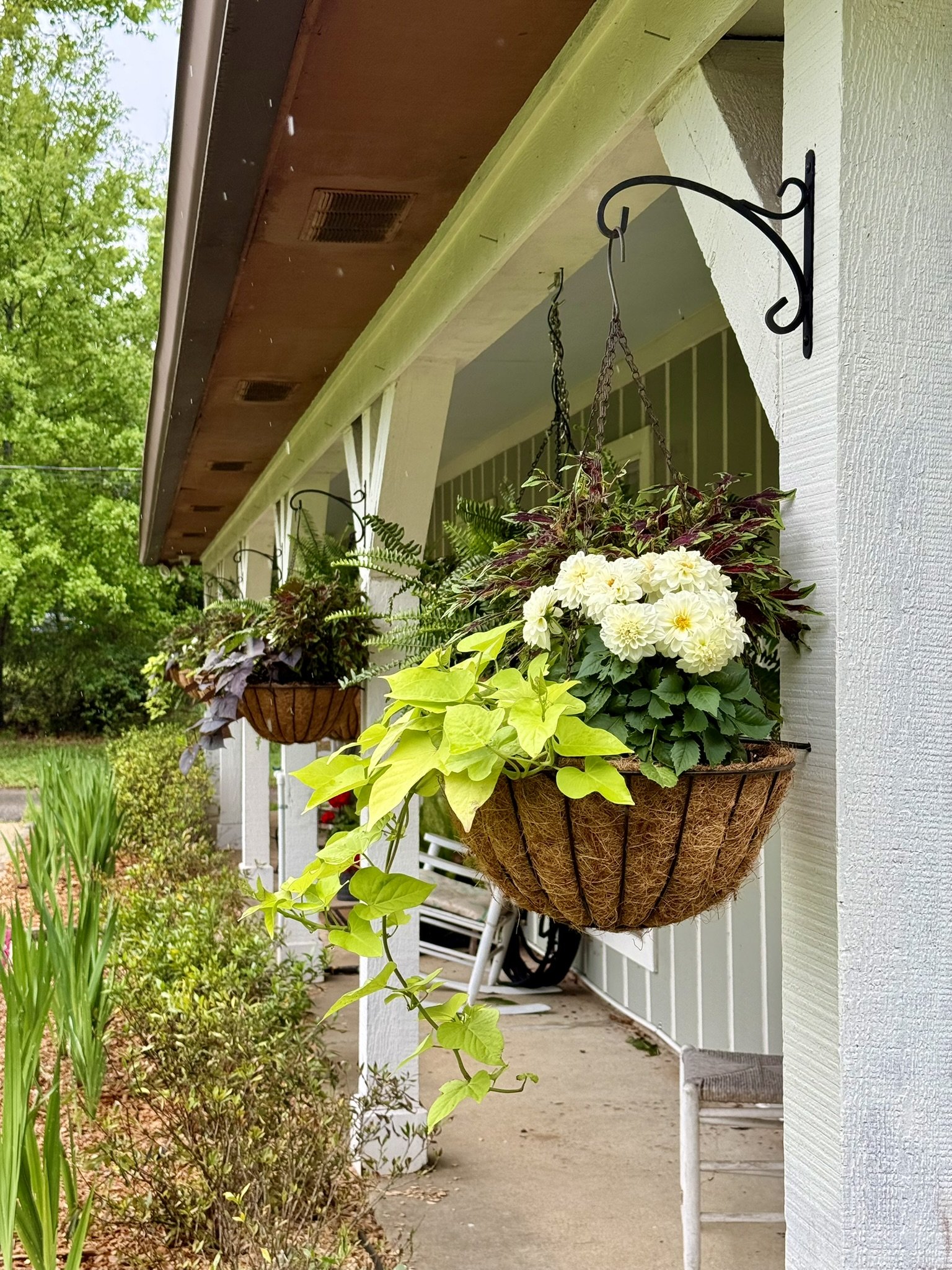
The first thing you notice walking up is the hanging basket game. We went with a mix of crisp white dahlias and neon-green sweet potato vines that are absolutely cascading over the sides, but the real secret ingredient is the dark, moody coleus tucked in there. The way those lime green and deep burgundy tones look when they’re freshly washed by the rain is probably the most intentional thing we’ve done all season.
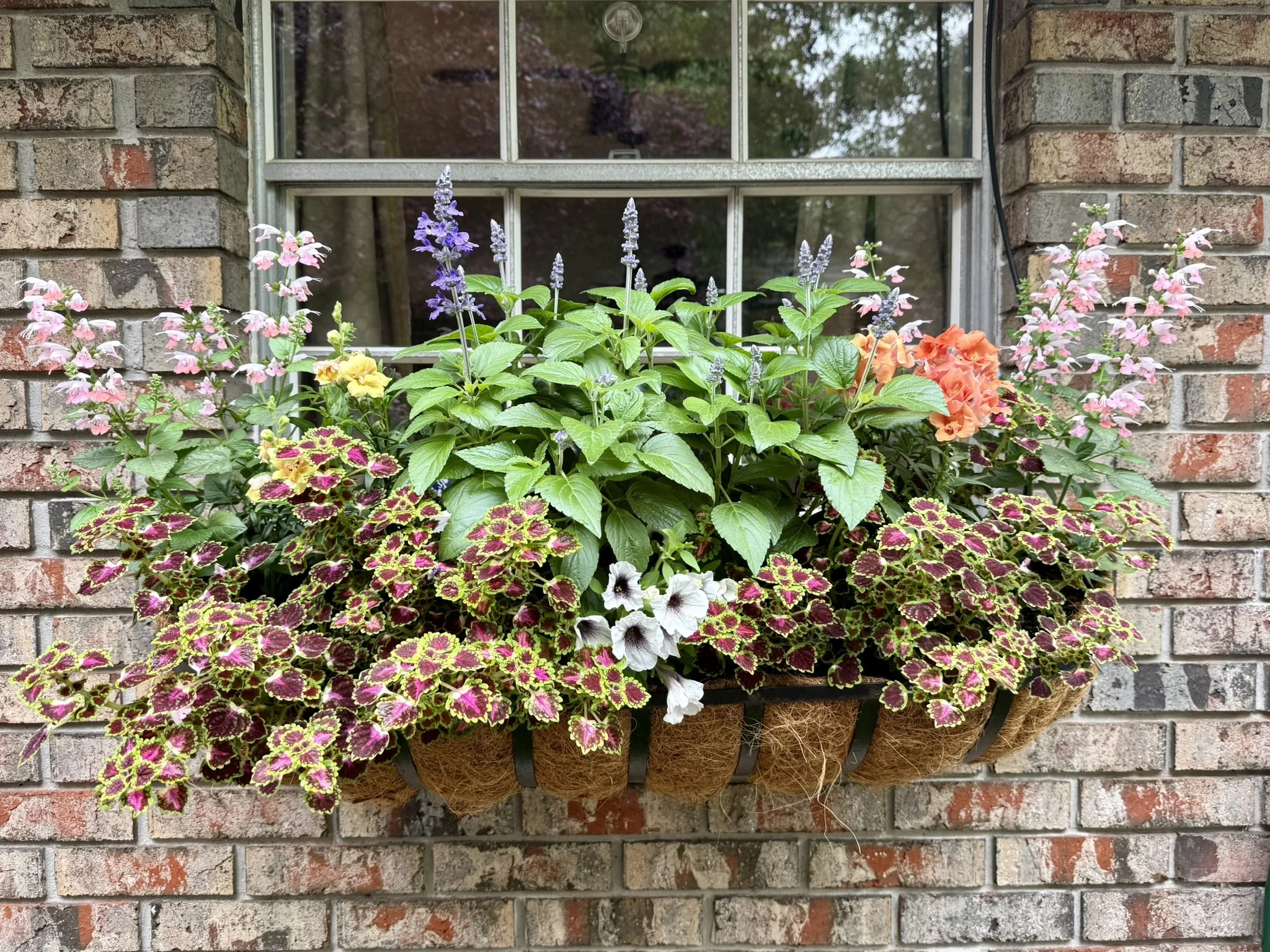
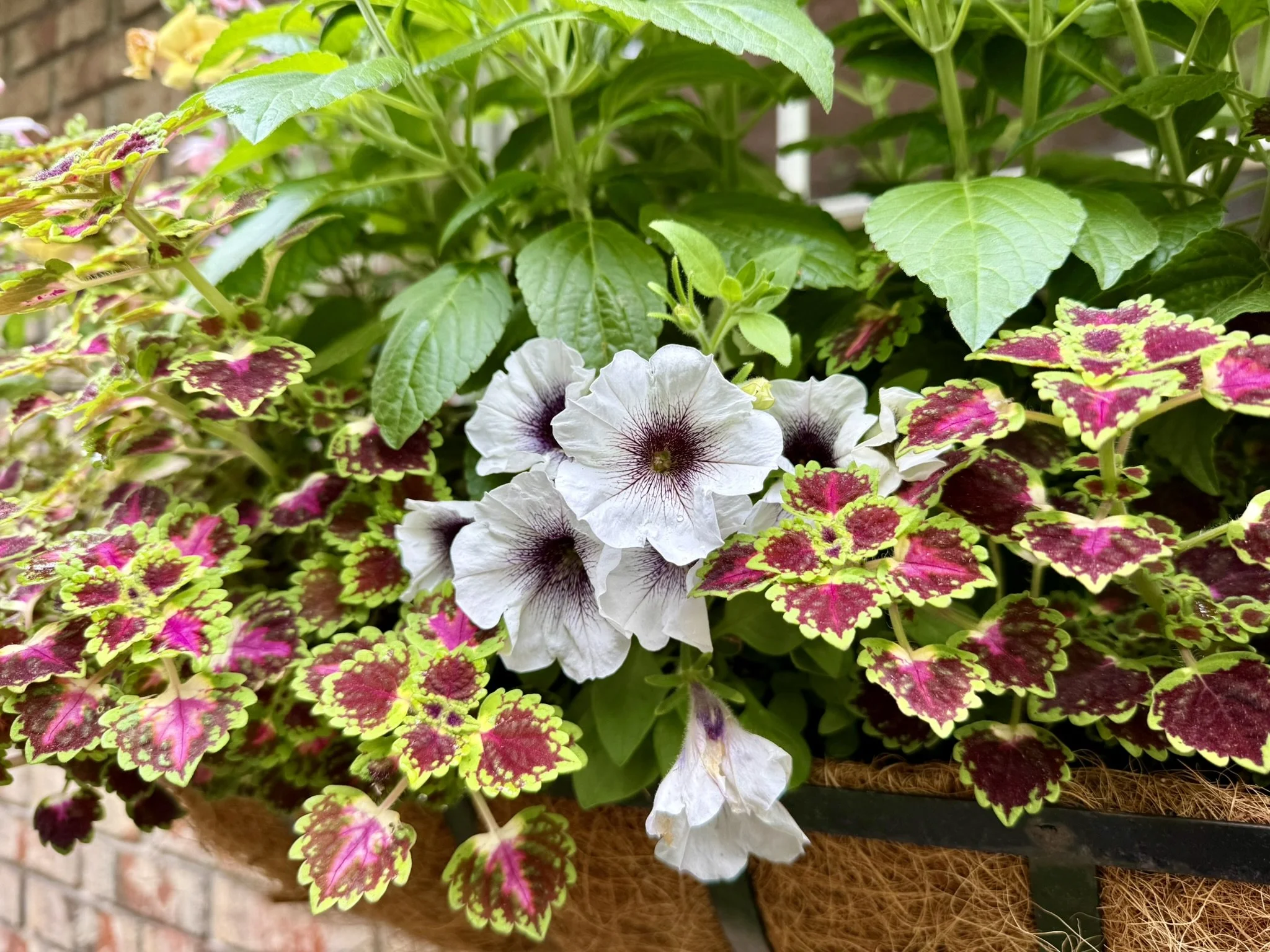
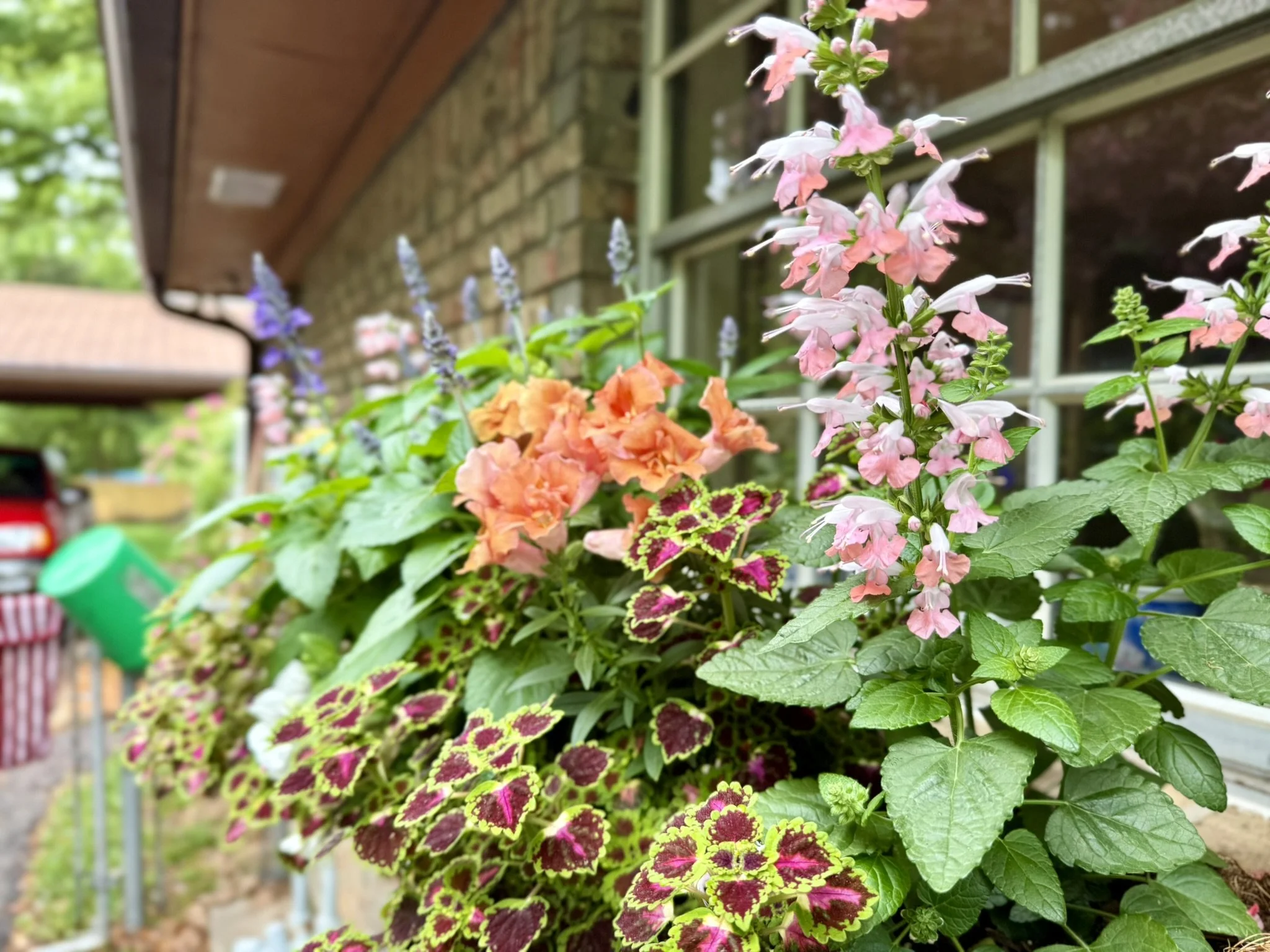
Tucked into the window boxes, we’ve got a texture explosion happening. We’re talking more of that vibrant coleus with those neon edges, paired with peach snapdragons and white petunias that seem to love the extra moisture. However, the standout has to be the pink salvia; the way those spires of soft pink reach upward, looking refreshed and vibrant after a soaking, gives the whole box a sense of movement that we’re really loving right now. It’s a dense, lush look that frames the windows perfectly under a gray spring sky.
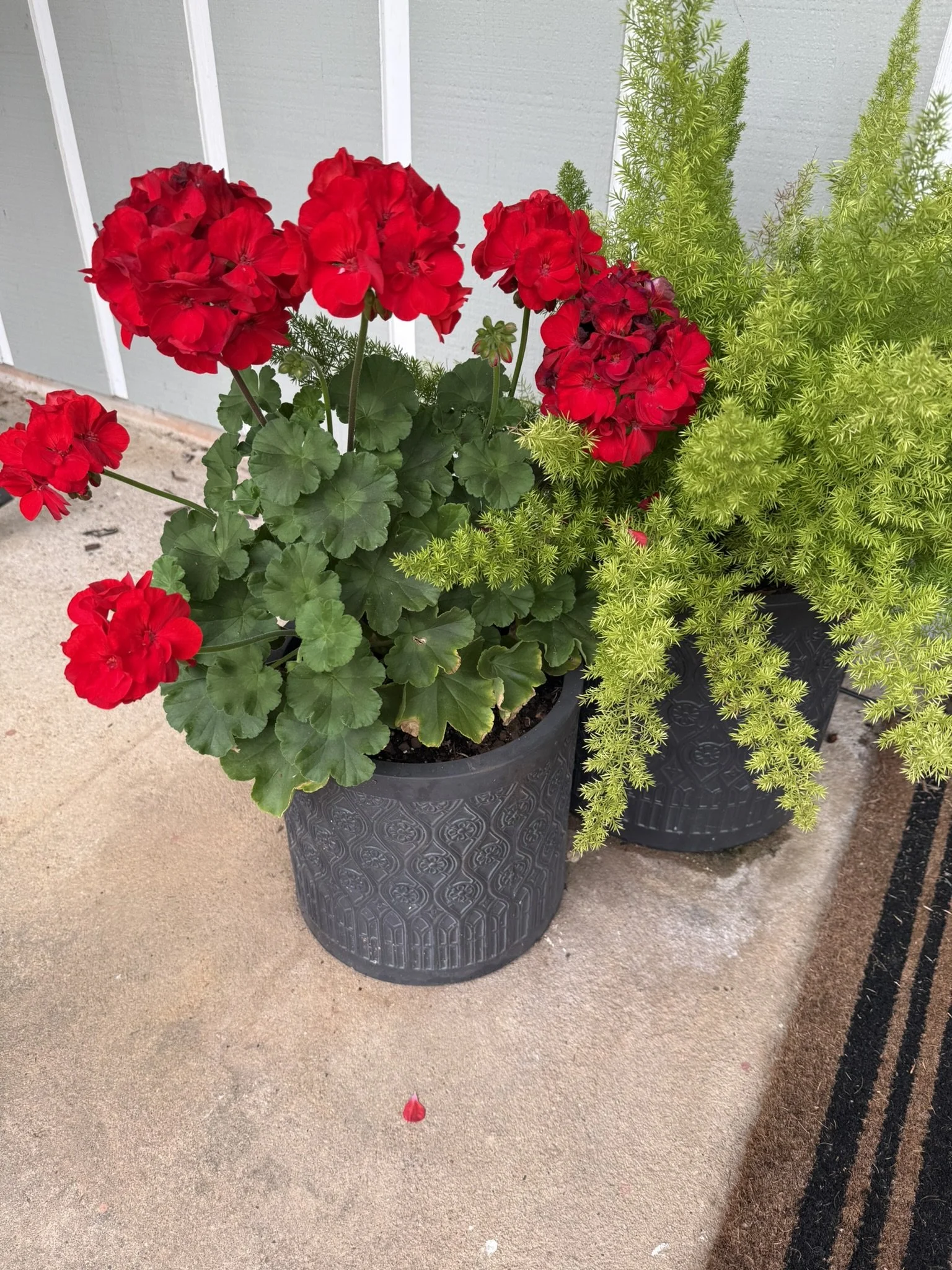
Finally, guarding the door in those charcoal textured pots, we have the classic red geraniums paired with airy asparagus ferns. There’s something so timeless about that red-and-green combo, especially when the colors are dialed up by the damp weather. It’s like the garden's way of putting on a tuxedo for guests. These pots look their absolute best when they’re sparkling from the rain, standing polished and bright while the rest of the yard is deep in its "growth spurt" phase.
The Foundation Layers: In-Ground Beds
Moving from the porch down into the literal foundation of the house, the in-ground beds are where we really see the impact of these first spring rains. There’s a certain satisfaction in seeing the mulch darken and the established perennials wake up with a vengeance.
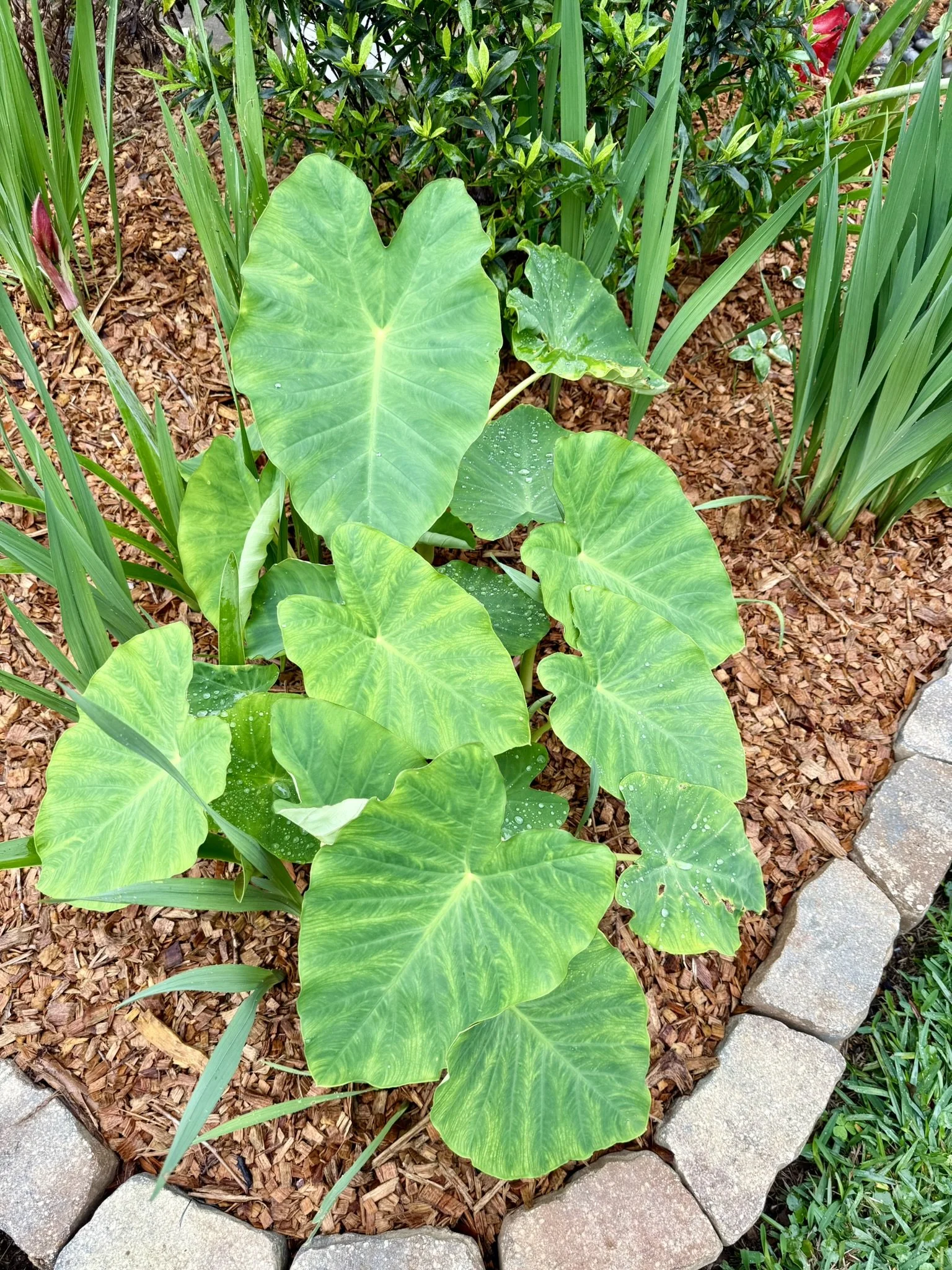
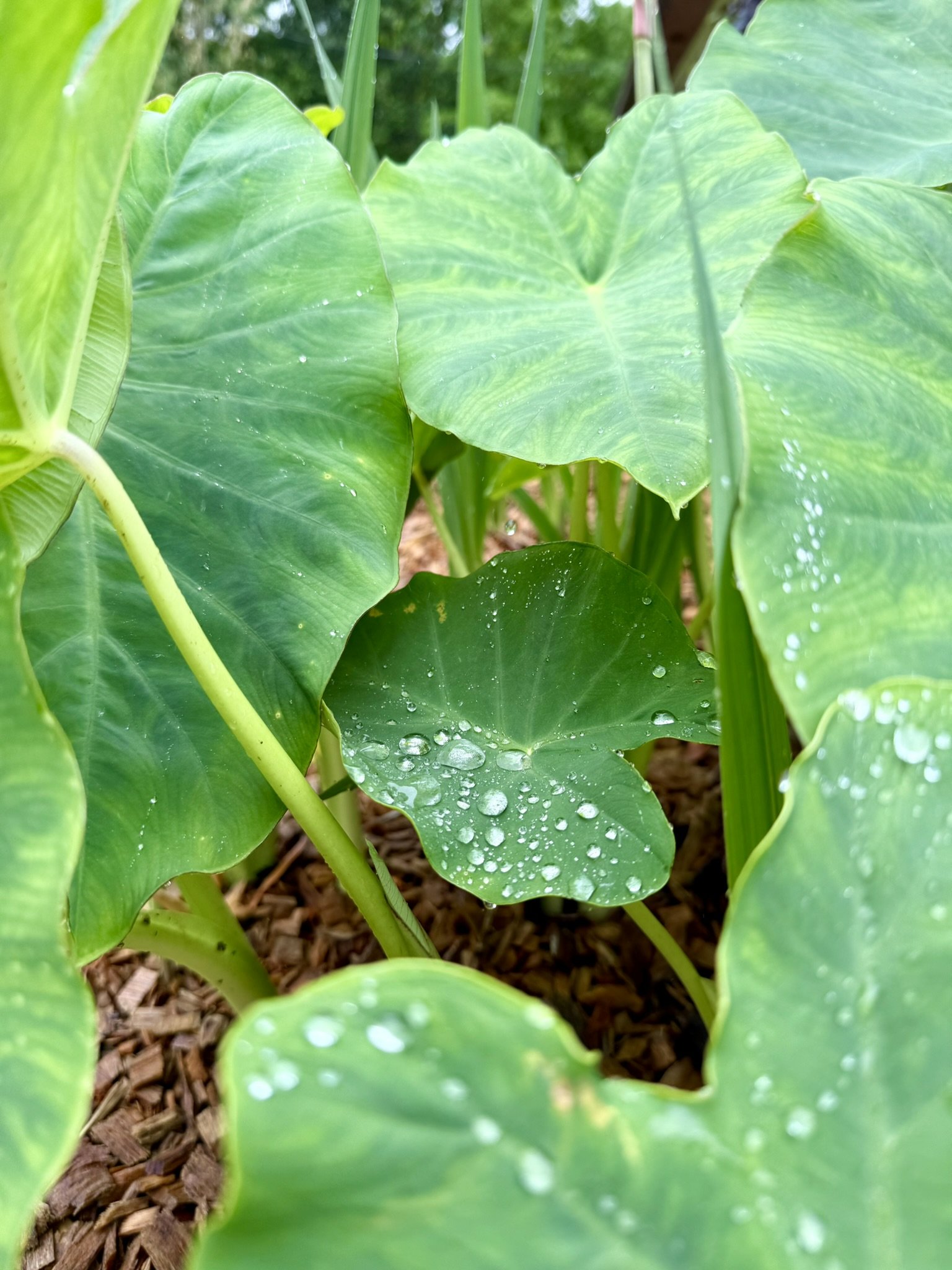
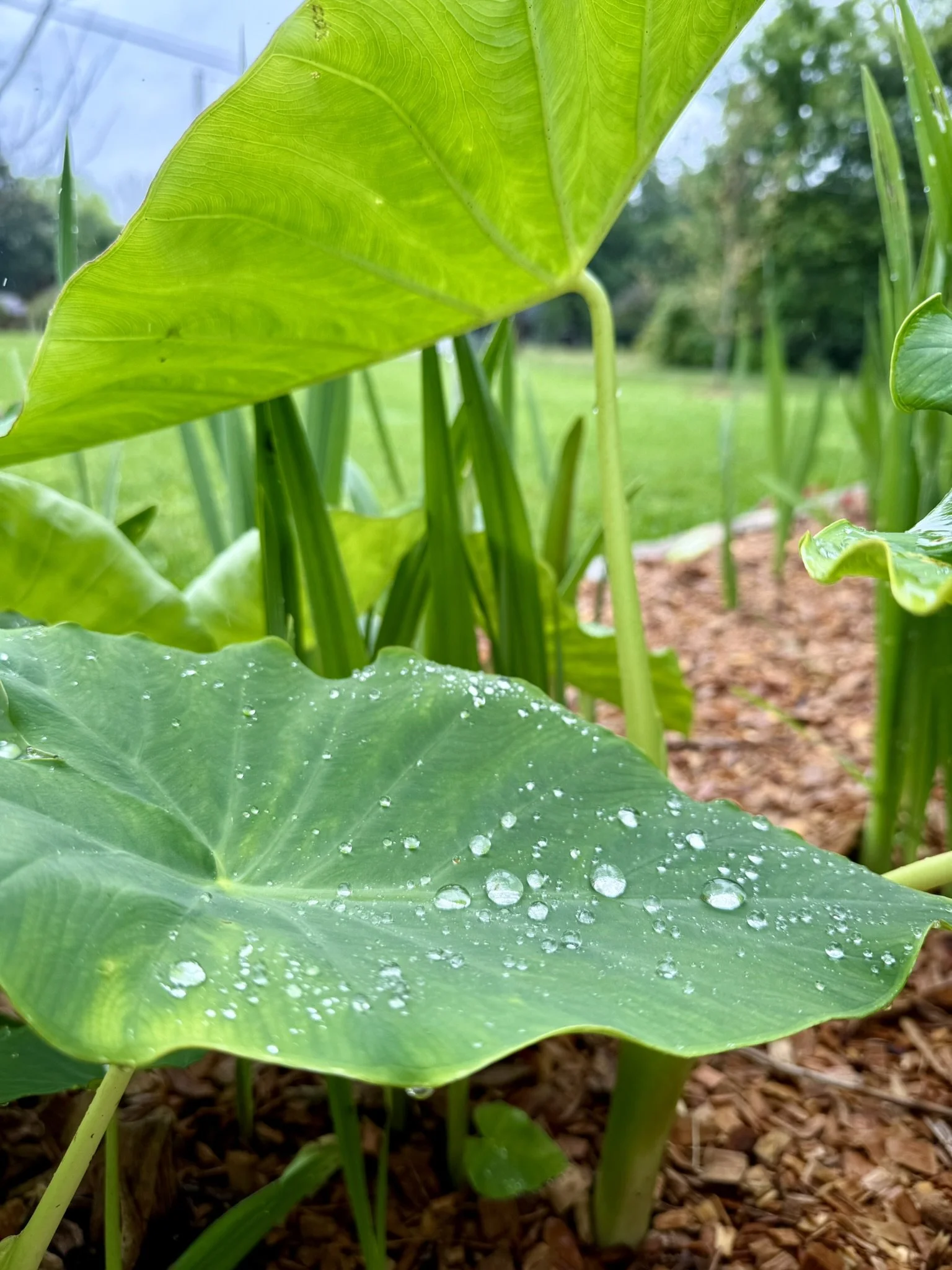
The undeniable stars of the front beds right now are the Elephant Ears. They’ve gone from mere suggestions in the dirt to massive, structural anchors. Seeing the rainwater bead up and pool in the center of those giant, velvety leaves is one of our favorite sights—it’s like the garden’s own natural plumbing system at work. They give the whole front of the house a lush, slightly tropical feel that balances out the traditional brick.
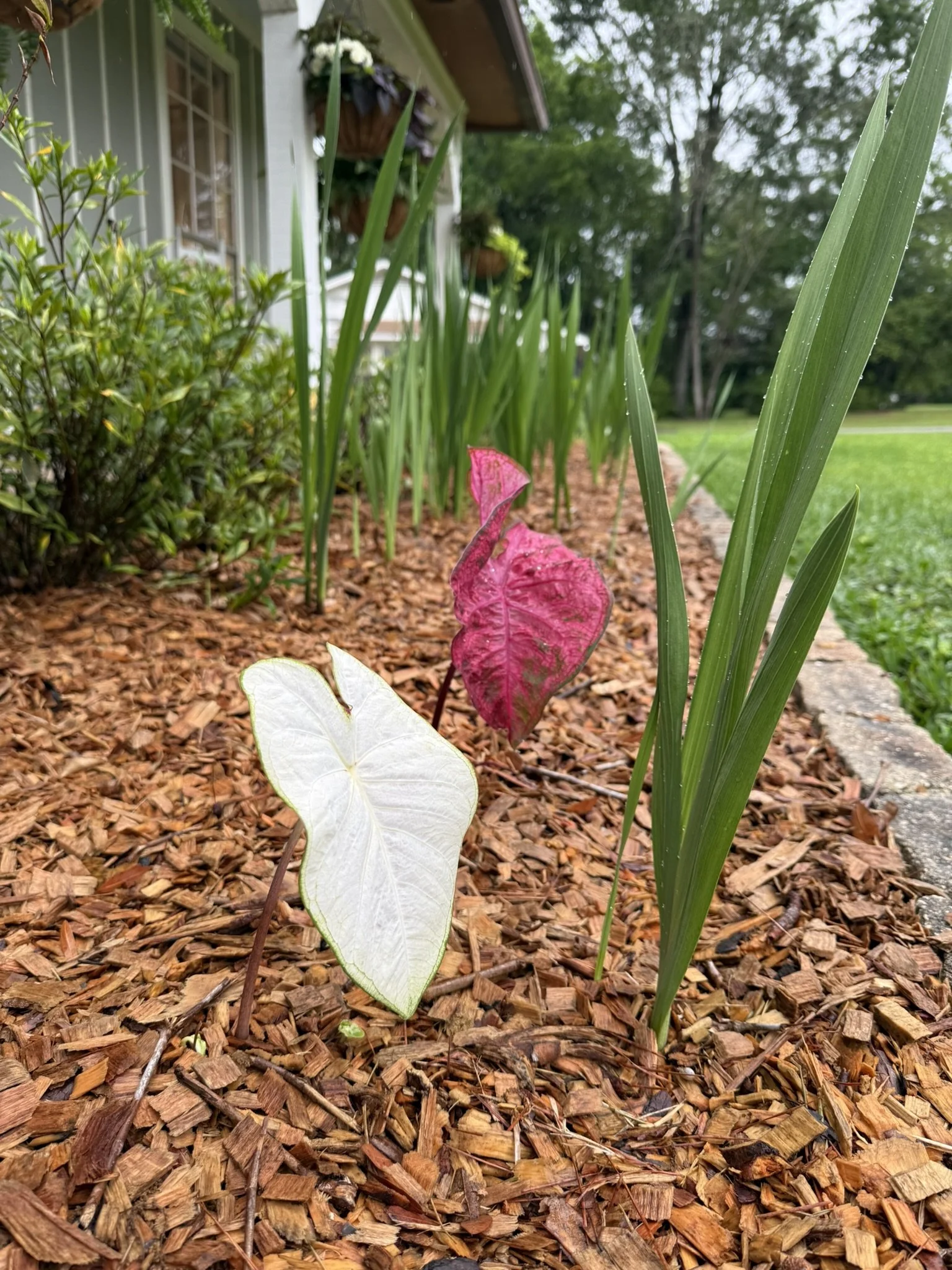
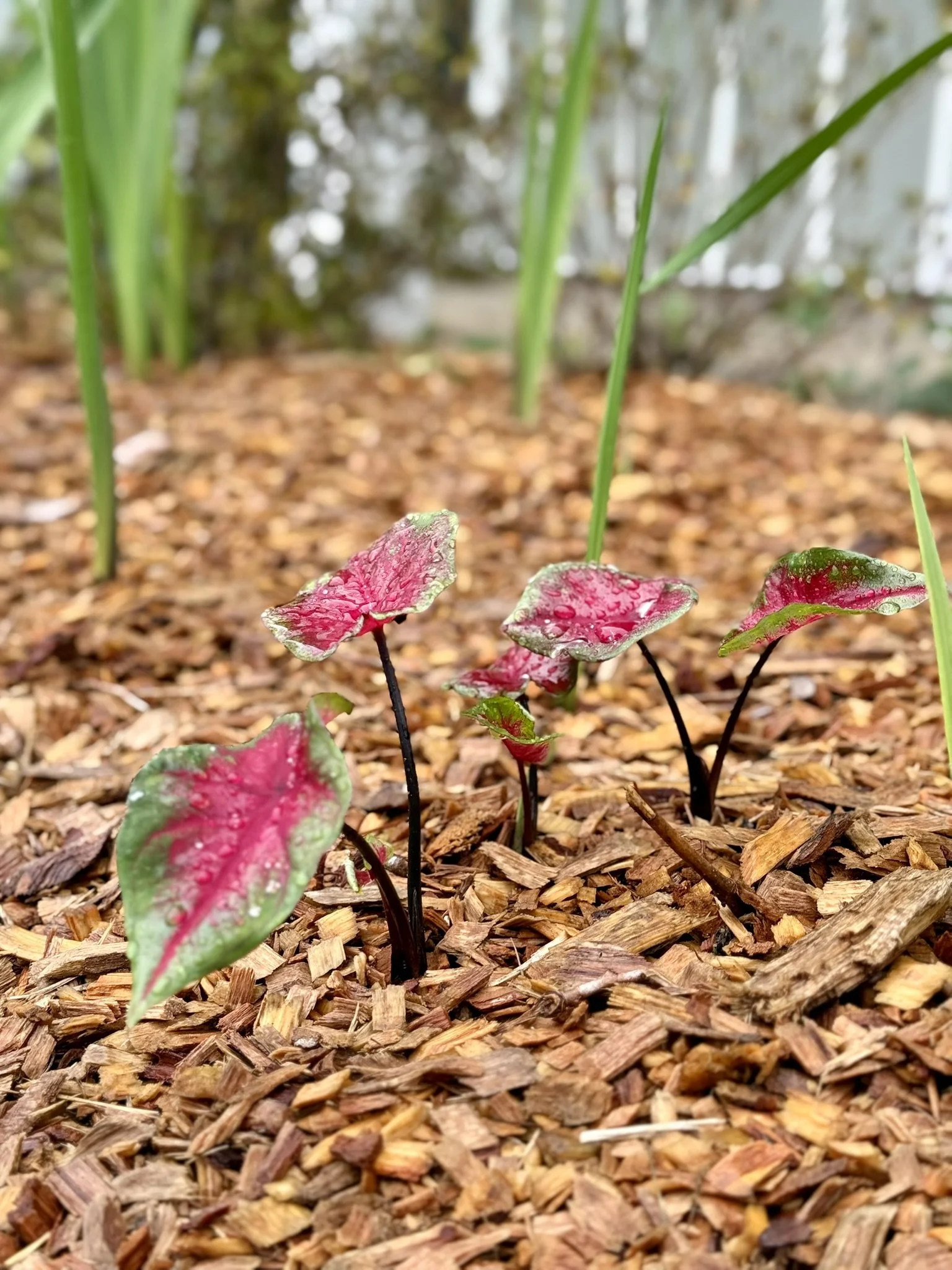
Tucked around the base of the larger plants, we’ve got Caladiums making their debut. We went with a mix of striking whites and vibrant pinks that are just starting to unfurl from the mulch like little painted jewels. Standing tall nearby are the Gladiolus spikes, looking refreshed and reaching for the sky.
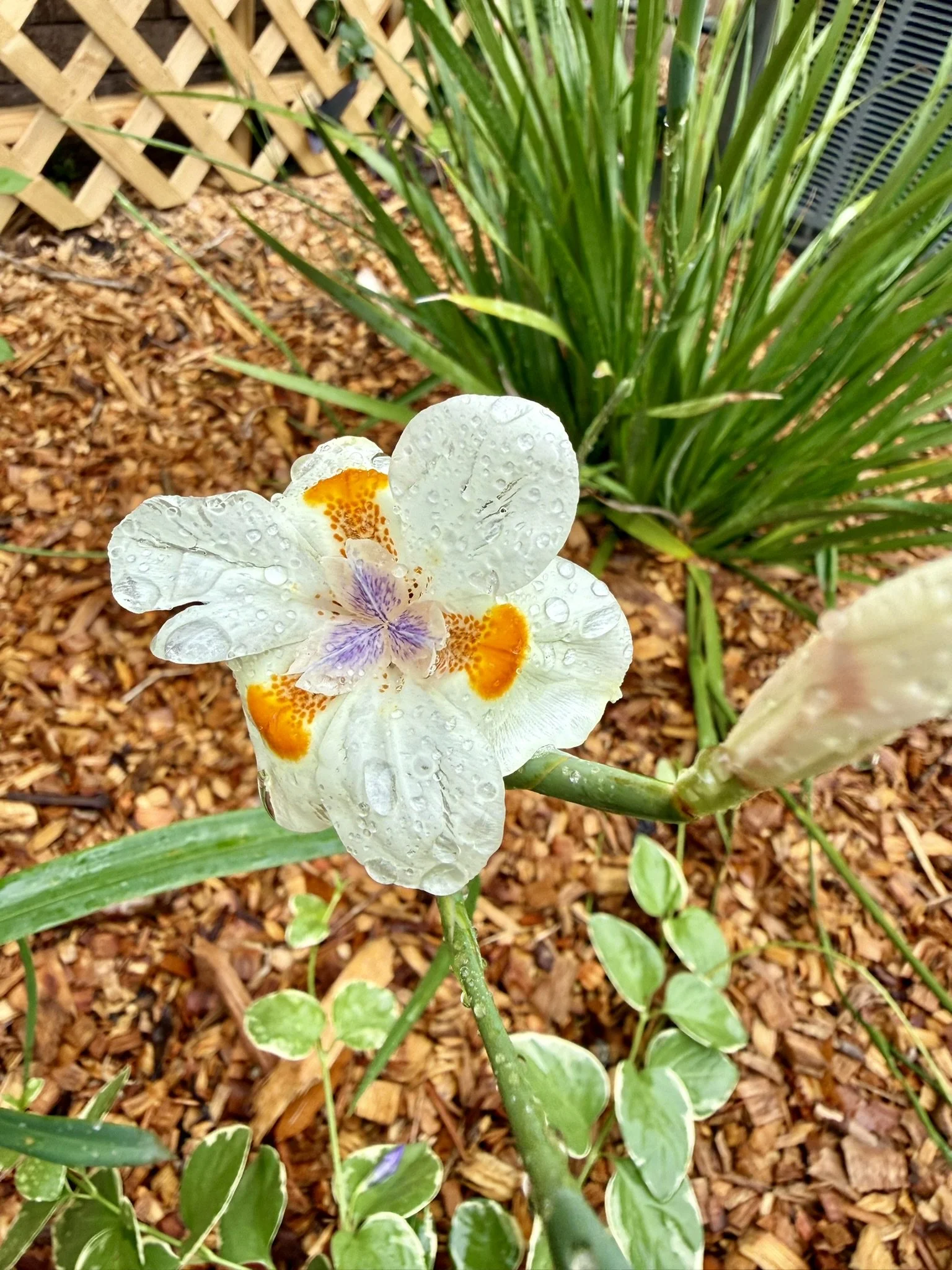
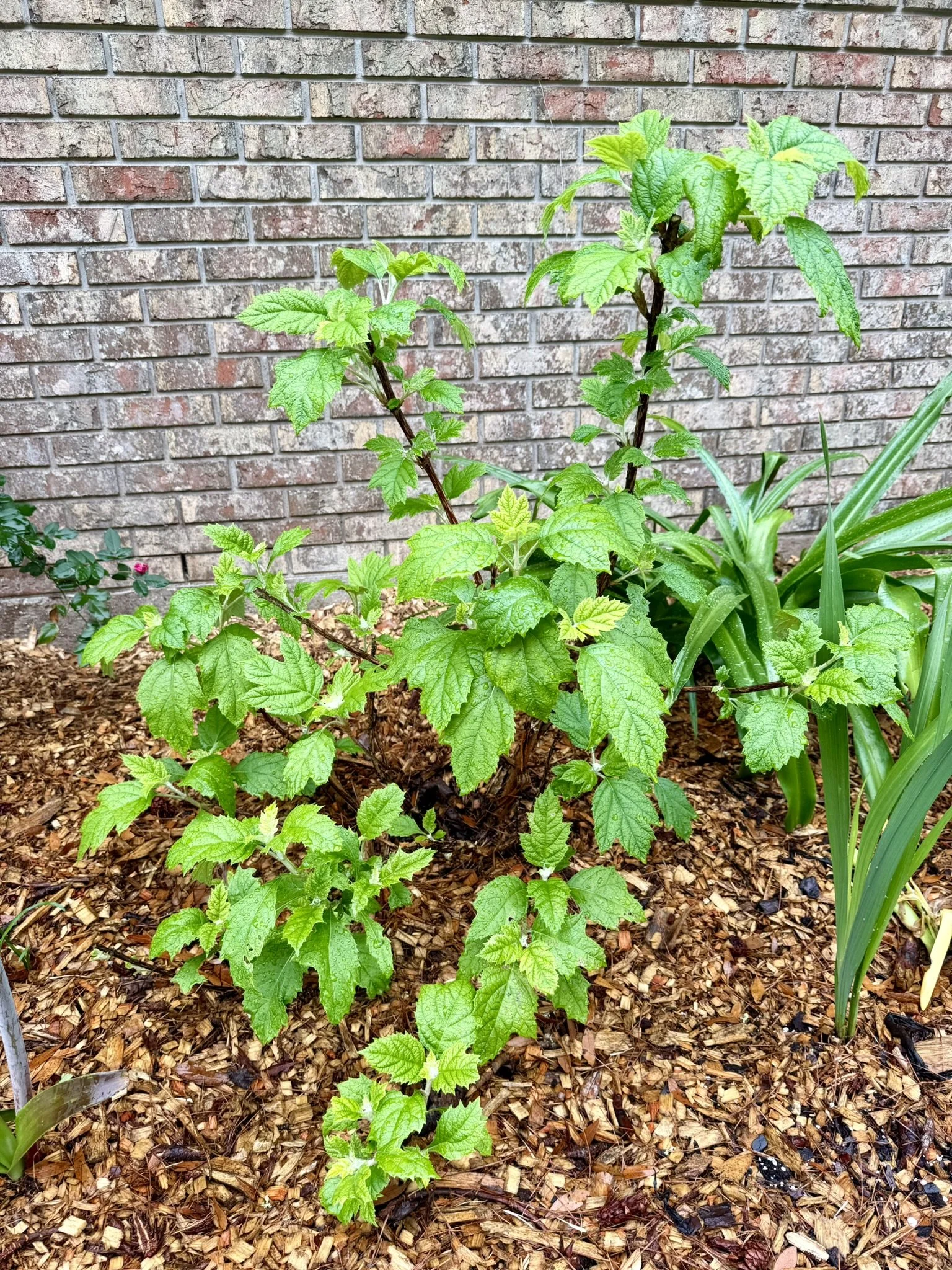
Adding to the texture, our Oakleaf Hydrangea is showing off those iconic, rugged leaves that handle the Southern humidity so well. Paired with our Irises—specifically that incredible white variety with the delicate purple veins—the front beds feel classic, intentional, and perfectly suited for the Gulf Coast. It’s a mix of bold foliage and delicate blooms that makes every rainy walk-through worth the damp shoes.
The Canopy and the Established Guards
While we spend a lot of time hovering over the flower beds, it’s the trees that give the garden its skeleton. The spring rains have been particularly kind to our vertical residents, turning the yard into a lush, multi-layered sanctuary.
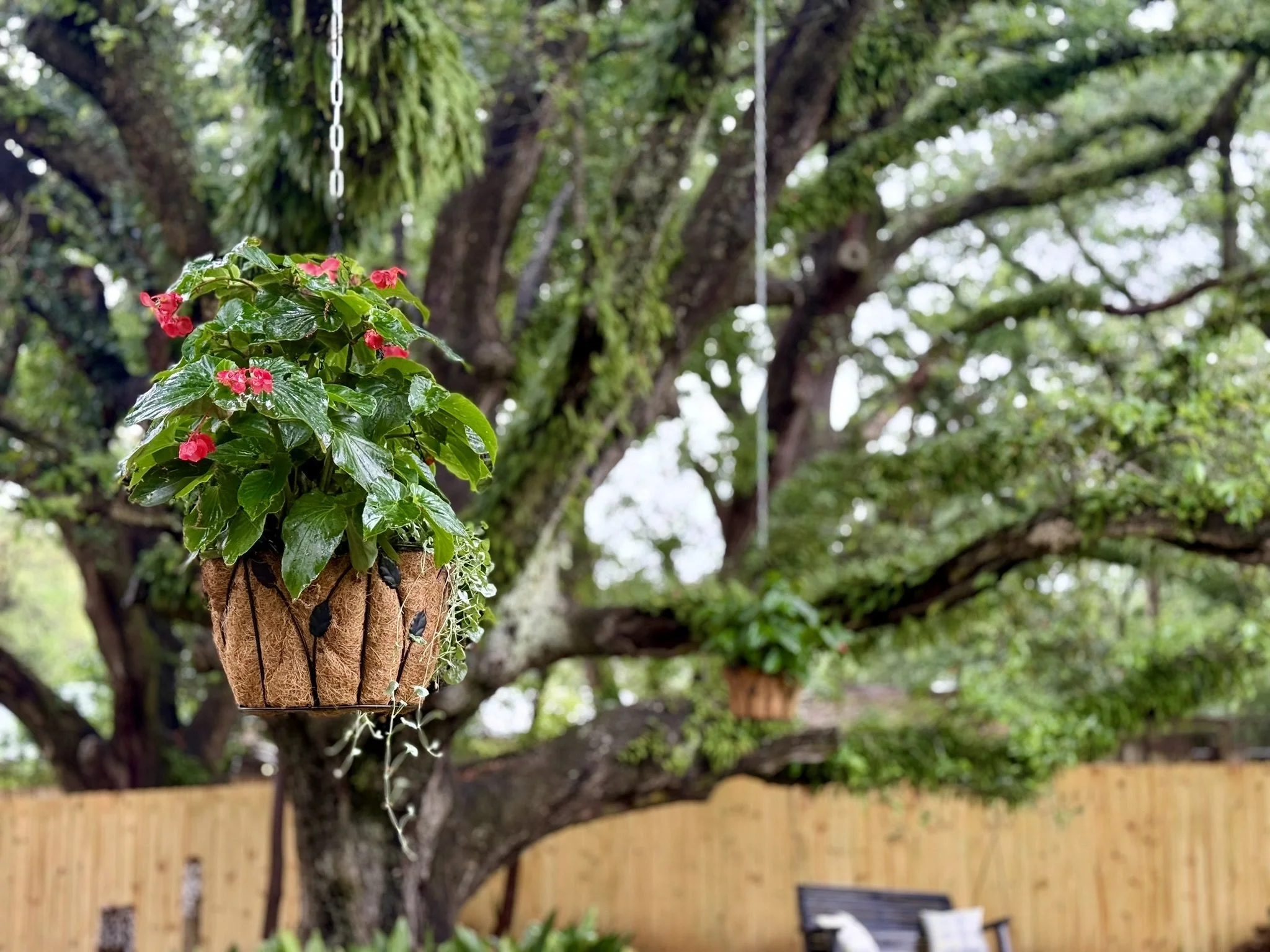
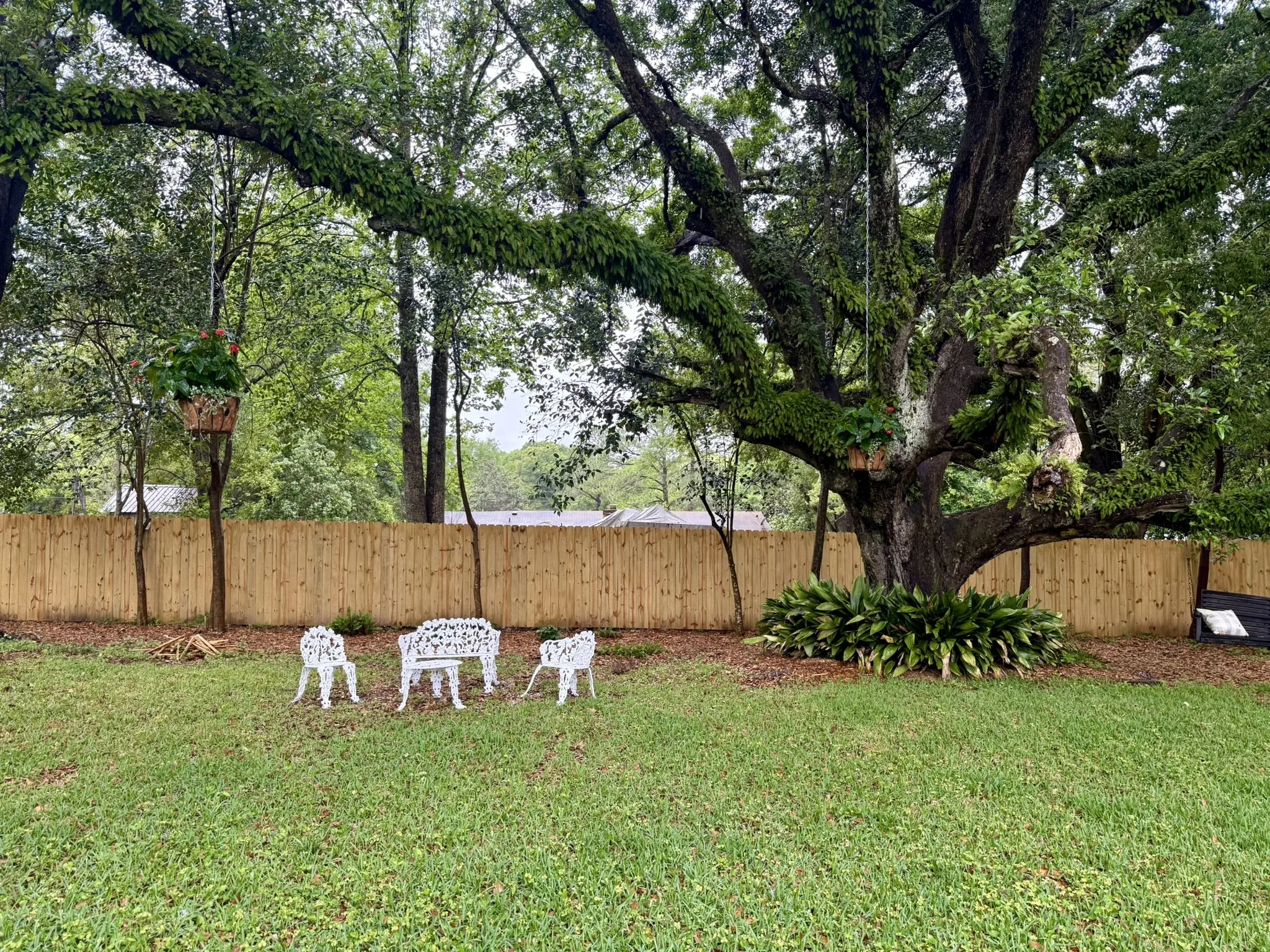
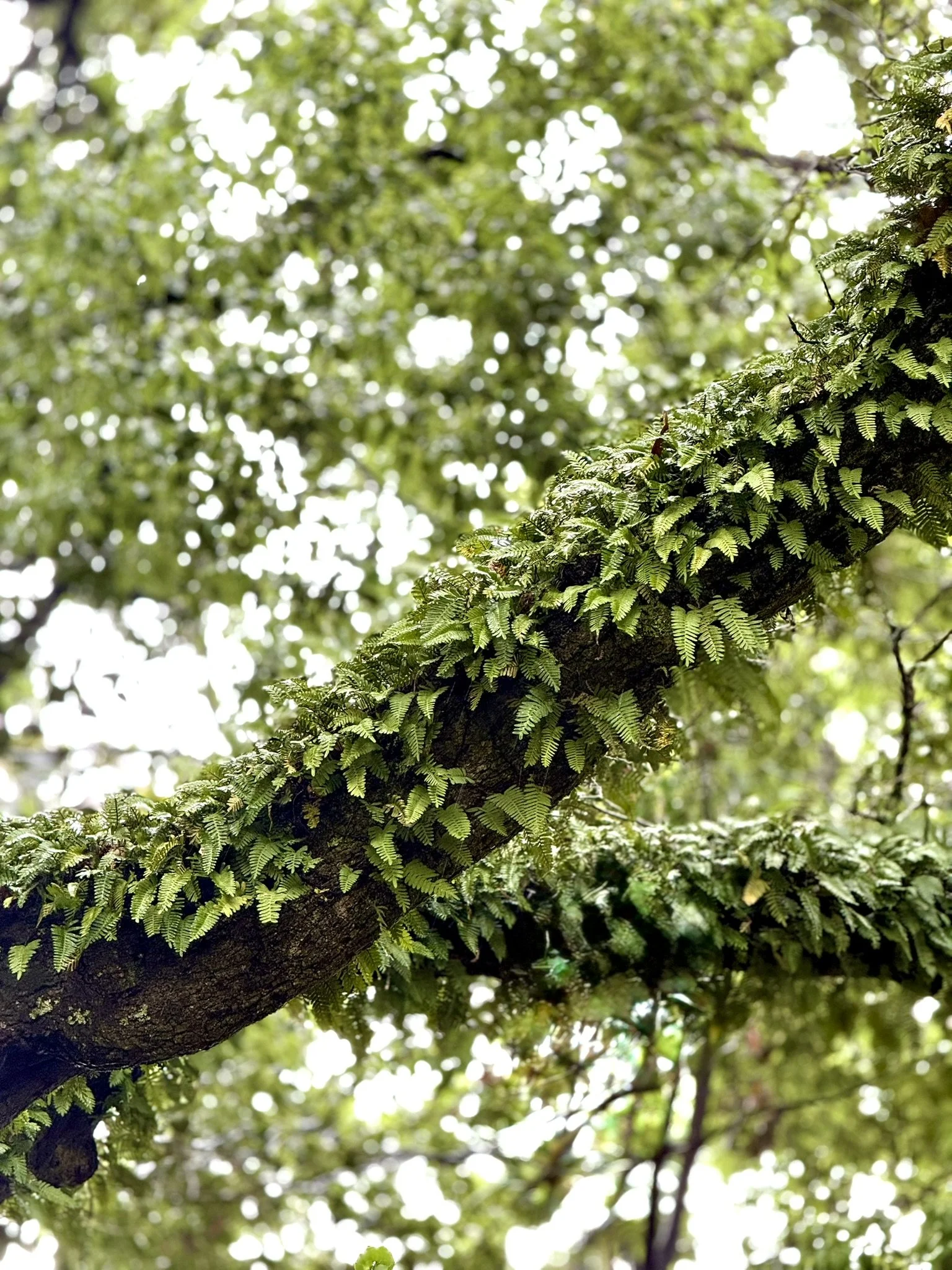
Dominating the skyline are our established Live Oaks. There is nothing quite like looking up through the canopy right after a storm to see the sunlight filtering through the moss and the deep green leaves. They’ve been here much longer than we have, and they serve as the ultimate anchors for the property, providing that draped, historic Gulf Coast feel that we love so much. This year, we decided to activate that space even more by adding a pair of "floating" baskets that hang directly from the massive lower limbs. We’re really loving how the vibrant red Dragon Wing Begonias and the cascading Silver Falls are beginning to spill over the sides, giving that ancient oak a little touch of curated color.
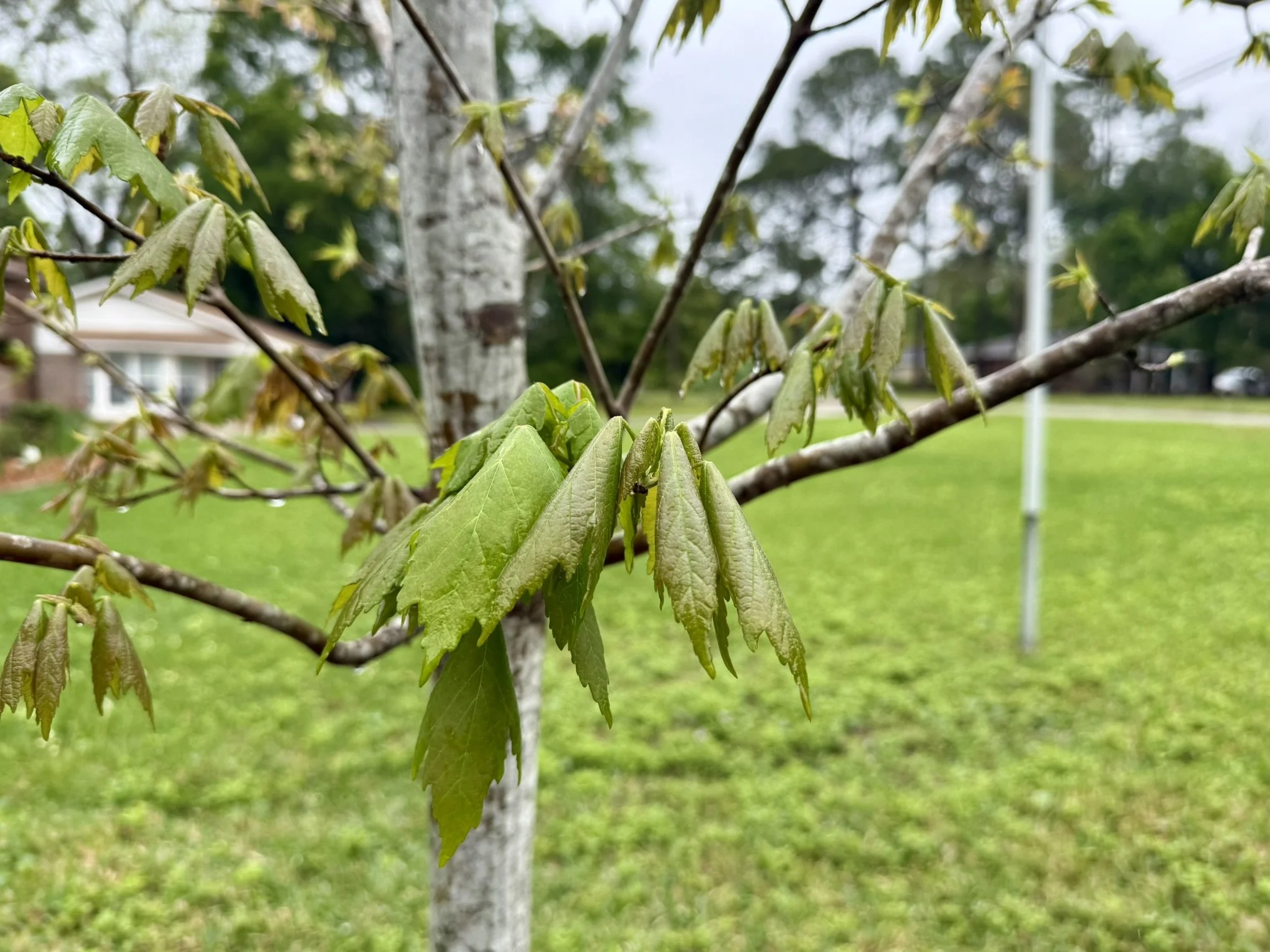
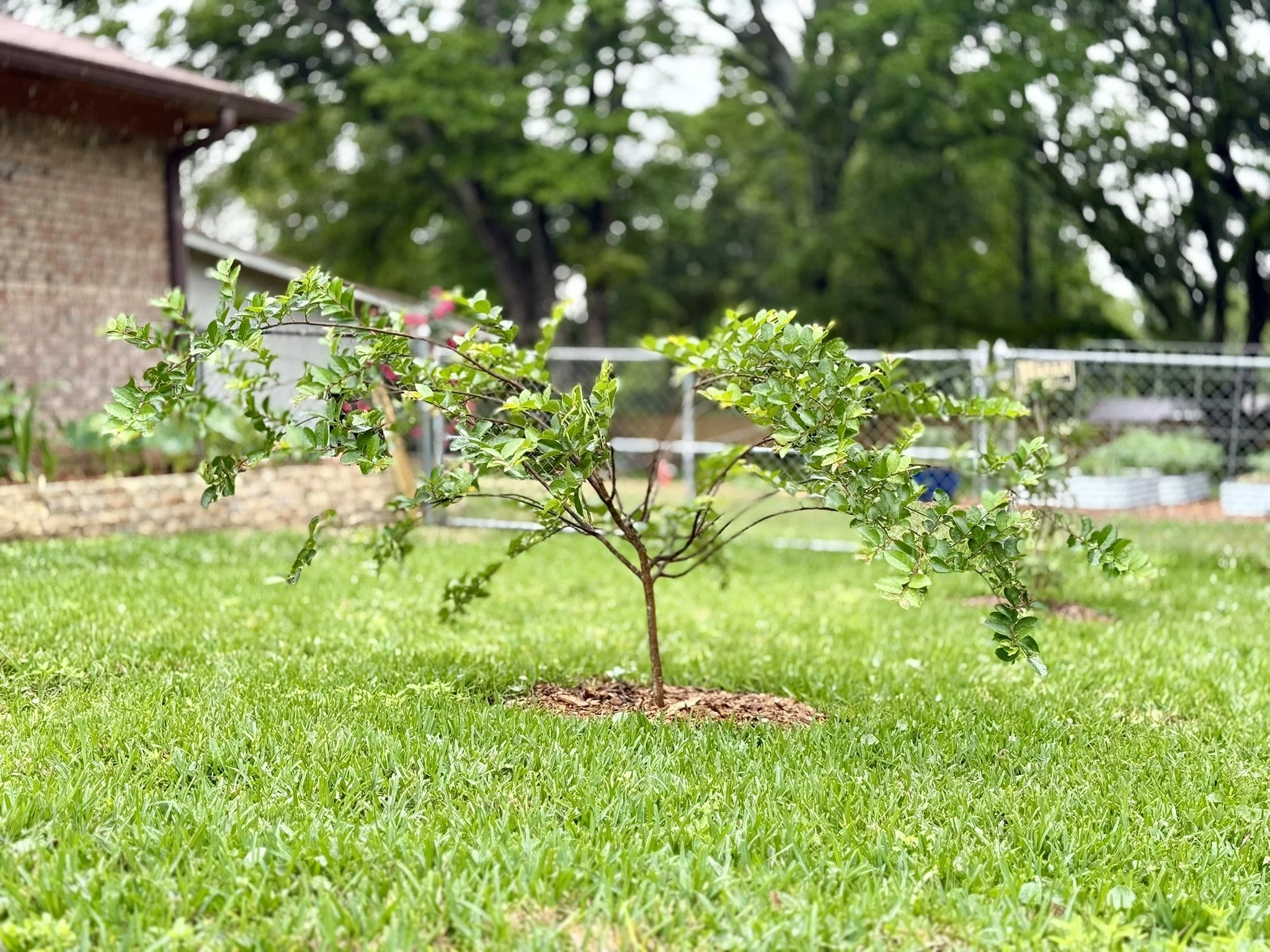
Our Maple is also a major presence in the lawn, standing at nearly 20 feet tall. It’s been part of our landscape for five years now and watching its canopy fill out and turn vibrant after a good soak is a highlight of the season. Nearby, our Crepe Myrtle is showing off its own growth spurt, responding to the moisture with plenty of new green shoots. It’s actually one of a quartet we have stationed around the house, and we’re looking forward to seeing all four of them hit their stride as the weather warms up.
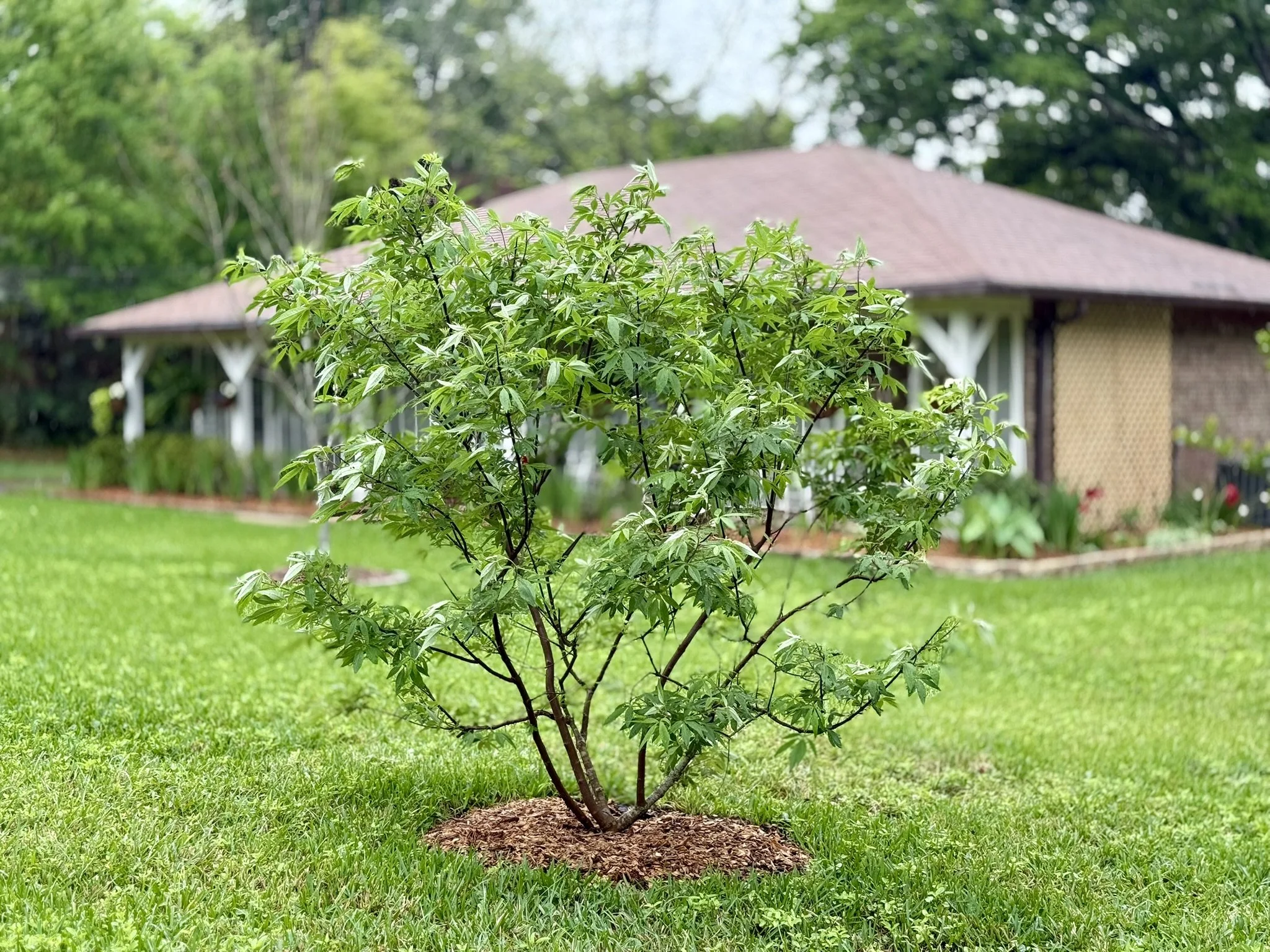
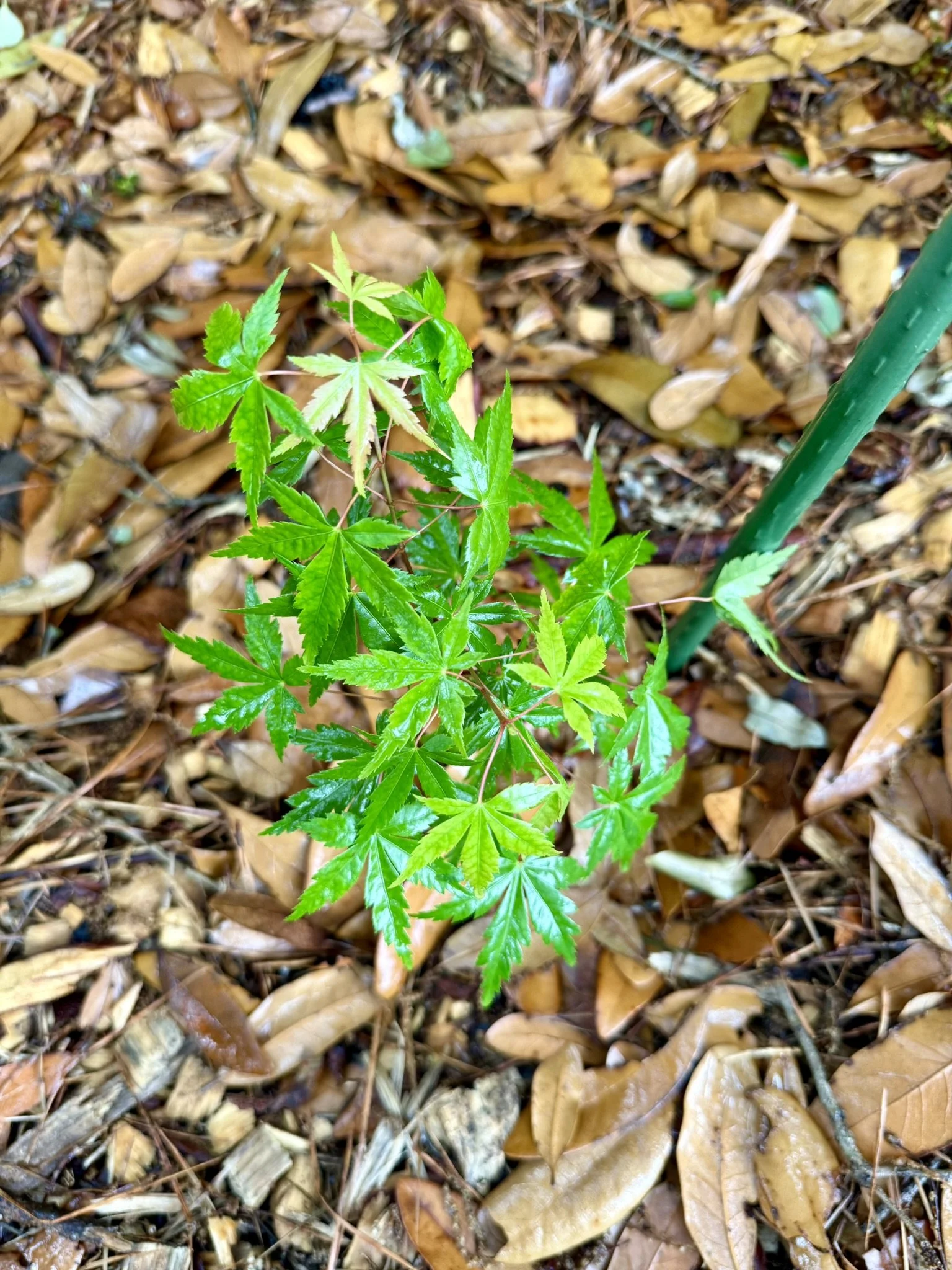
In another corner of the yard, the Japanese Maple is leafing out beautifully, its delicate structure a perfect contrast to the sturdier residents. We’re also watching our Chaste Tree, which has reached an impressive six feet and is showing off a unique texture that adds something special to the mid-layer of the yard. Every time we walk under these branches, it feels like we’re seeing a long-term investment in the landscape really paying off—one that these first spring rains are helping to nurture and expand.
The Backyard Border: Blooms and Boundaries
As we head into the backyard, the energy shifts from the polished curb appeal of the front to a more layered, lush landscape. The beds running along the house and fence line are starting to fill in, creating a soft, green perimeter that truly thrived under the recent downpours.
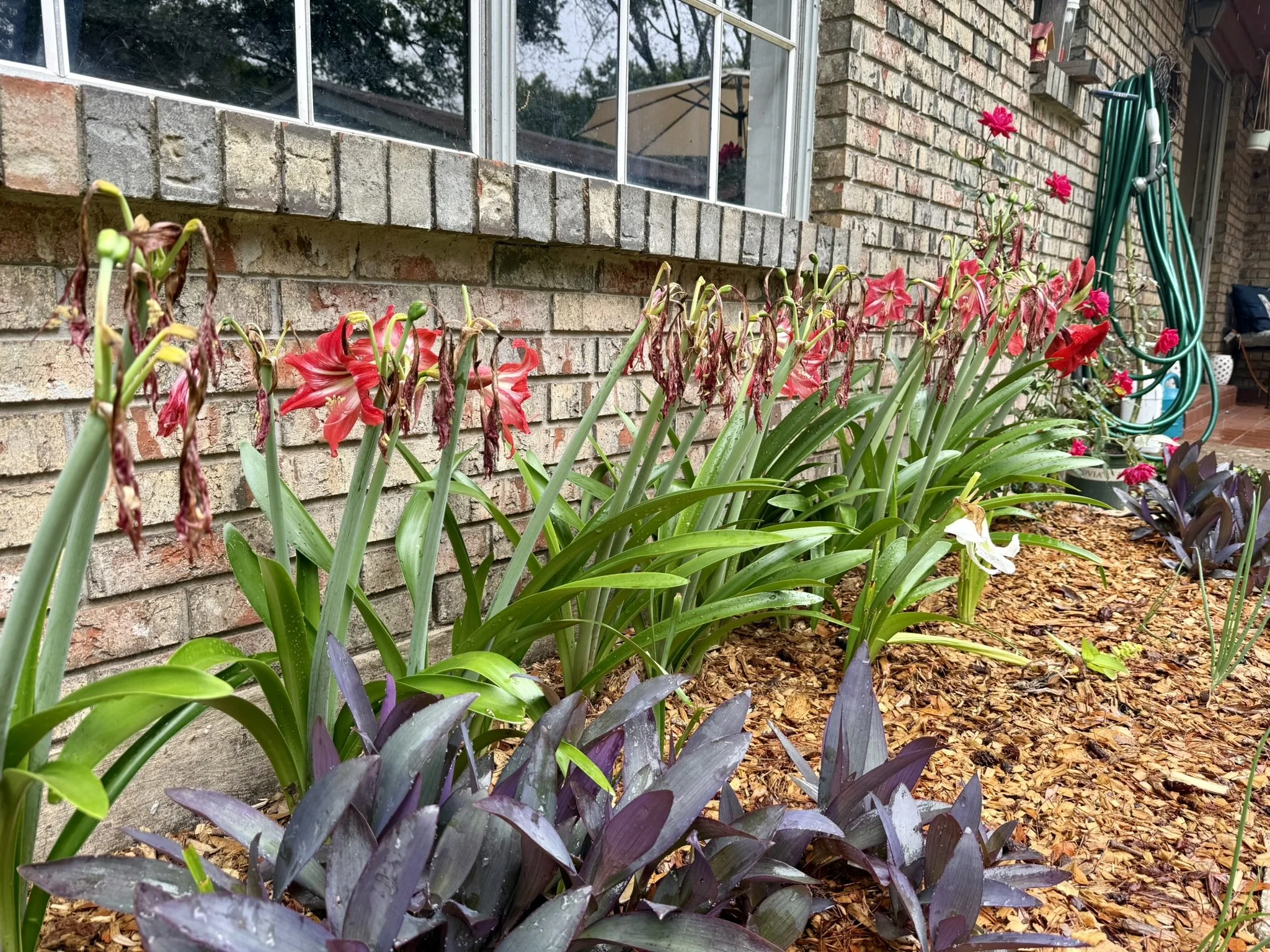
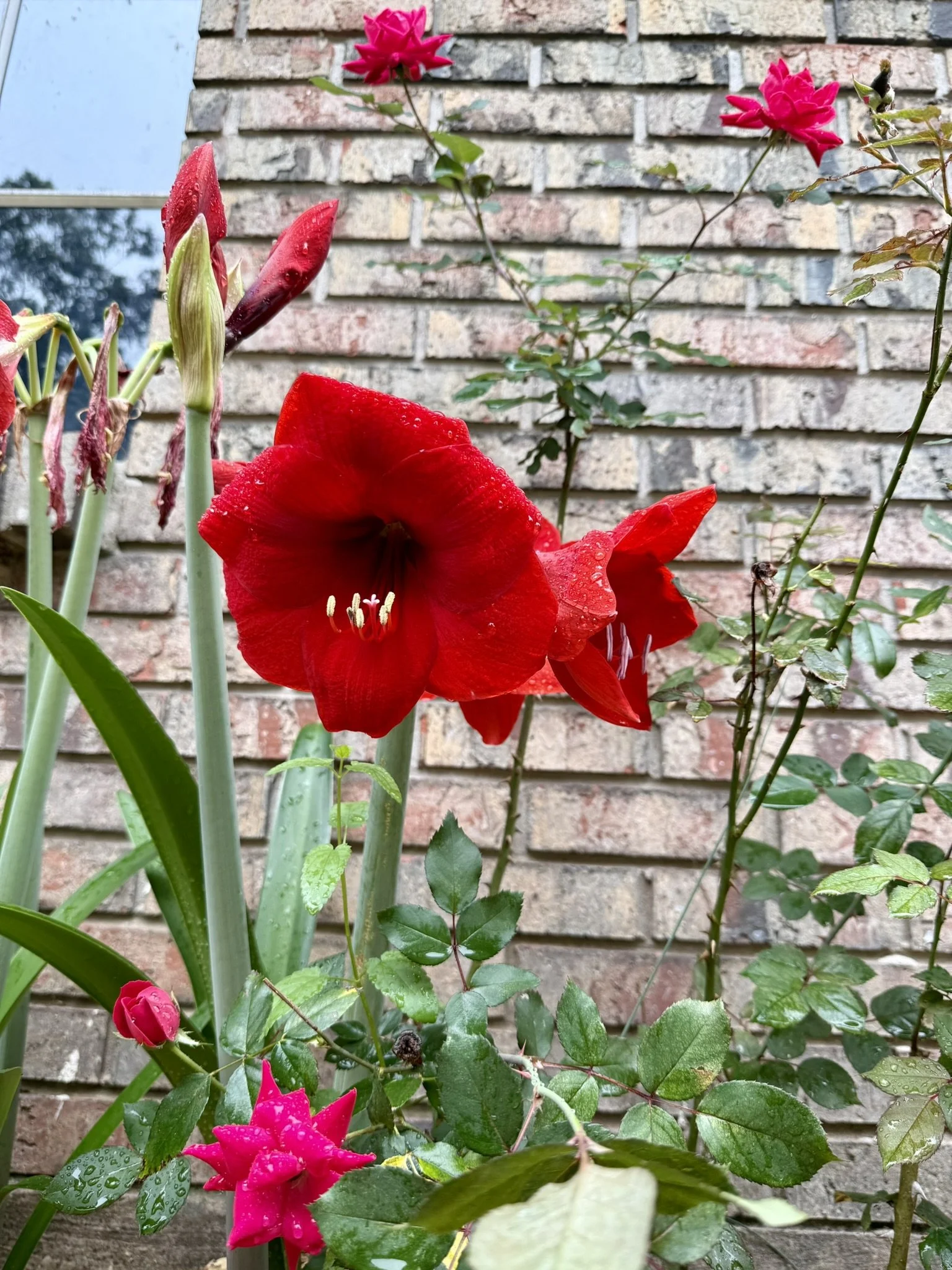
One of the most exciting sights right now is the Red Amaryllis, which is currently in full, glorious bloom. Its deep, velvety red petals look almost luminous against the brickwork and the dark, damp mulch. It has taken the baton perfectly from our Minerva Amaryllis, which have finally finished their show for the season and are starting to die back.
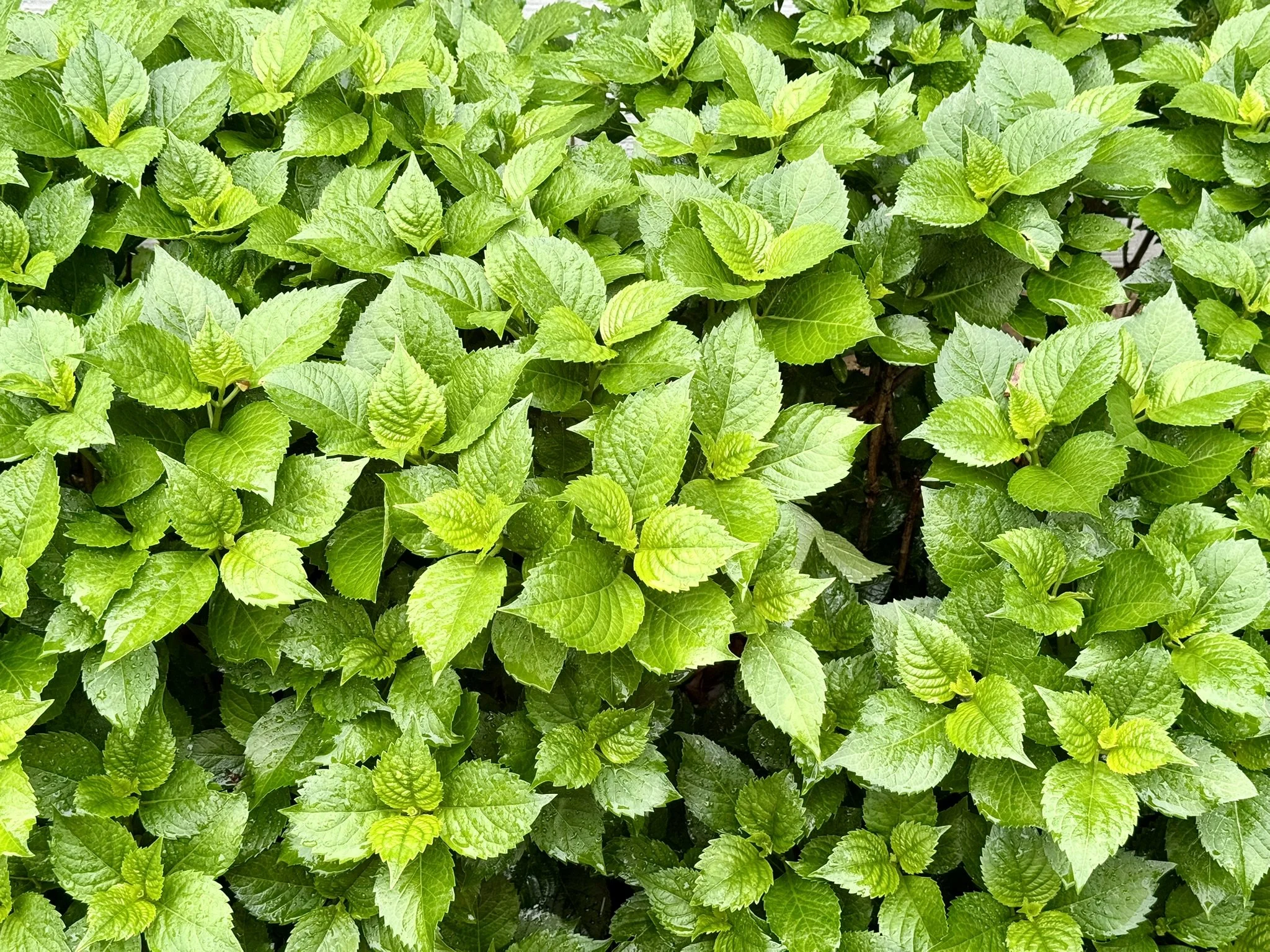
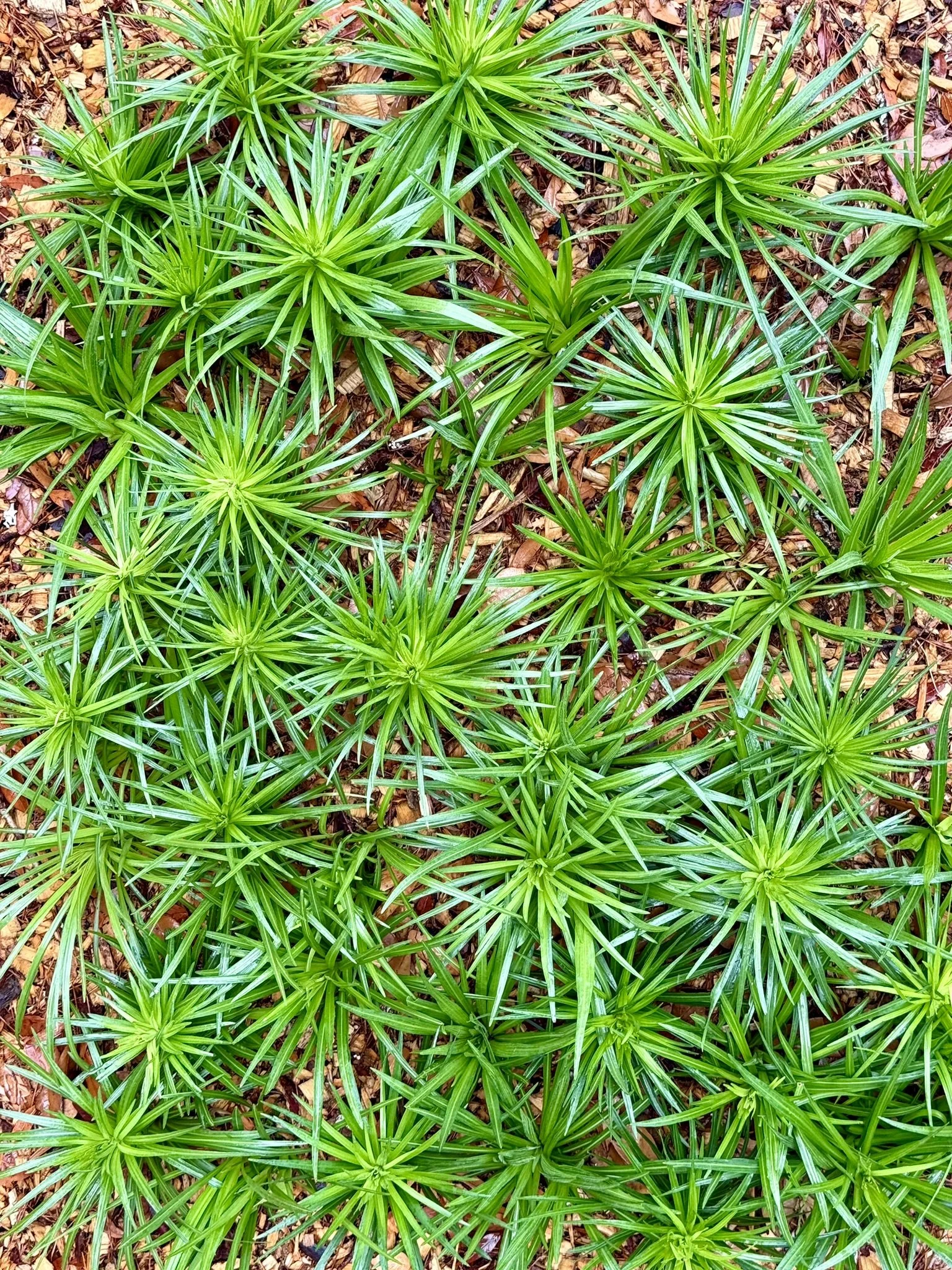
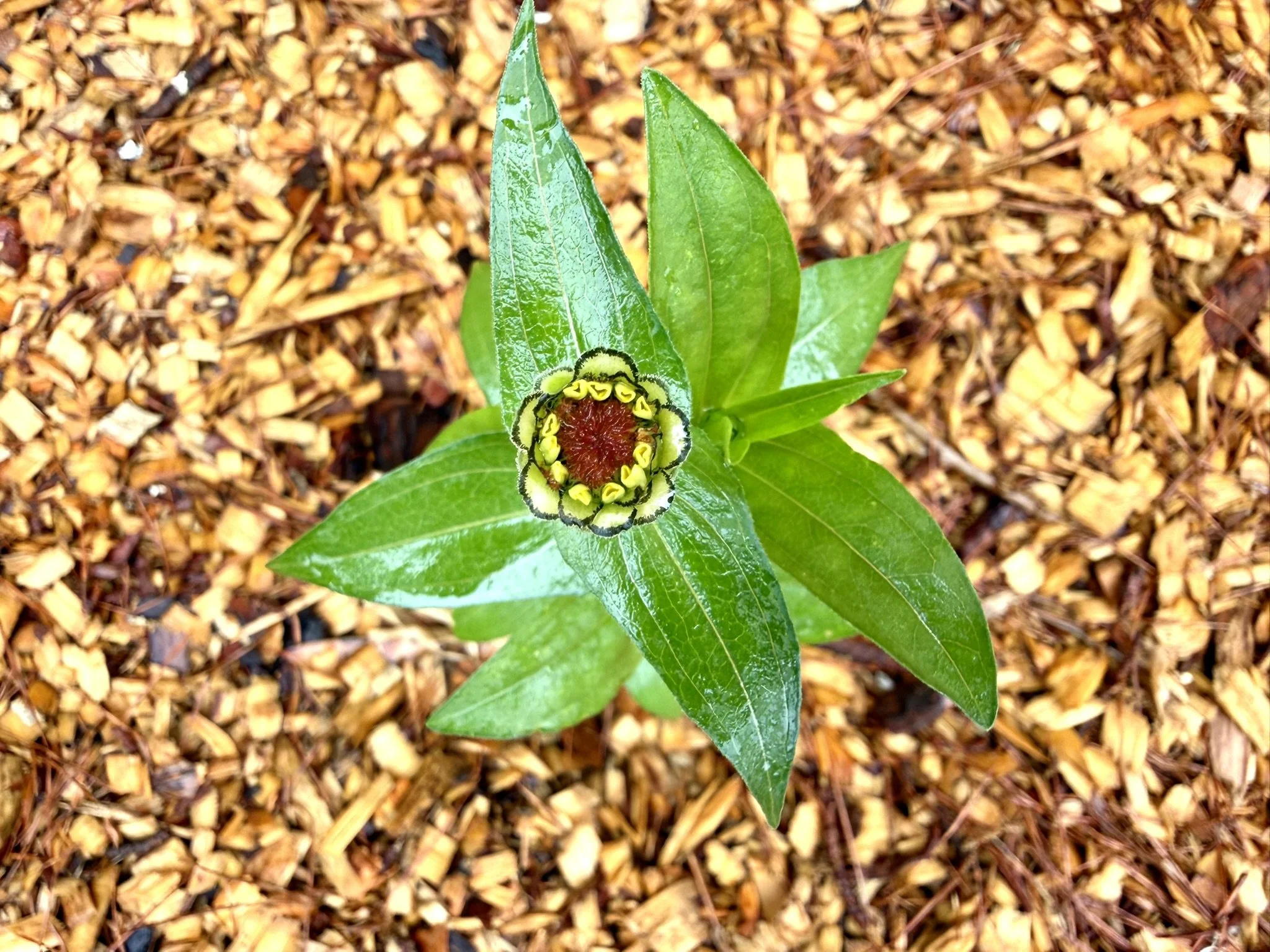
The Hydrangeas are also making a major move; the foliage seems to have doubled in size after the rain, and we’re even seeing the very first blooms start to form. Adding to the unique textures in this bed are the Tigridia and our Zinnias, the latter of which are just days away from bursting into flower. We’ve also installed a series of vertical trellises along the fence that are currently waiting for their occupants to take off, promising even more height and greenery soon.
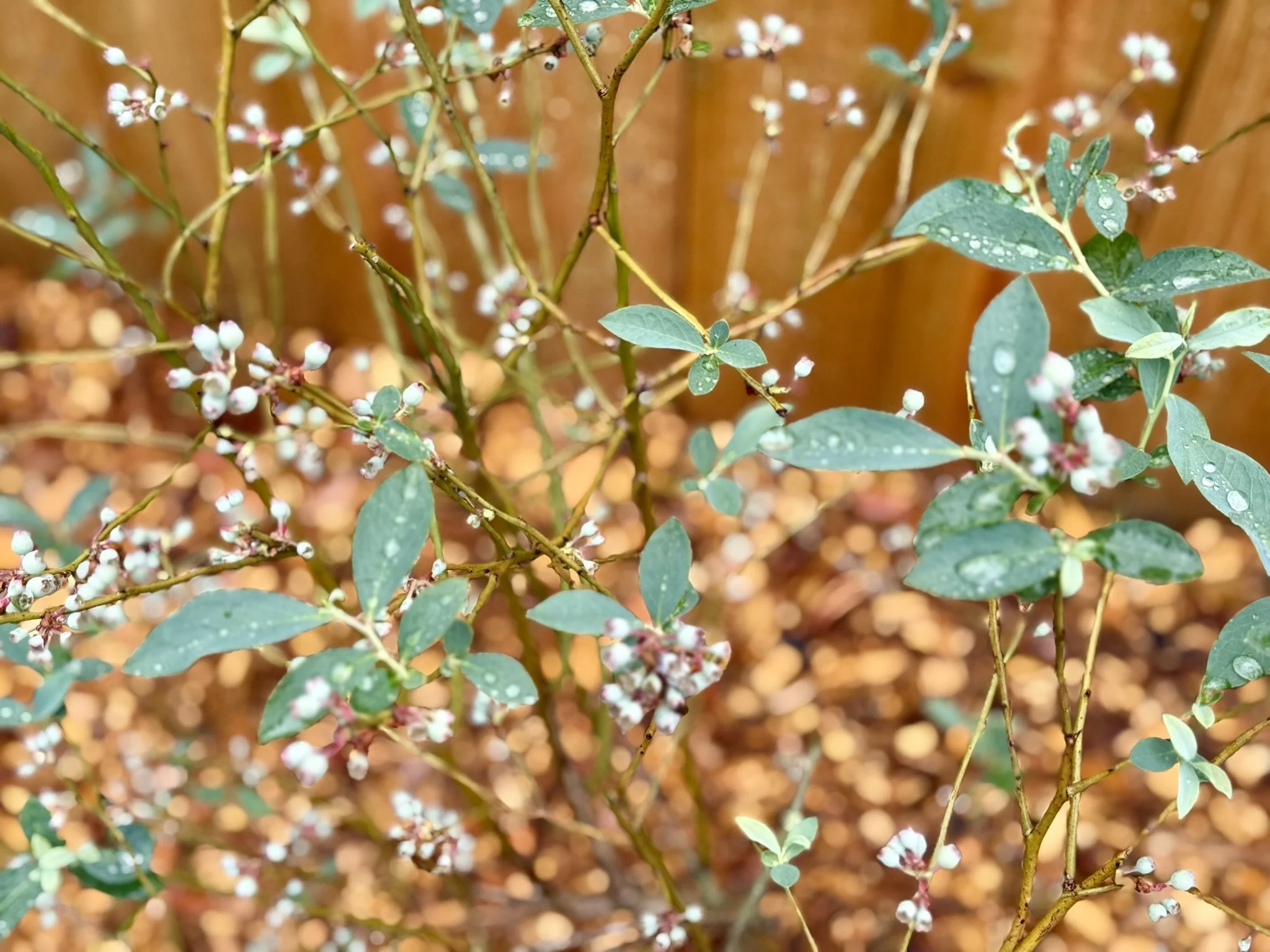
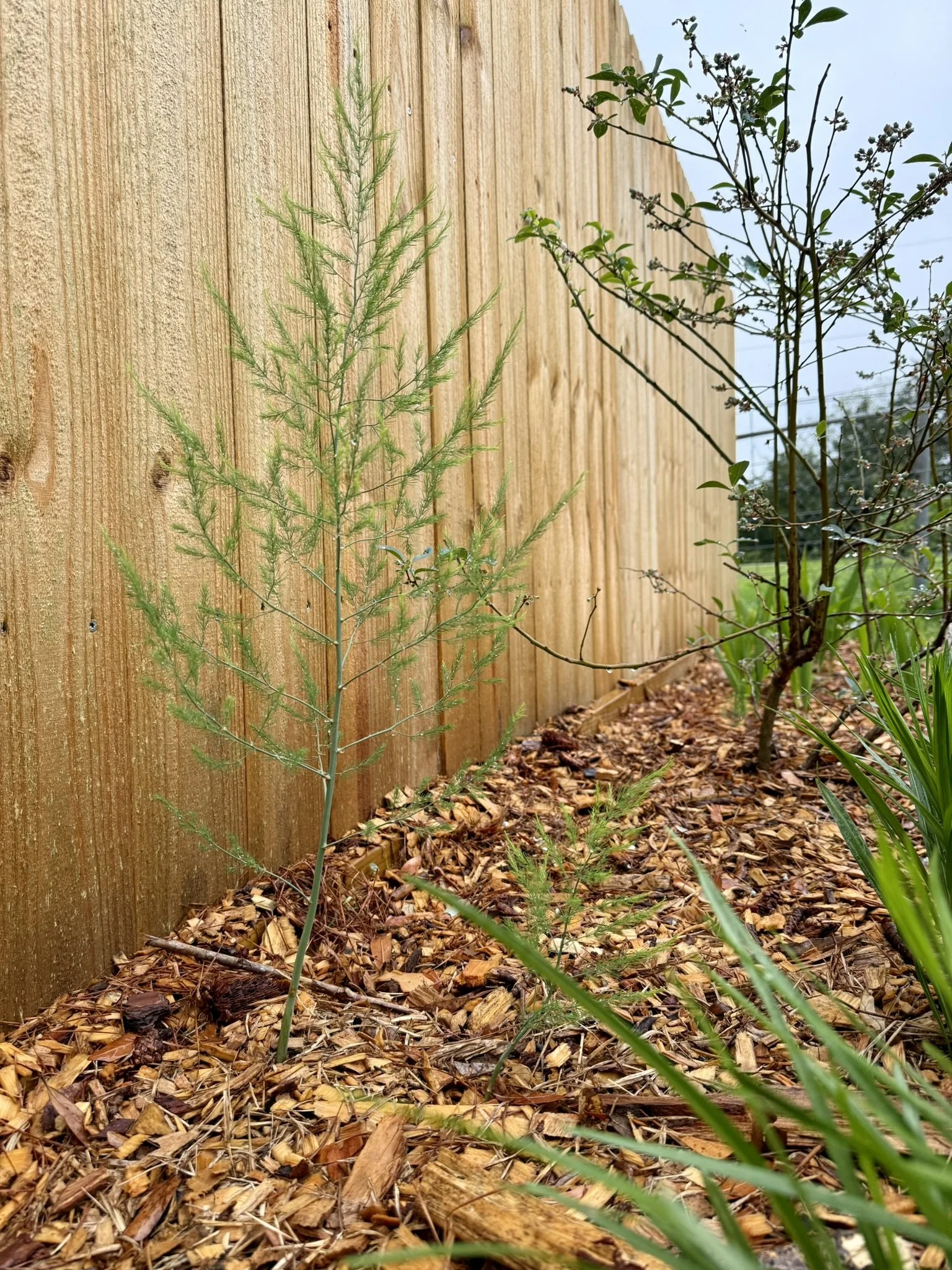
Rounding out the backyard beds is a quiet but productive corner for our perennials. We have our Blueberry bush leafing out beautifully, and tucked nearby, the Asparagus is finally poking its head through the soil. We love that these edibles are woven right into the landscape—it’s a busy corner of the yard that feels like it’s just one more good rain away from a total transformation.
The Vegetable Patch: Production and Potential
If the front yard is our "showpiece," the backyard vegetable area is our engine room. This is where we spend most of our time getting our hands dirty, and the spring rains have officially turned this space into a production powerhouse. It’s no longer just a collection of seedlings; it’s a full-blown operation.
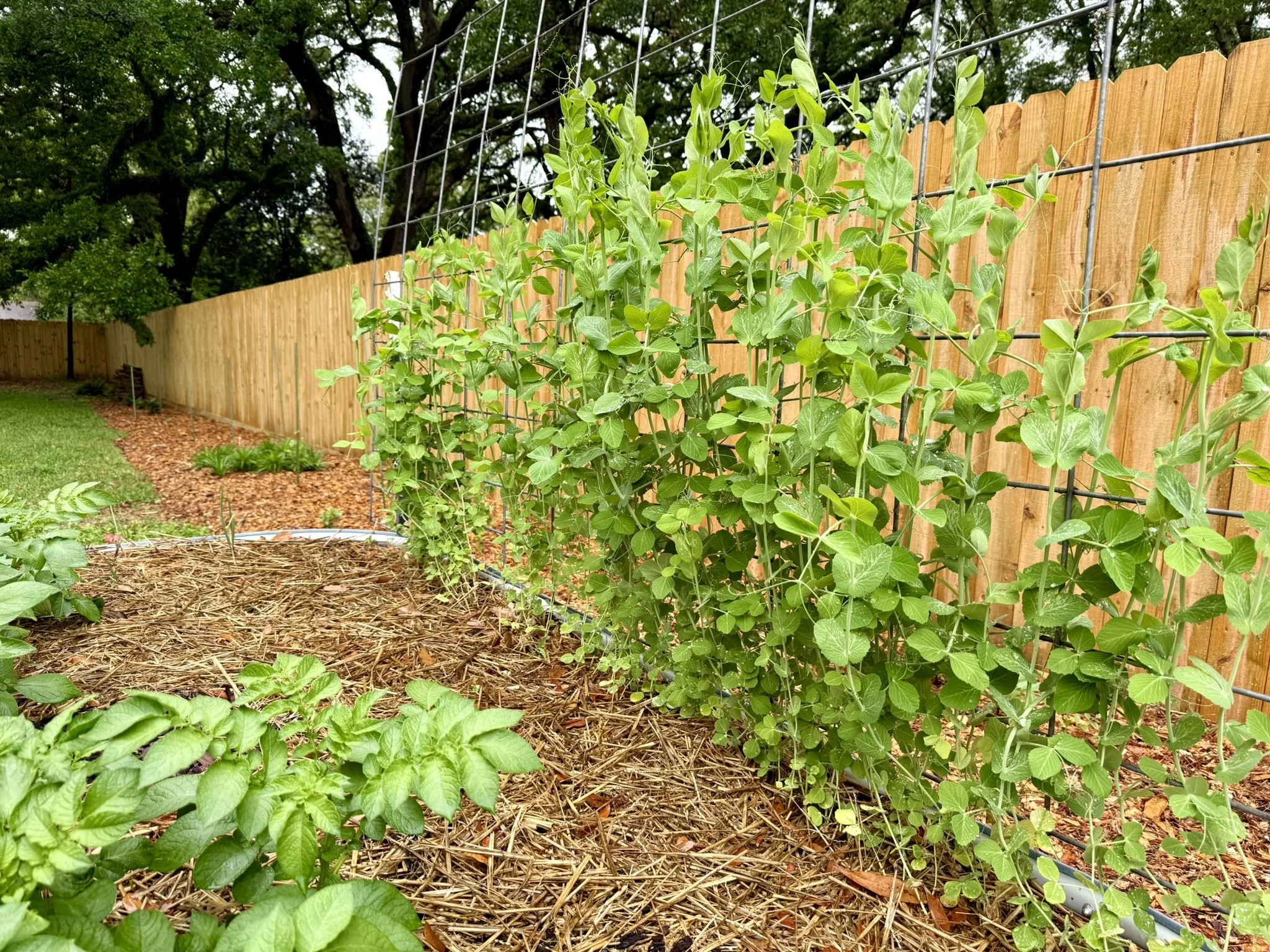
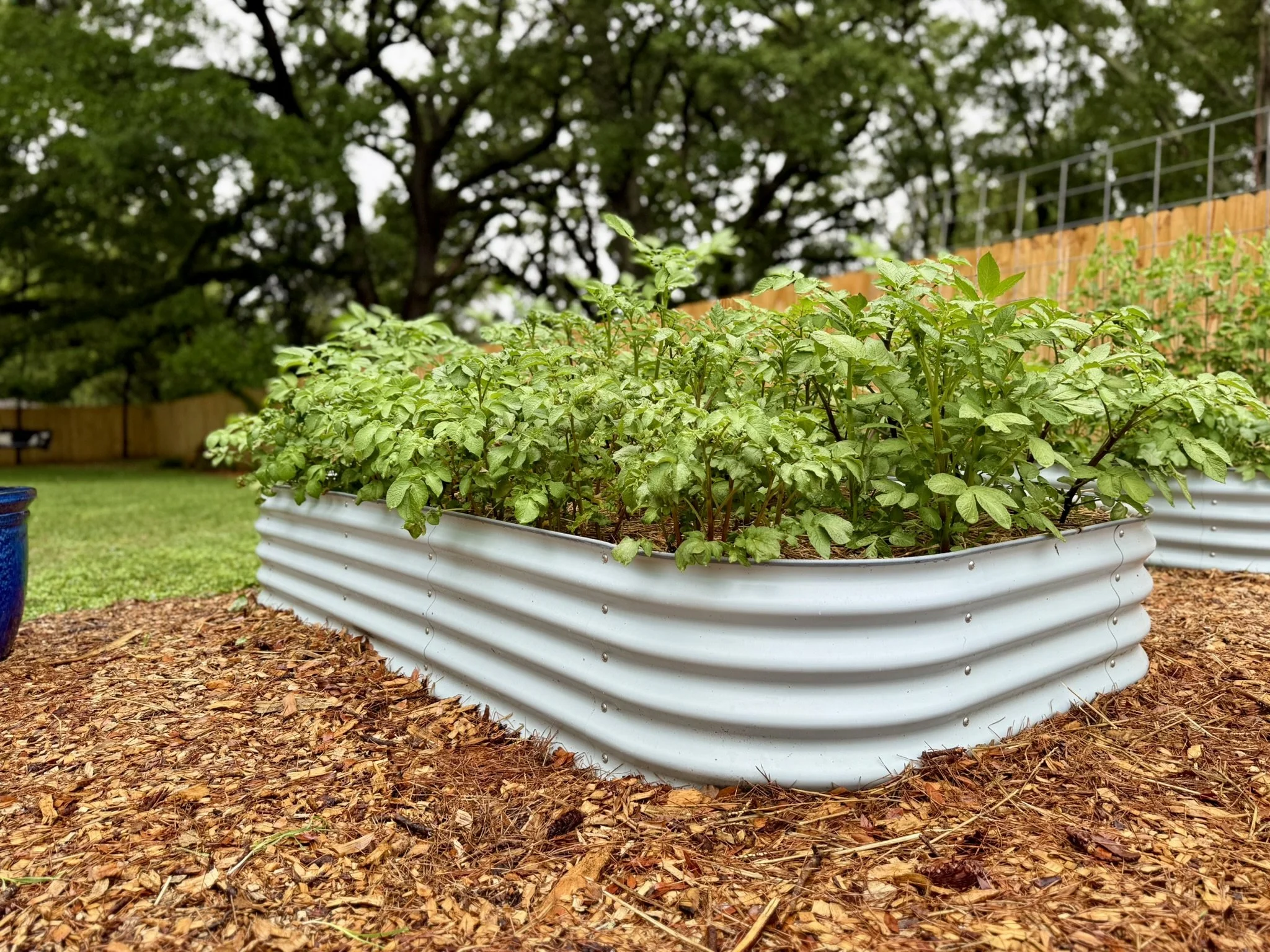
The undisputed heavyweight champion of the garden right now is the Potato bed. Our metal raised beds have responded to the extra moisture with a growth spurt that is hard to miss, with lush, dark green foliage filling out the space. Not far behind are the Sugar Snap Peas, which have finally found their footing on the fence trellis and are beginning their vertical ascent.
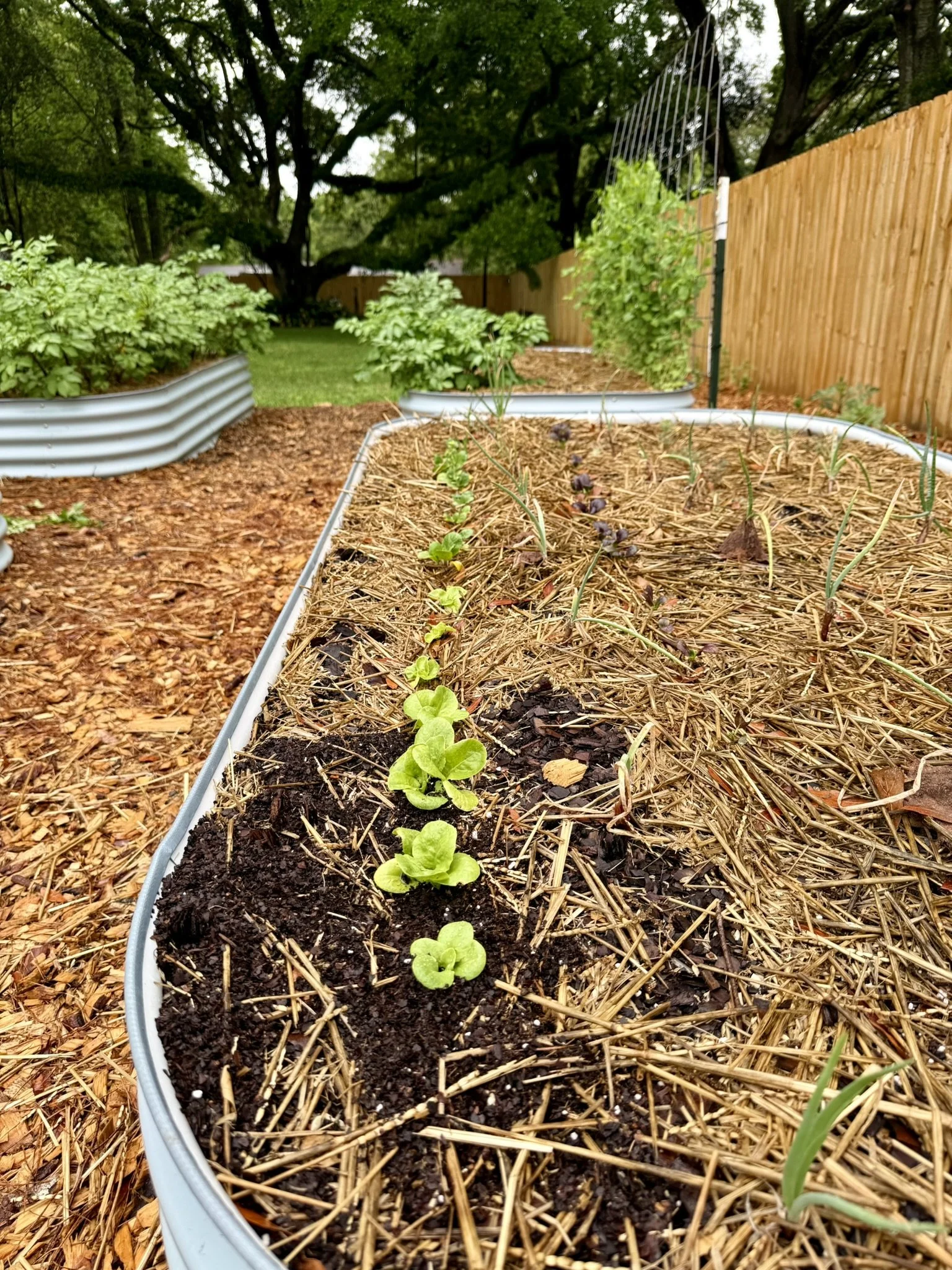
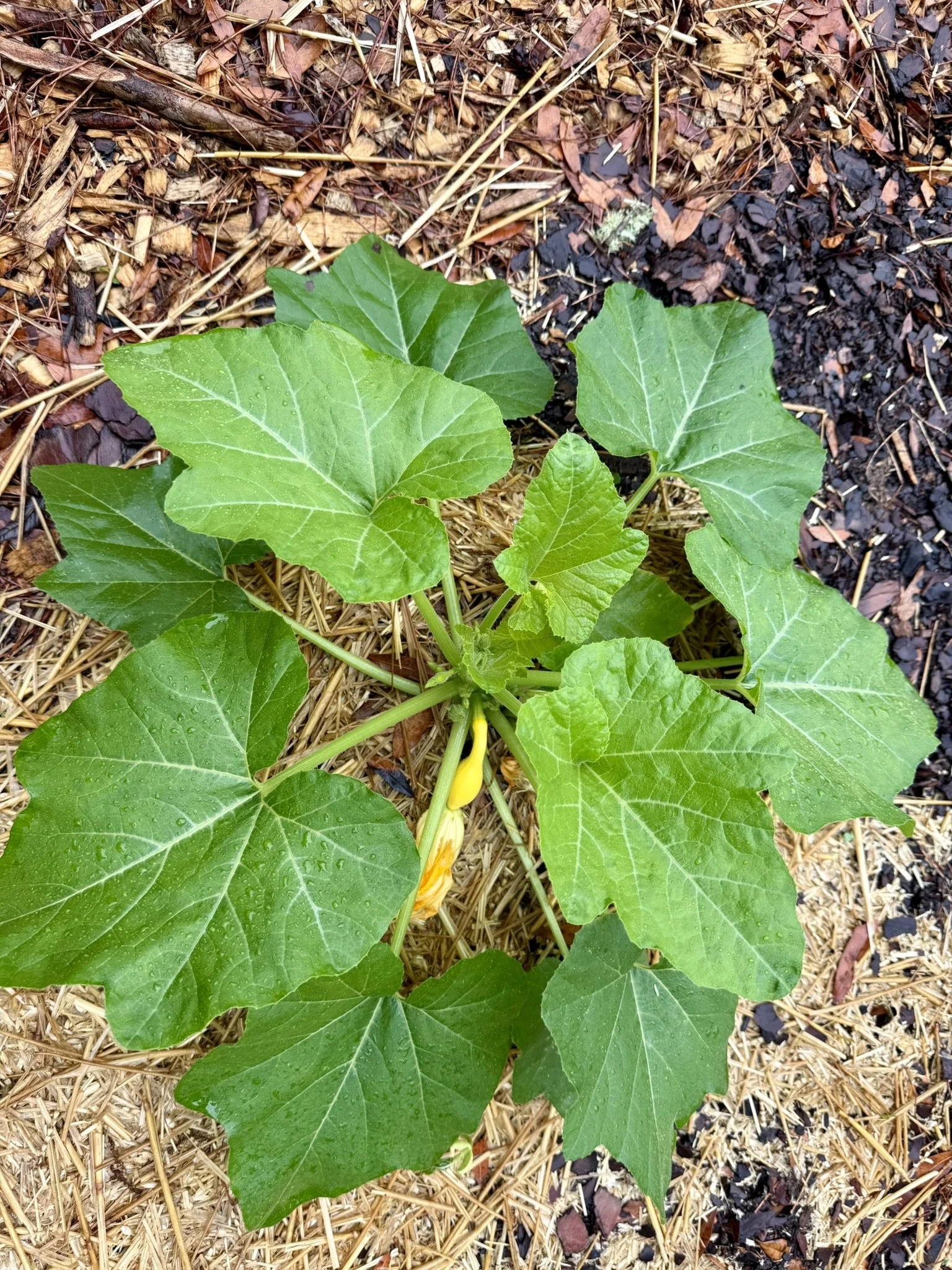
We’ve also dedicated several metal raised beds to our cool-weather crops, and they are thriving. We have a neat patch of Lettuce coming up, with some Onions and Bok Choy quietly holding down the background. Nearby, our in-ground Summer Squash (the crookneck variety) is already showing off those massive, iconic leaves, looking incredibly healthy after the soak.
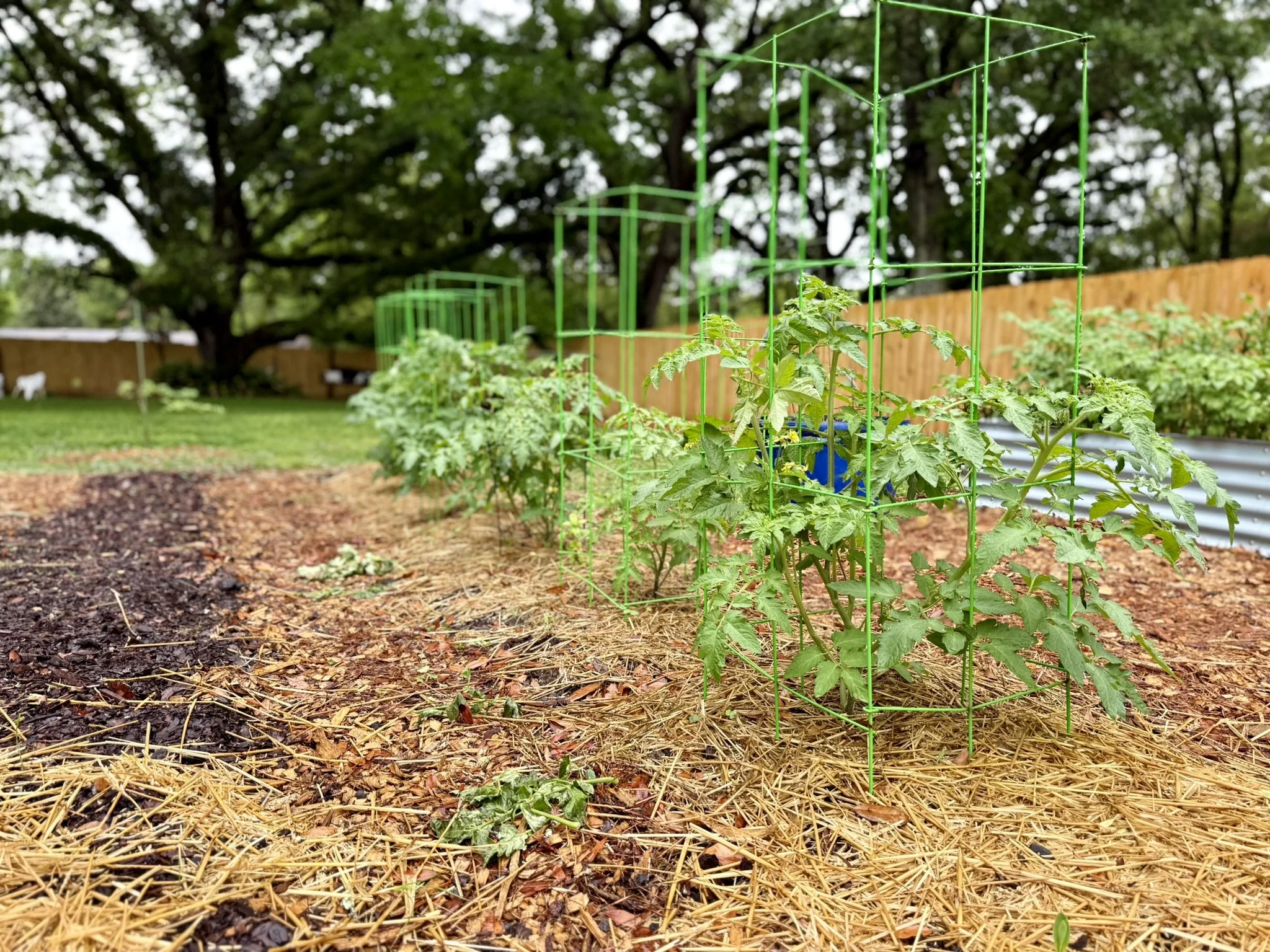
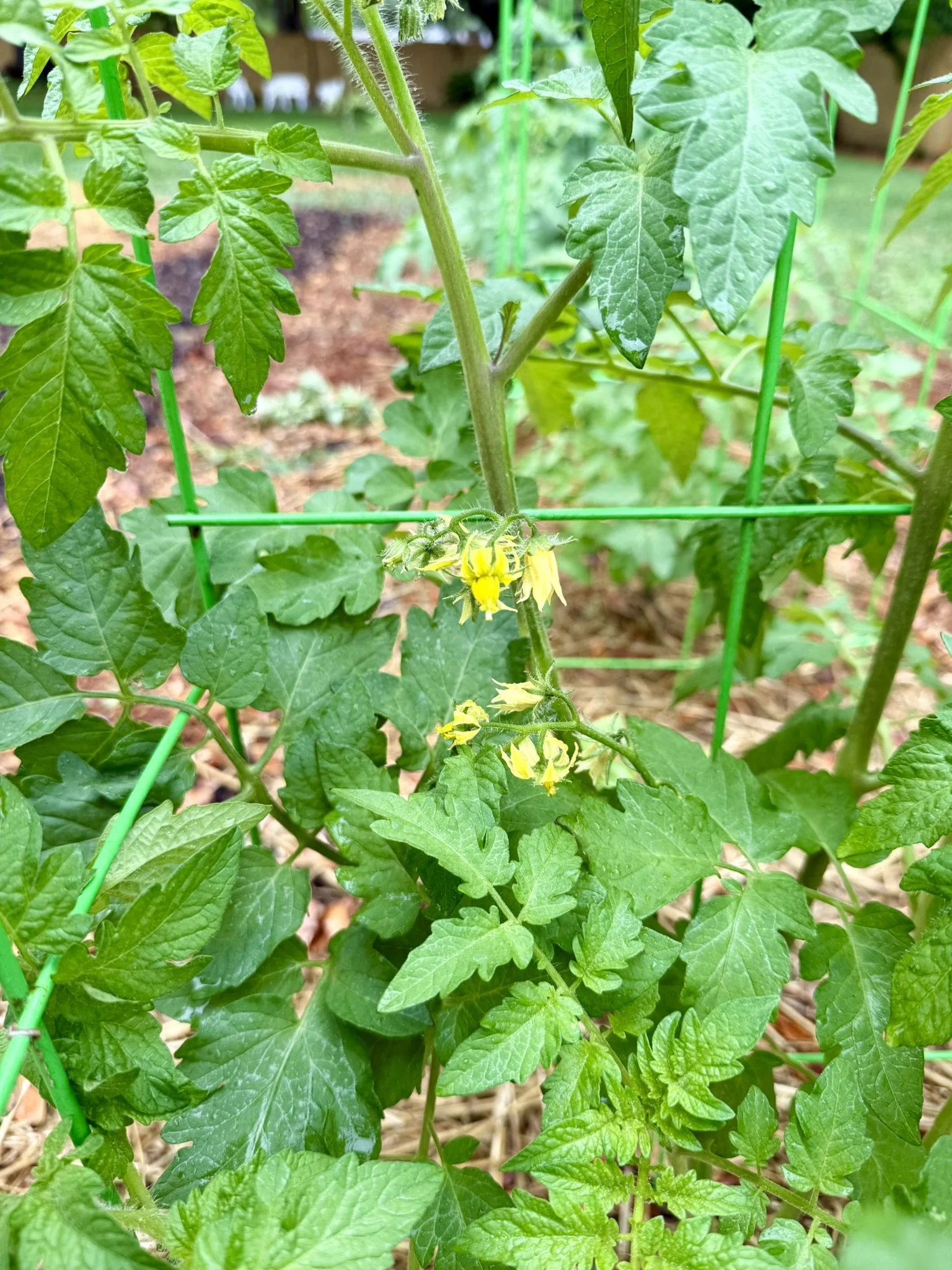
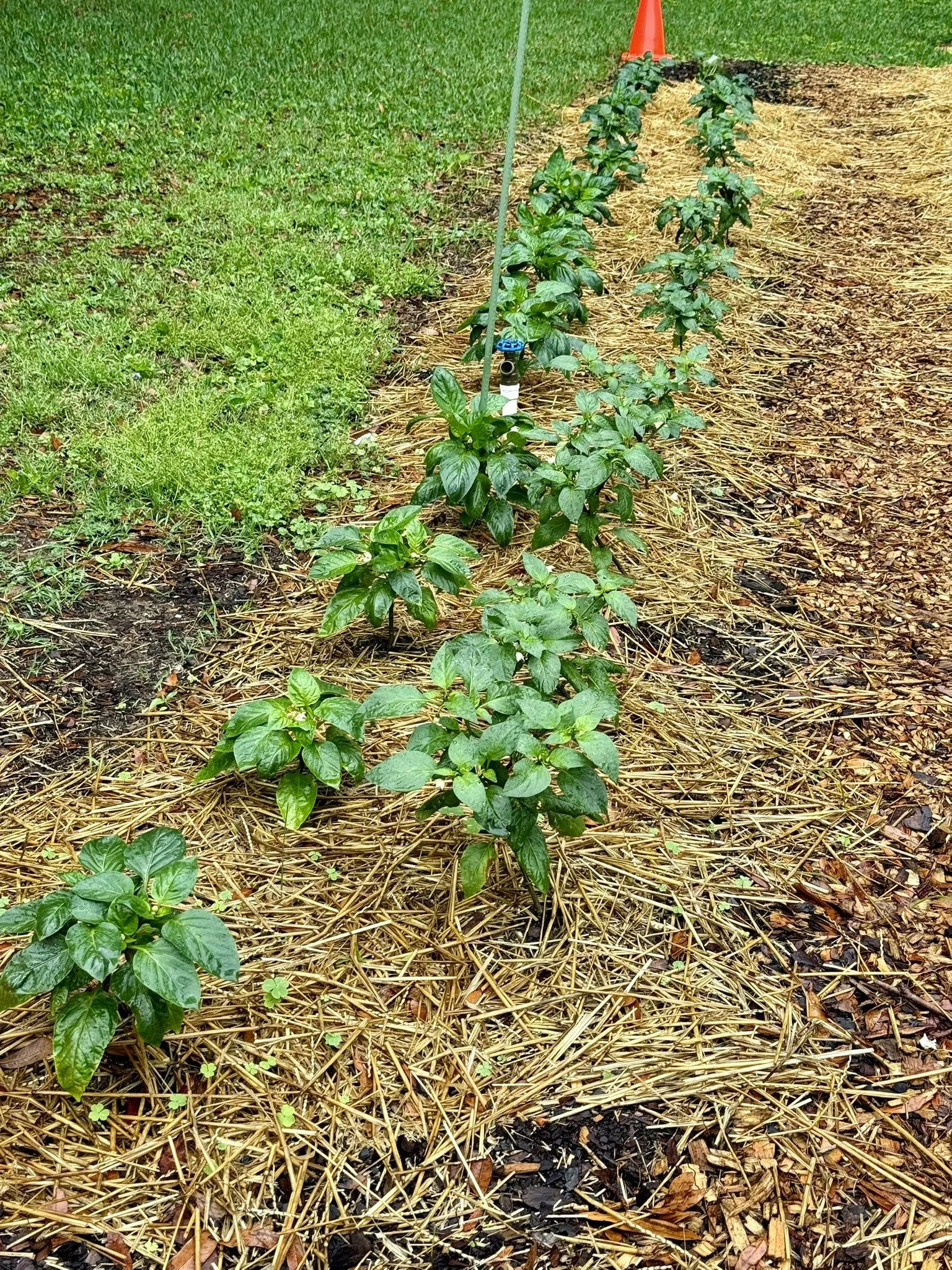
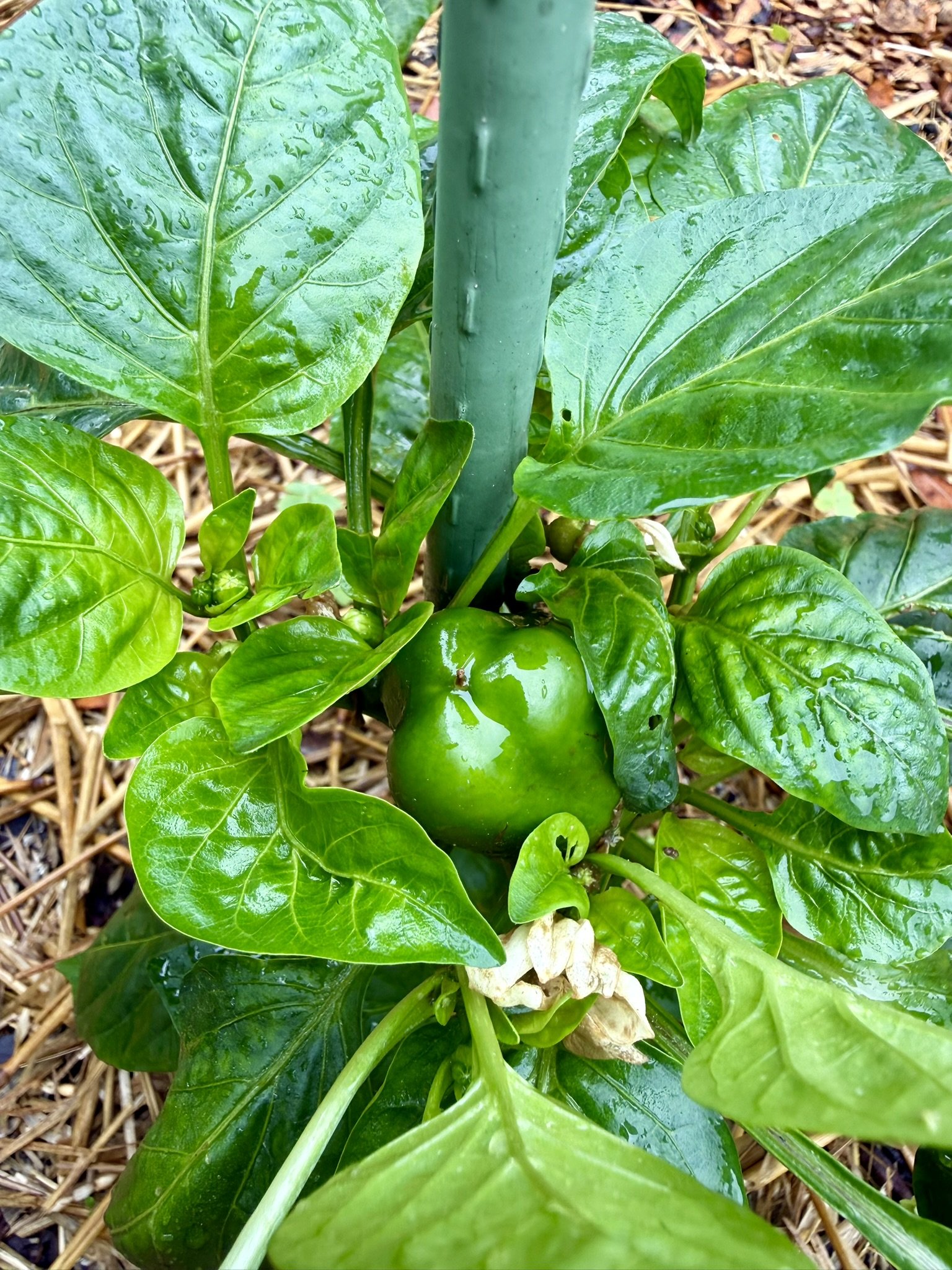
Then, there are the summer staples. Our Tomato rows are looking sturdy and well-supported; we’re already seeing the first delicate yellow blossoms, which is the ultimate green light for the season ahead. Right next to them, the Pepper row is hitting its stride. While most are still building their structure, we were thrilled to find our very first tiny pepper fruit glistening with rainwater. It’s a small win, but it makes all the weeding and watering feel entirely worth it.
The Back Porch Nursery: The Next Generation
Every garden needs a waiting room, and for us, that’s the back porch. This "nursery" area is where we keep a close eye on the newcomers and the delicate starts that aren't quite ready for the main stage of the yard. After the rain, this little corner looks like a crowded, vibrant laboratory of future growth.
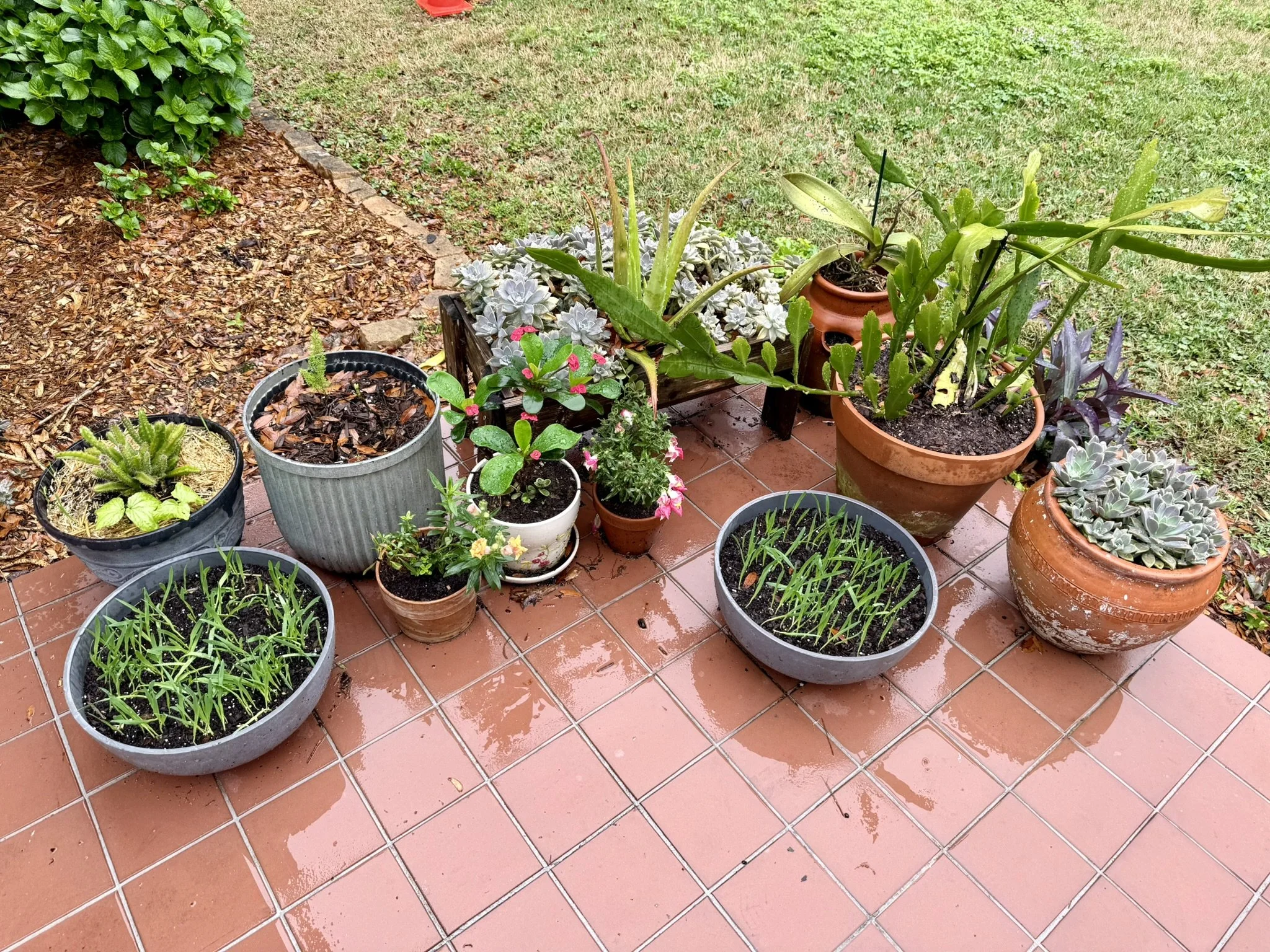
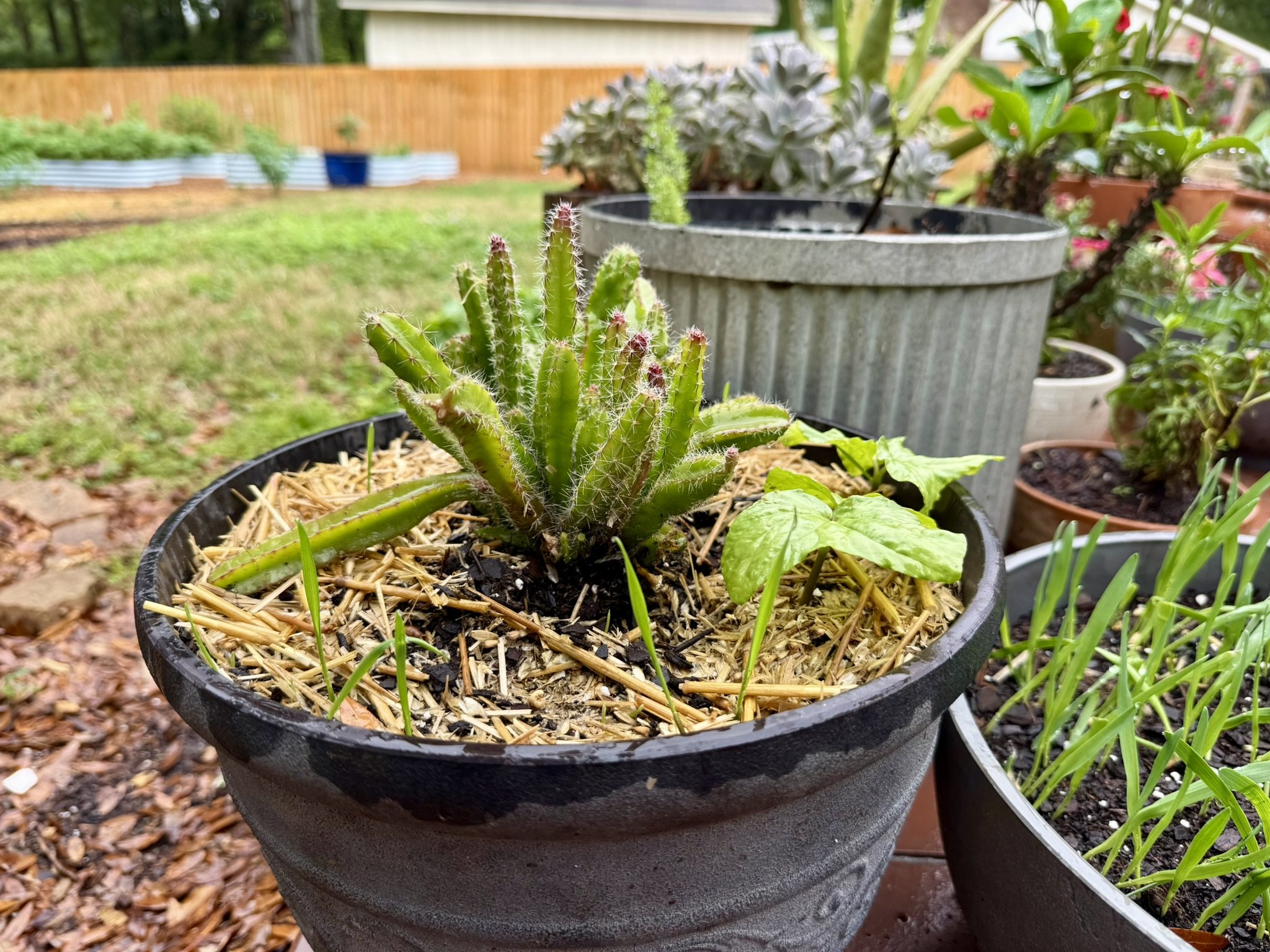
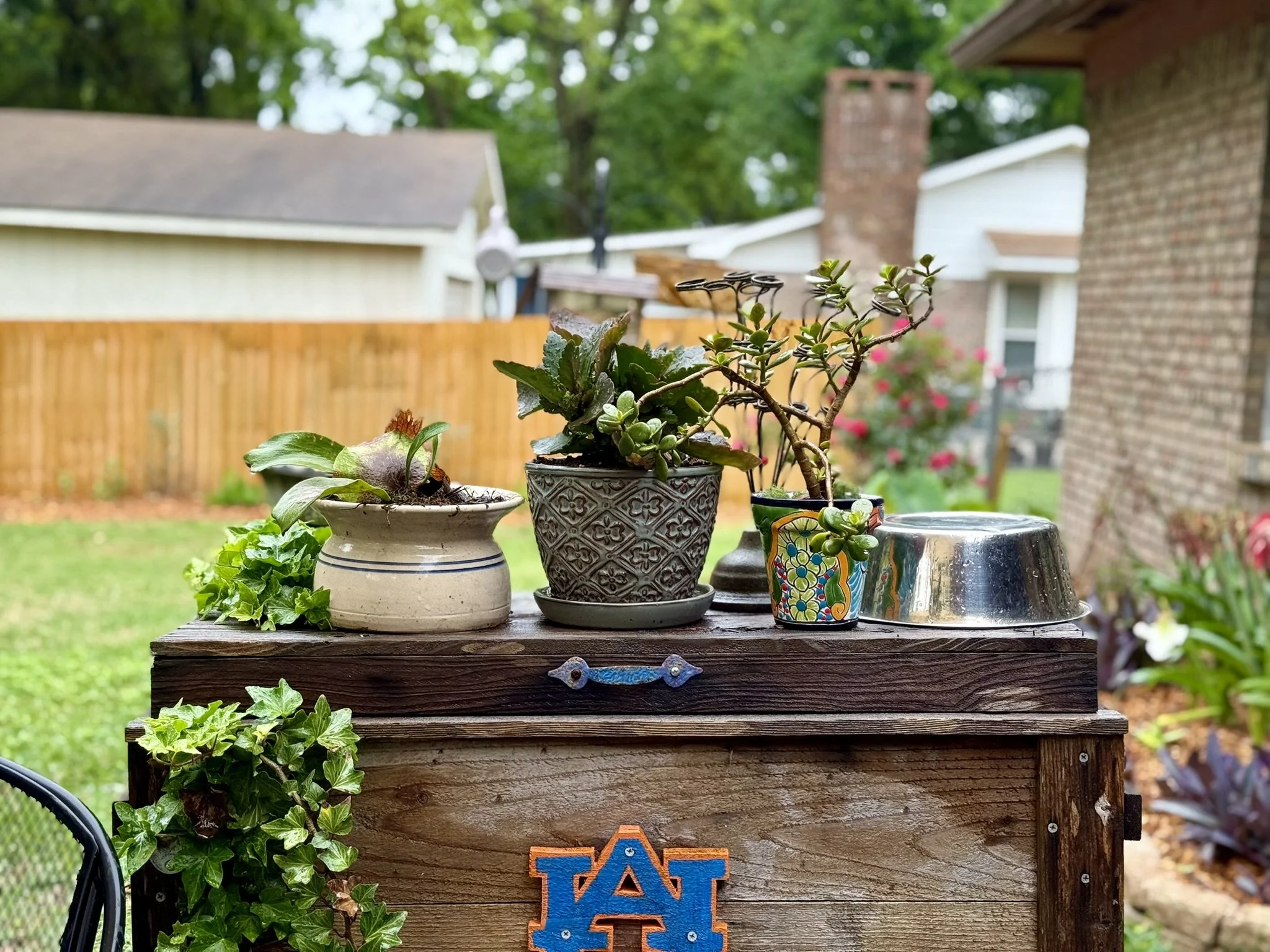
We’ve also got several seed trays and smaller starter pots lined up, holding everything from future perennials to the next round of garden accents. There’s something deeply satisfying about seeing these tiny sparks of green—some just barely poking through the soil—knowing that in a few months, they’ll be the ones anchoring a bed or filling a gap in the border. It’s the cycle of the garden in miniature, tucked away right outside our back door.
The Garden Mascots: Supervisors and Visitors
No tour would be complete without the local "management." While we do most of the heavy lifting, we definitely aren't the only ones enjoying the yard—though some are more helpful than others.
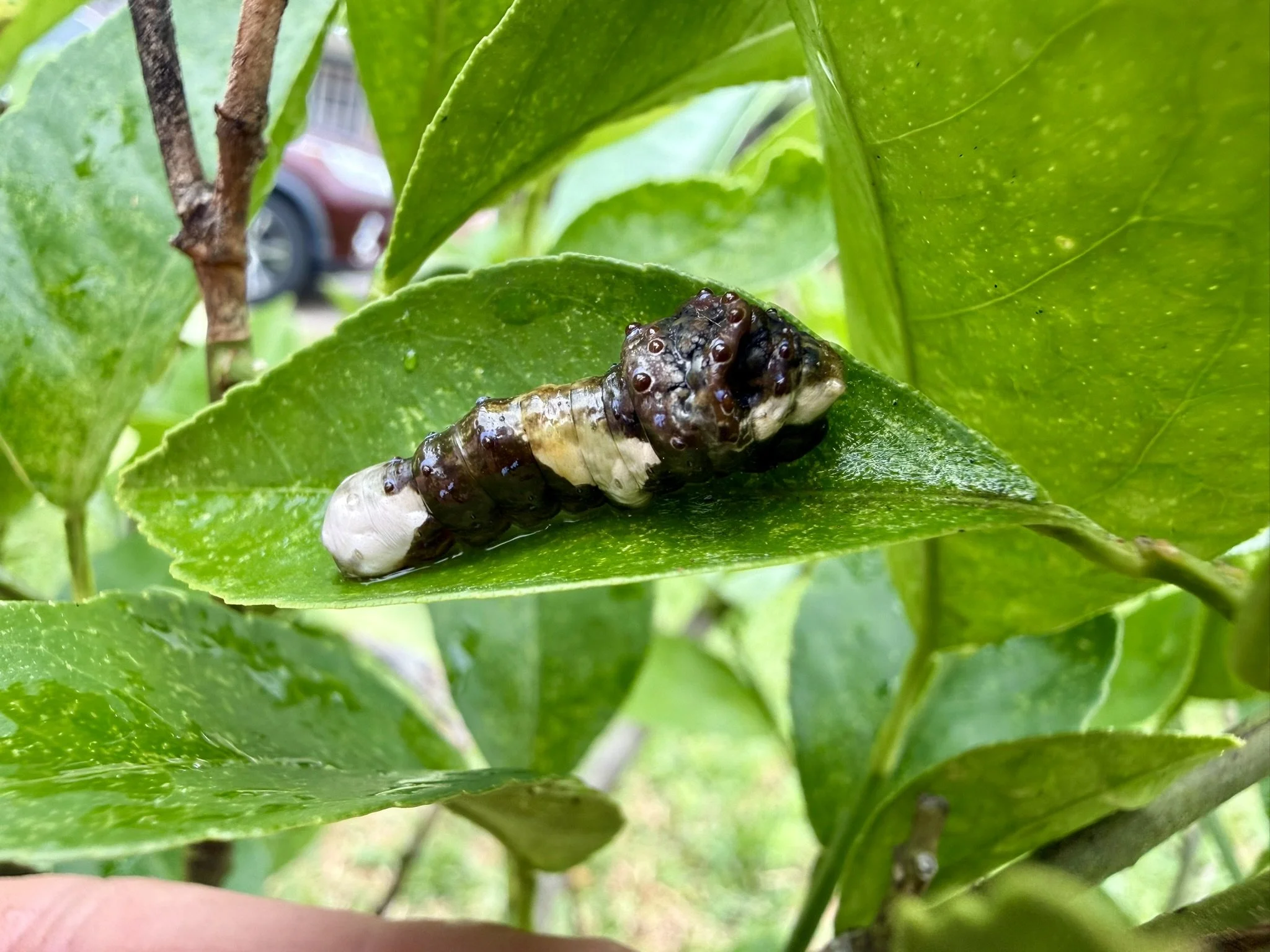
We recently spotted a fascinating visitor busy on a leaf of our Lime tree: a Giant Swallowtail butterfly in its caterpillar stage. These caterpillars are masters of disguise, mimicking bird droppings to stay safe from predators, but their presence is a huge win for the garden. Since citrus is their primary host plant, we’re more than happy to share a few leaves if it means seeing those massive, dark-winged butterflies fluttering around the yard later this summer. It's a reminder of the ecosystem we're building here; the garden isn't just for us, it's for the local wildlife, too.
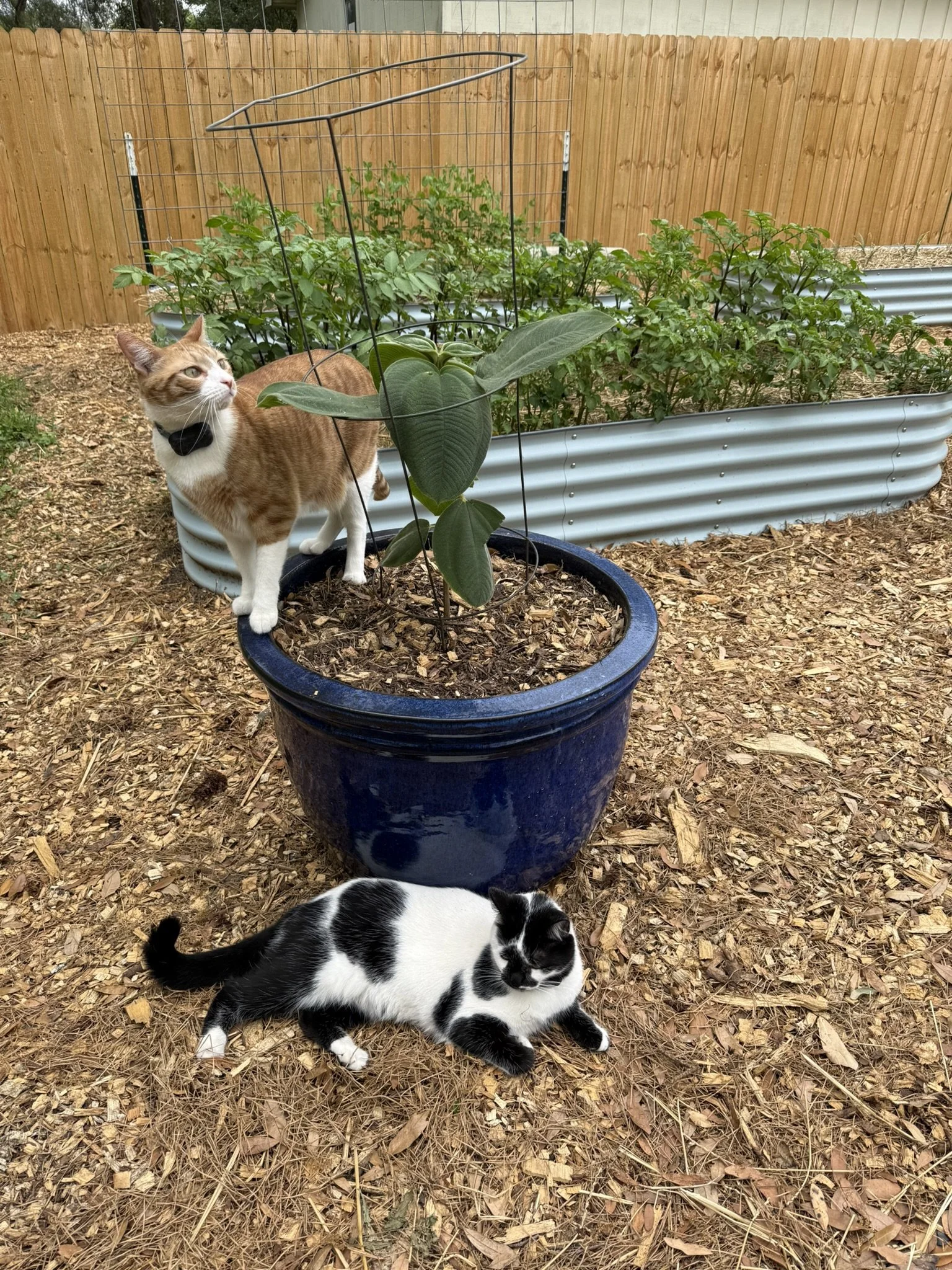
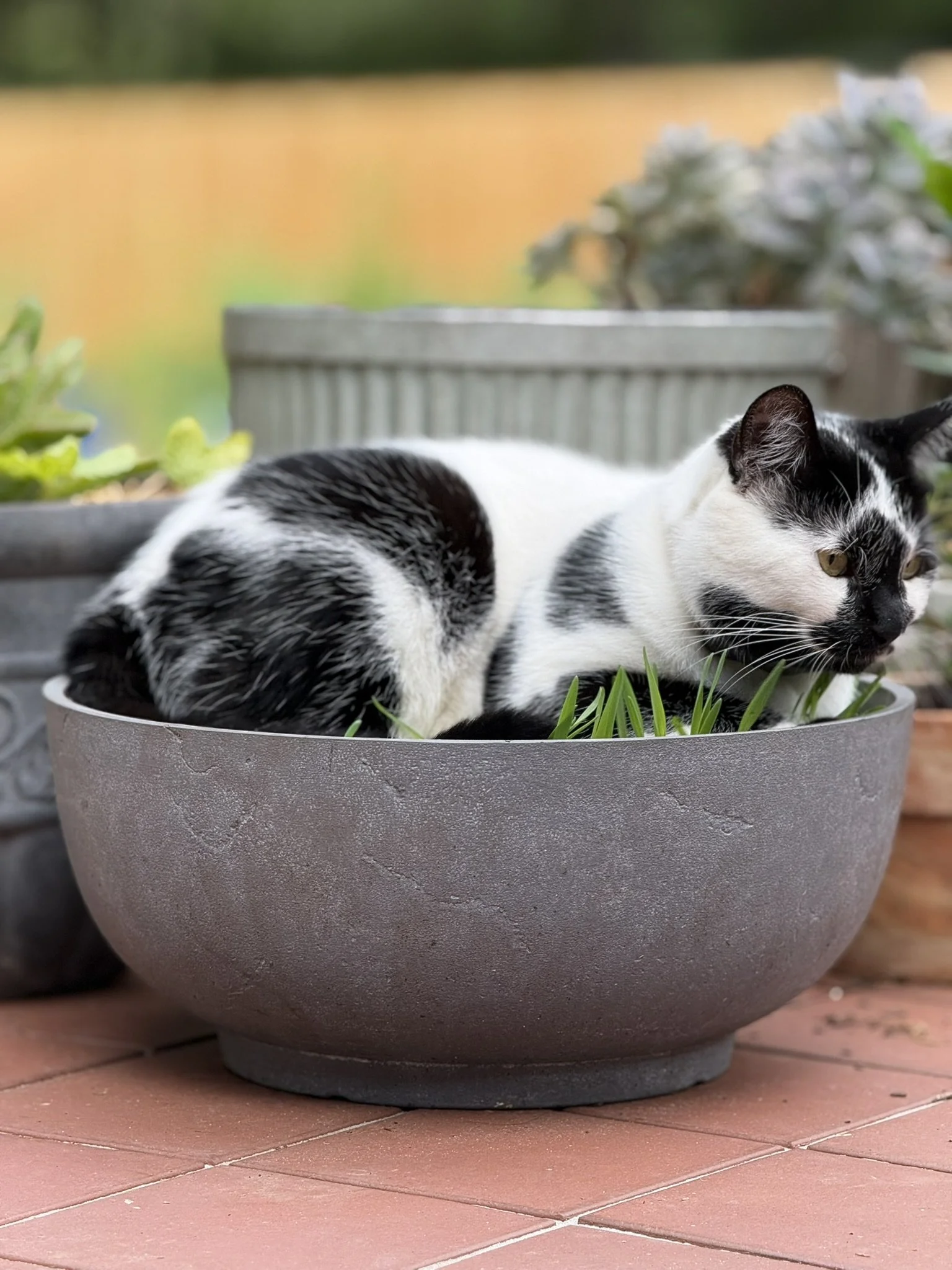
Then, of course, there are the official site supervisors. Scout, our black-and-white resident, takes his job very seriously, usually patrolling the perimeter or finding the perfect shady spot to watch the plants grow. Meanwhile, Yoda, our orange explorer, prefers a more hands-on approach to garden inspection. Whether they’re stalking through the grass or napping near the porch nursery, the garden wouldn't feel like home without them.
Closing Thoughts
These first spring rains have officially kicked off the season, and we can't wait to see what happens next. From the towering Live Oaks and our established Maple to the tiny new peppers and our Giant Swallowtail-to-be, everything feels connected and full of life. Thanks for taking this soggy stroll through the yard with us!
