2026 CW32- Gardener Math
I have a history with clearance plants (Check out “The Home Center Rescue Mission” from the 2026 CW17 - Glad for Gladiolus! post) … and this week I have successfully diagnosed myself with what I like to call Gardener Math.
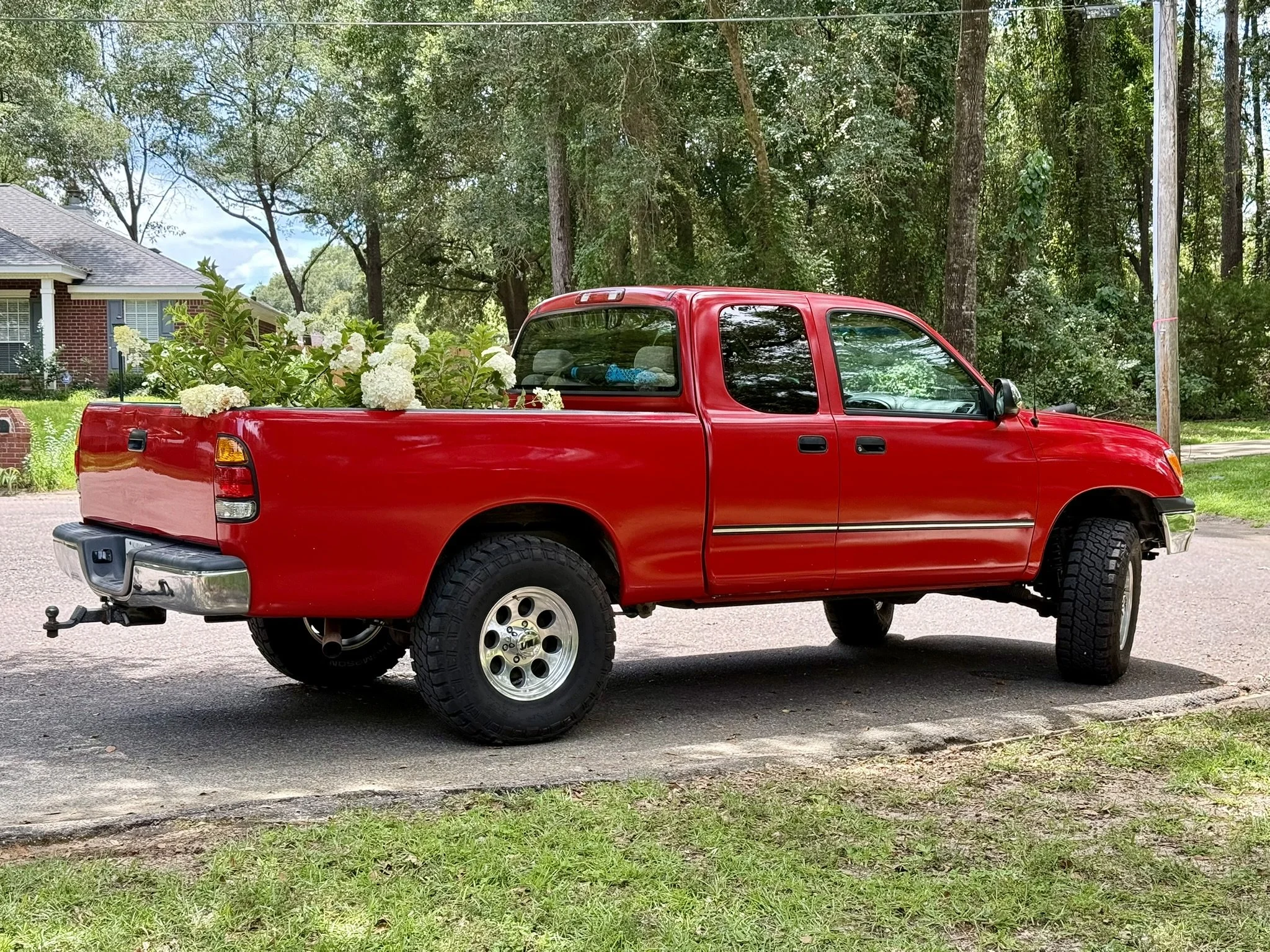
“What’s Gardener Math?” you might ask. Well, if you’re familiar with the internet infamous “Girl Math” then I think you can infer where I am taking this. This week Sara and I were visiting one of our local fruit stands before they close for the season. Given that it was their last day open for a while, most of their plants and produce were on sale! Well, we spotted some Vanilla Strawberry hydrangeas in 3-gallon pots out in front and came to find out that they were a mere $15! Well, we were in the 4Runner at the time but vowed to return. Upon our return, we cleared out their entire remaining stock. (By the way, if you’re interested in how this 27 year old, 350k mile Tundra got this bright red color, check out some of my YouTube videos documenting my restoration of the truck I’ve had since I was 16).
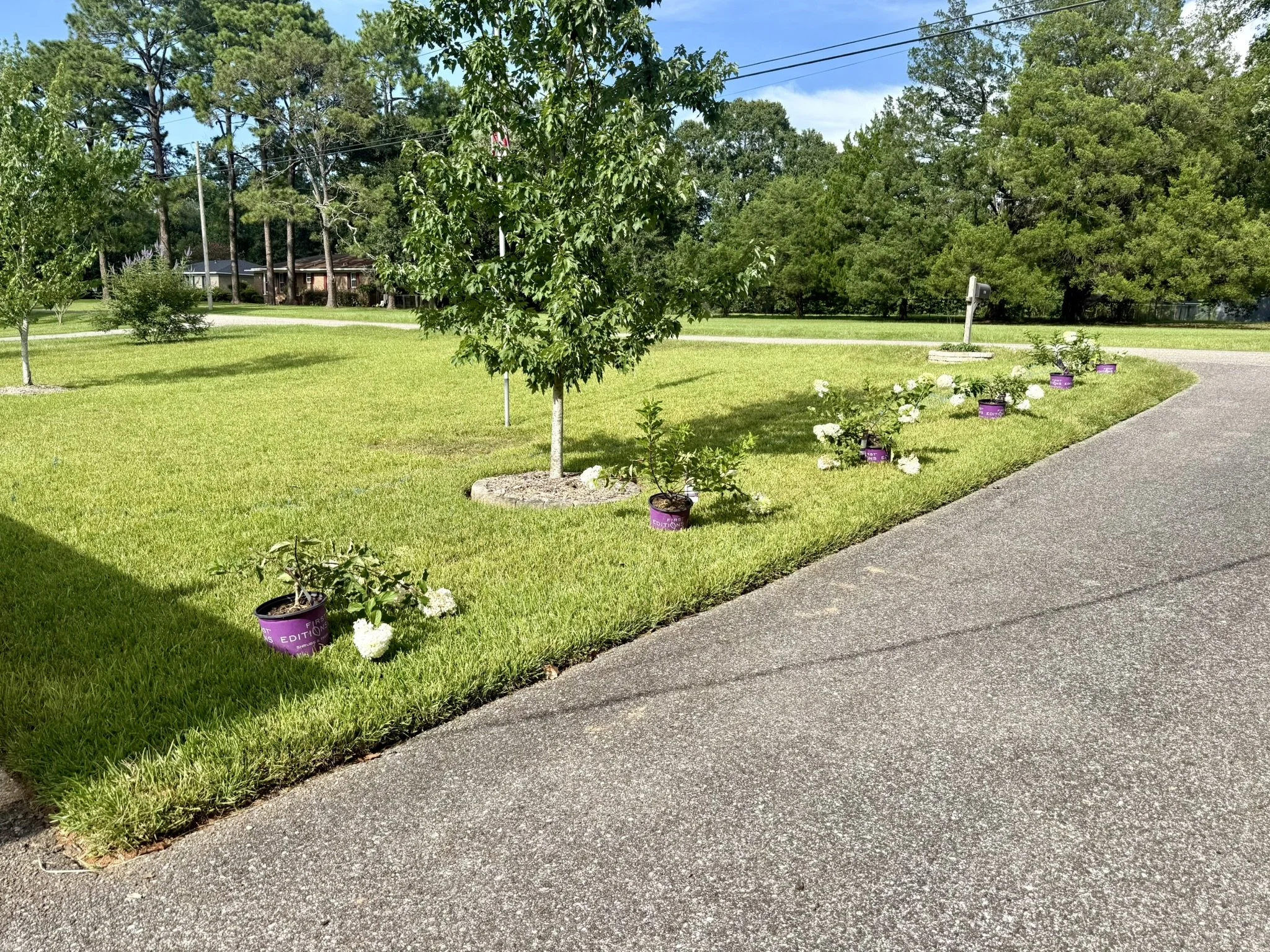
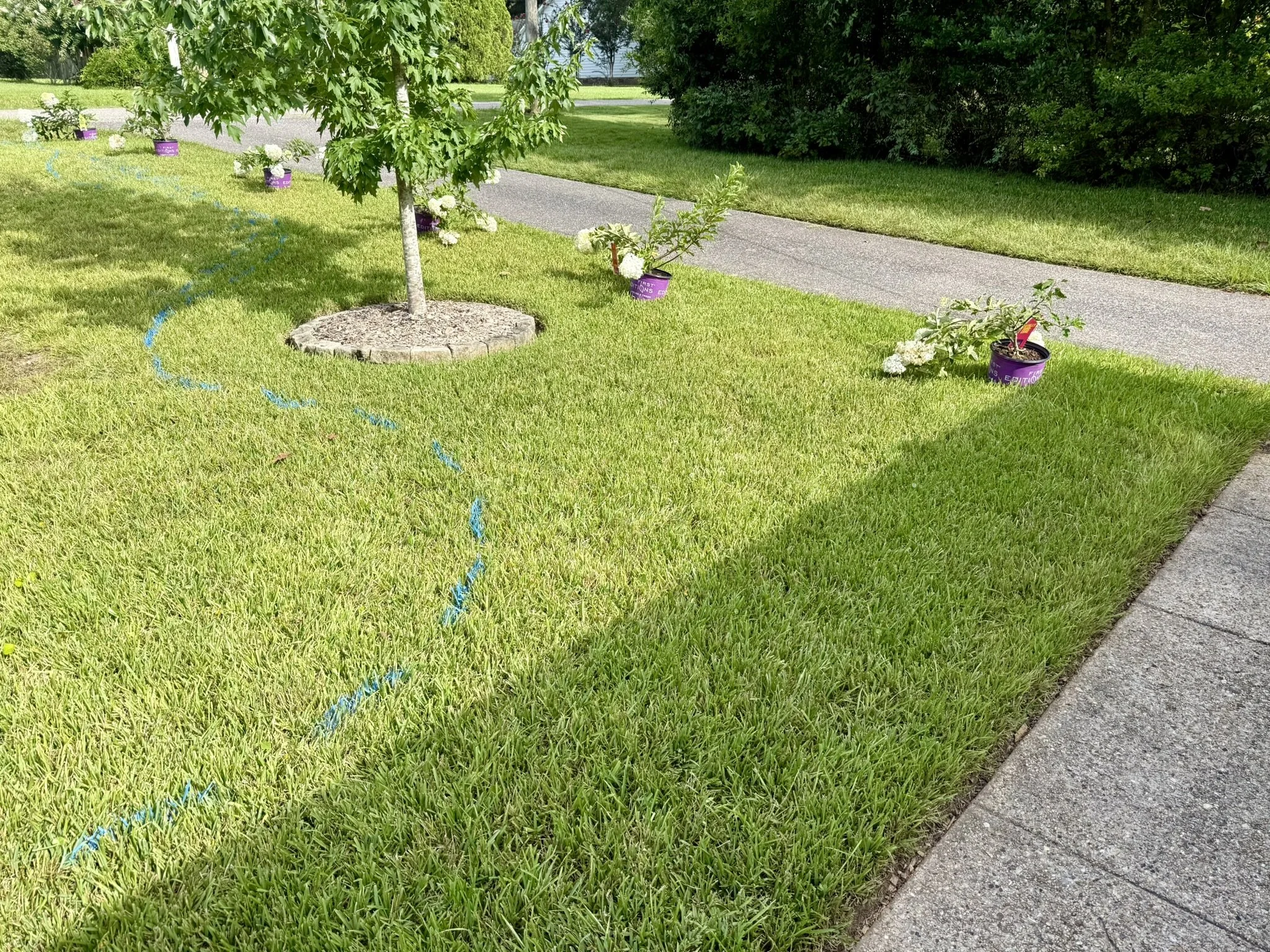
So what? We bought six hydrangeas at $15 dollars which is a deal! Where does the “Gardener Math” come in?? Well, once home we had to ask ourselves where these hydrangeas would go. We landed on arranging them on the north side of the driveway… One thing led to another, and before long I had the marking paint out to draw up a new bed in the front yard! Now, our clearance hydrangeas coming in at a whopping $90 have resulted in a plan costing deep 4 figures. Stay tuned in the coming weeks as we rent a sod cutter, destroy our gorgeous front lawn, reposition irrigation systems, and plant a huge new flower bed!
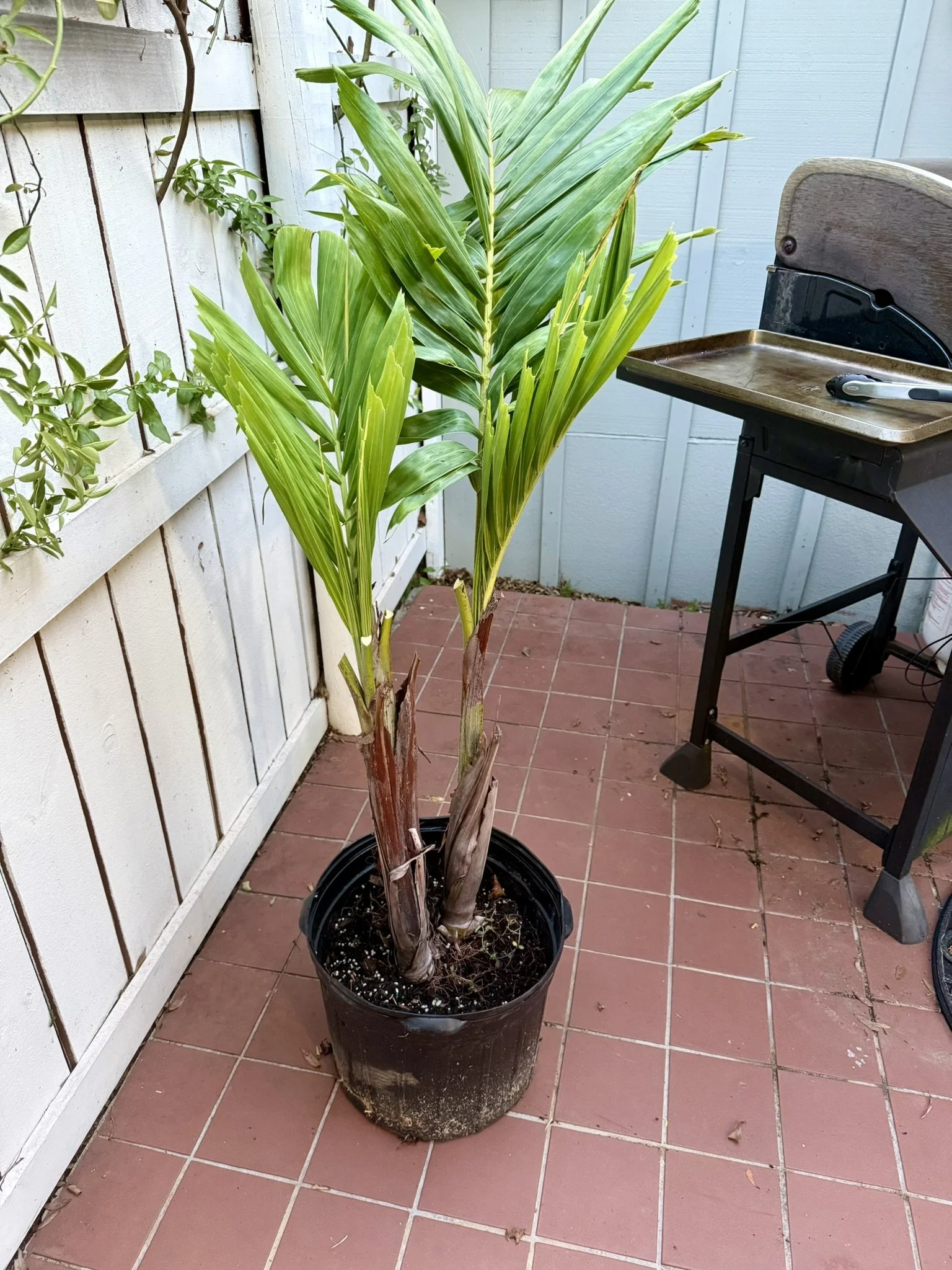
The gardener math is not constrained to the front yard! We also purchased this clearance Majesty Palm which is destined for our library. Unfortunately, our Library does not receive enough light to keep such a tropical species healthy, so I am going to have to invest some time and money into a grow light solution that fits the theme of the room. Stay tuned for that update as well!
Basket Renovations
This week did not only consist of spur-of-the-moment gardening decisions. Sara and I have also been planning to renovate the hanging baskets, window box, and mailbox bed. Everything in these areas has performed great, but almost a little too much so! The Coleus has completely taken over the hanging baskets, choking out the Dwarf Dahlias and the Potato Vines. The Lilies at the mailbox have been past their prime ever since the large bulbs died off last year.
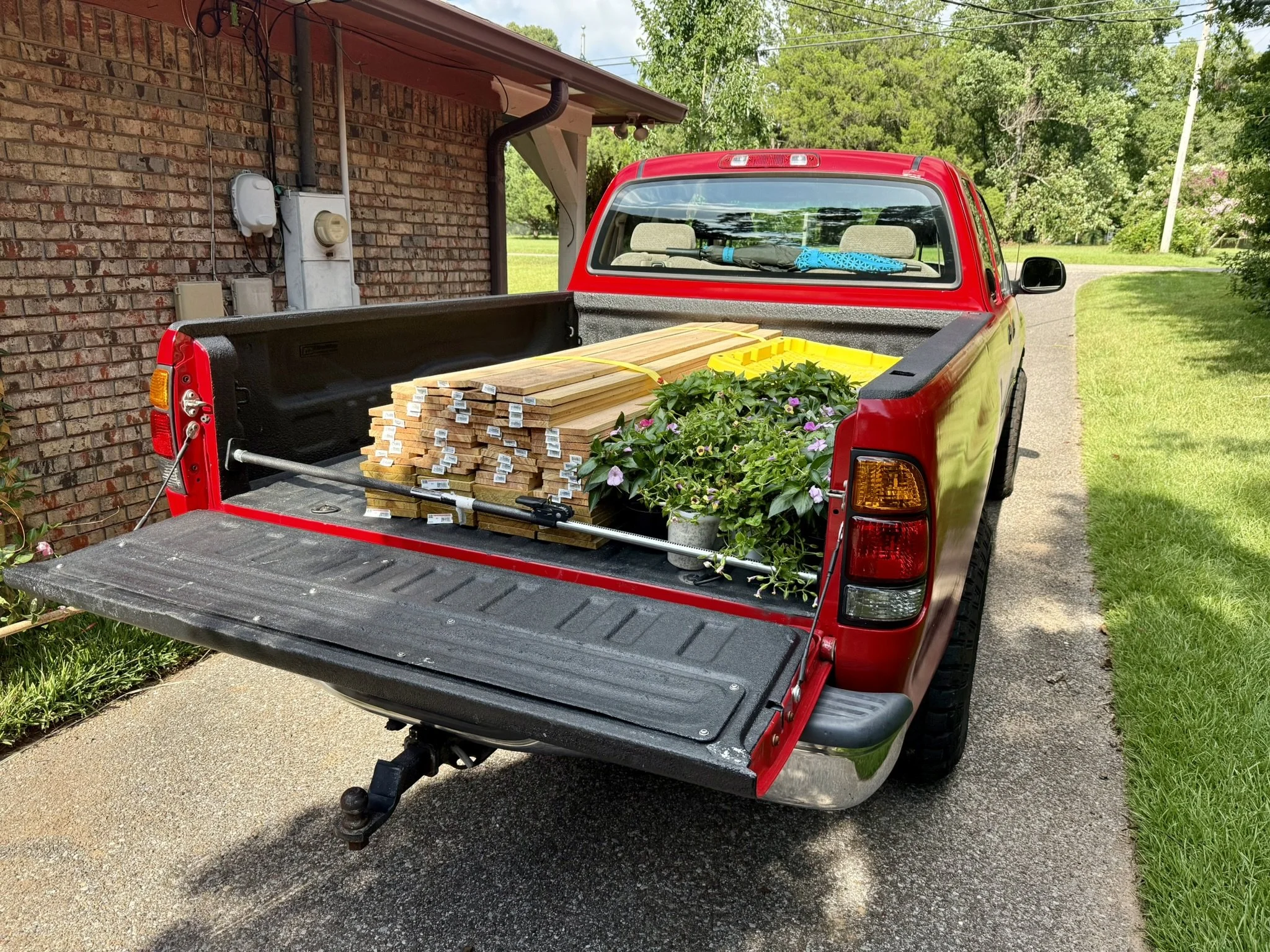
As with all garden renovations, step one is shopping! We headed up to a local nursery Saturday morning to see what was available. Much to our surprise, there was still a solid selection of annuals available despite the peak summer heat we’re experiencing right now. Here you can see the truck loaded down with new annuals, as well as pickets to complete the front facing portion of the privacy fence.
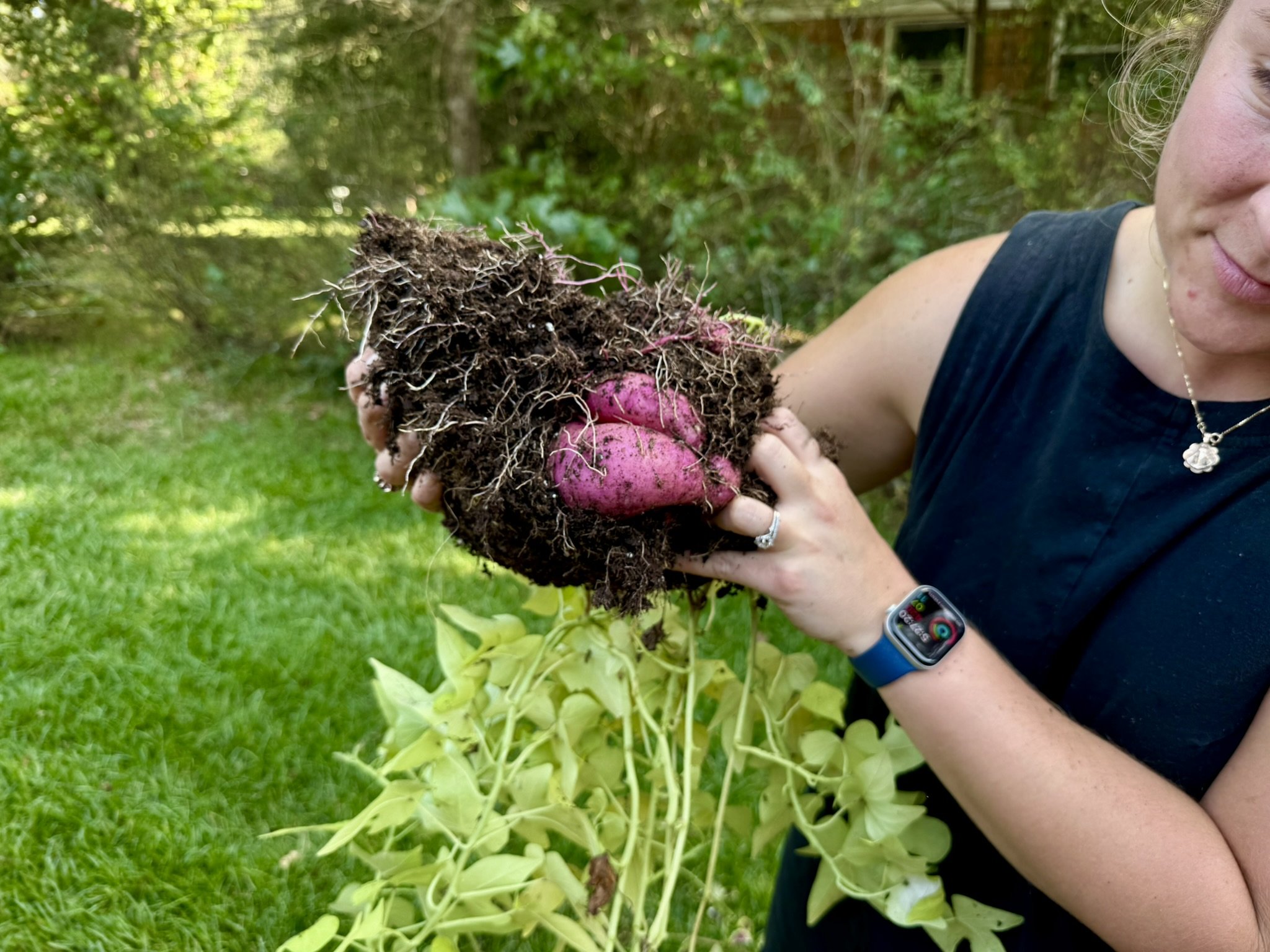
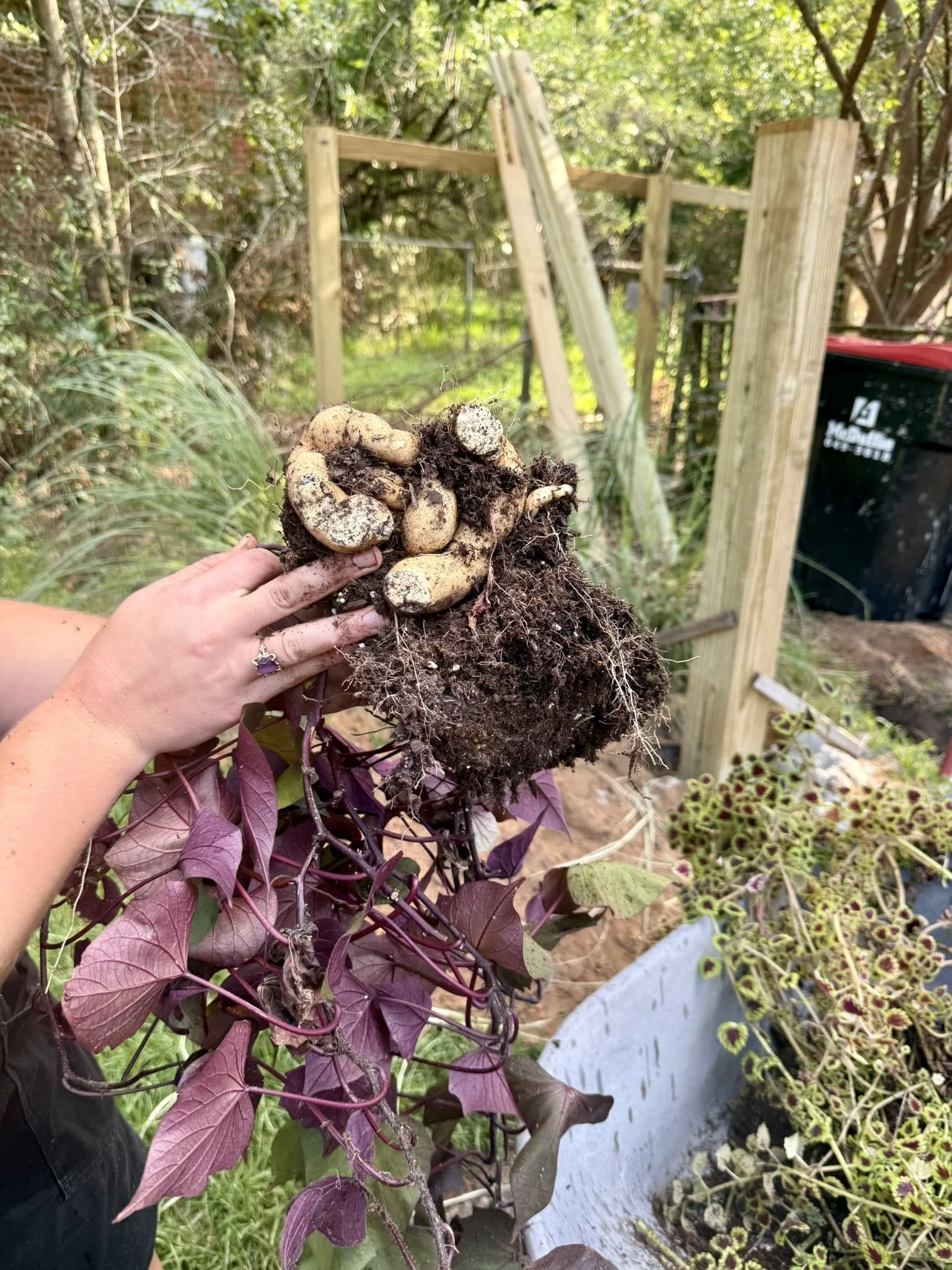
Step two? Well, that’s demolition of the existing arrangements! The most entertaining part of this was certainly pulling the Potato Vines (or what was left of them) from the hanging baskets. Here we were delighted to find some sizable potatoes! Oddly enough, the purple vines house white potatoes whereas the green vines house purple potatoes!
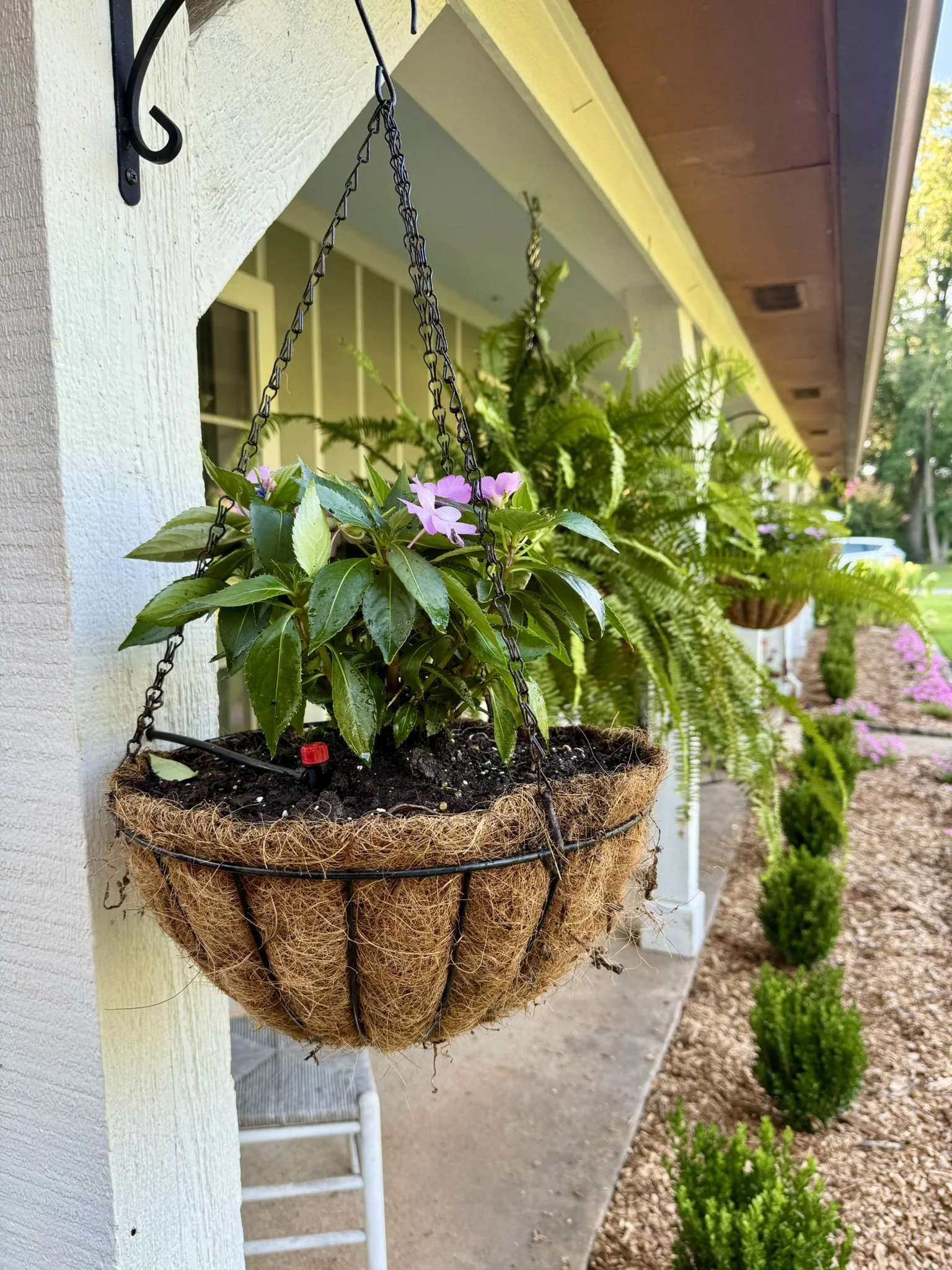
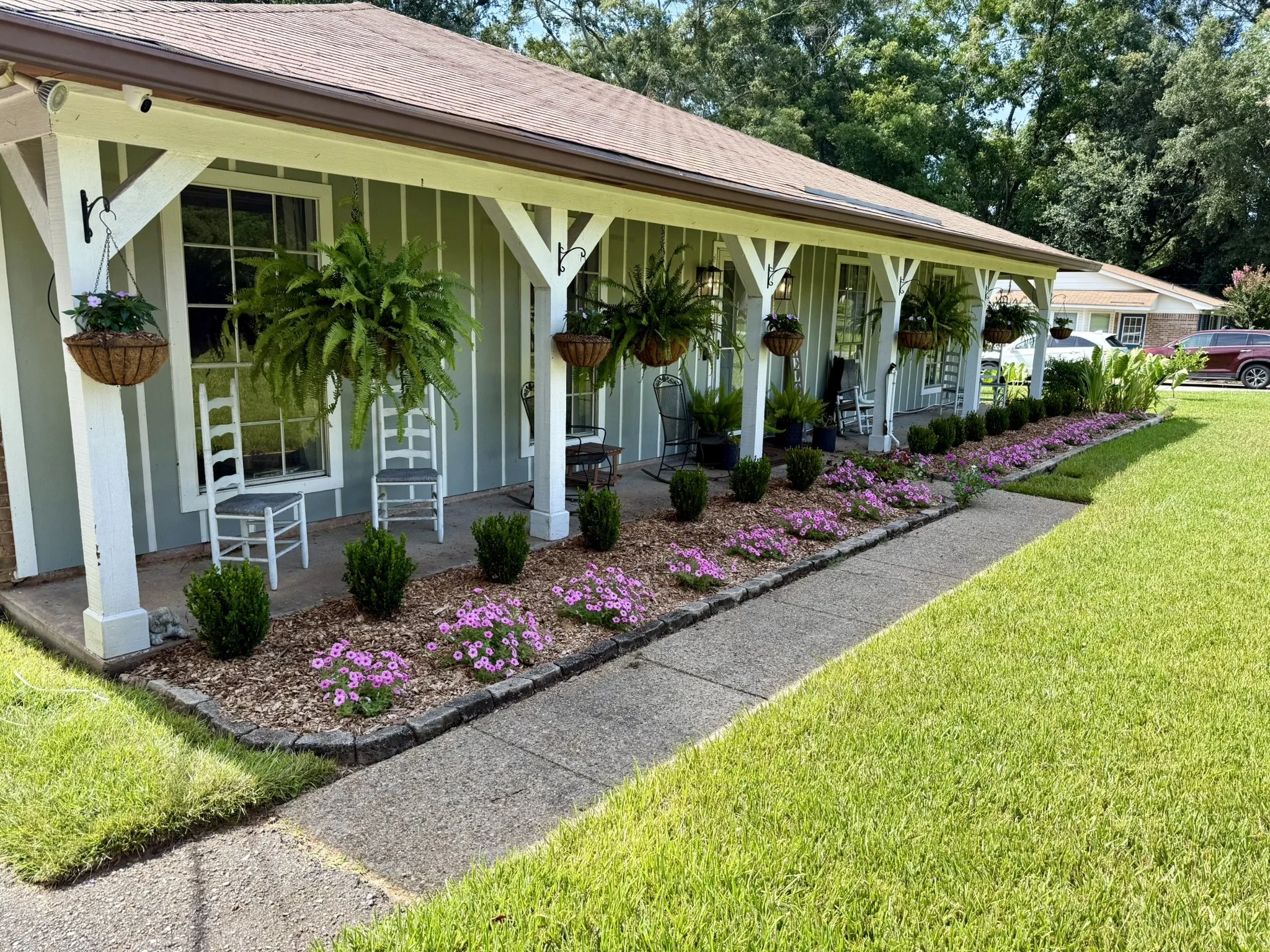
For the front hanging baskets, we decided to go simple as not to overcrowd these 14-inch pots again. We selected some Blush Pink Sunpatiens which perfectly compliment the Bubblegum Supertunias in the front beds! These may be a bit underwhelming at the moment coming from the gargantuan coleus, but they will undoubtedly fill out these planters by the end of the season!
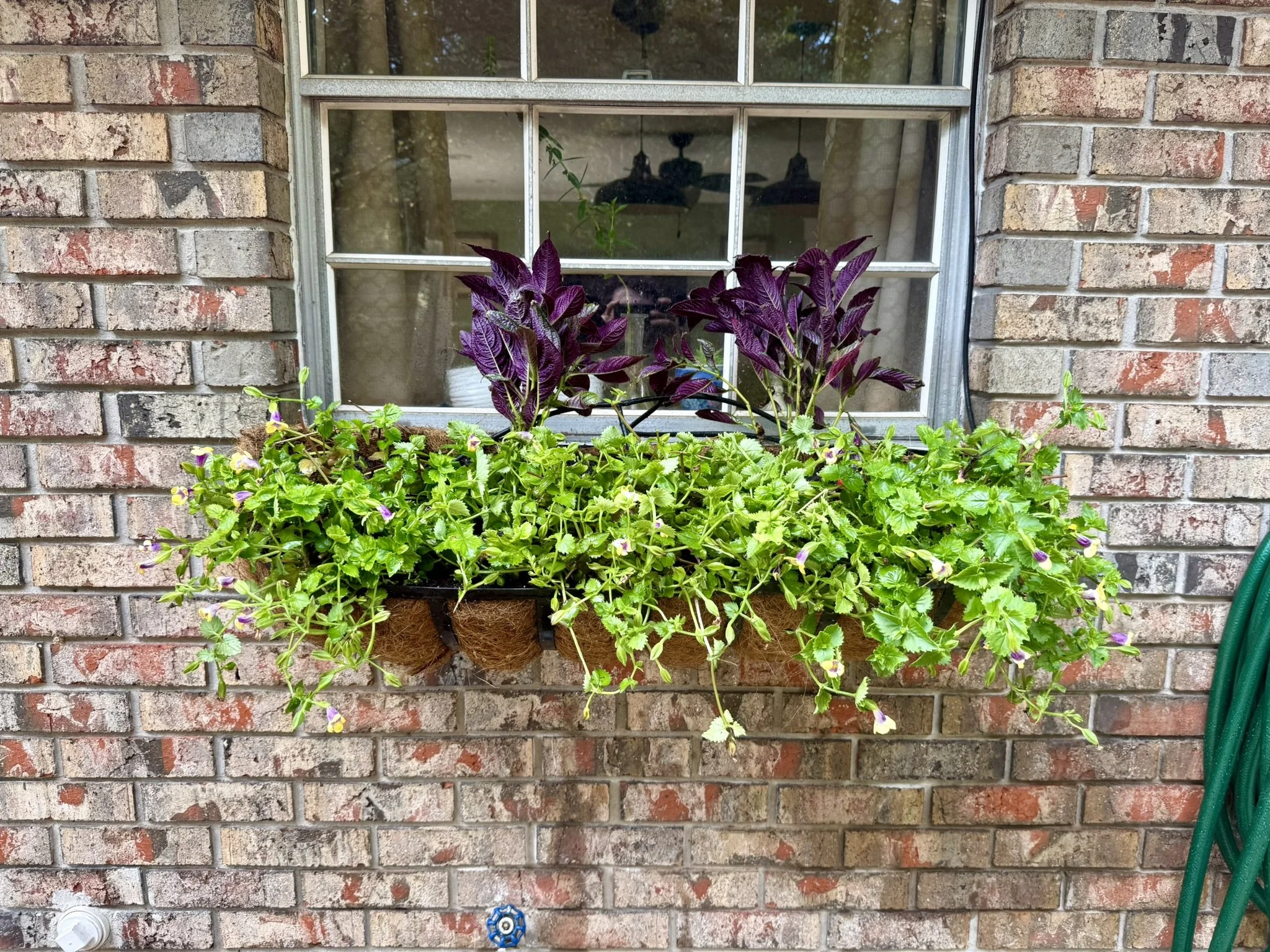
Around the south side of the house along the driveway, we also rescued the kitchen window box from its overgrowth of coleus. For this location, we chose two new-to-us varieties. In the back we chose this beautiful deep purple Persian Shield. This plant acts as a perennial in our zone and will eventually reach a height of four feet once transplanted into the ground! For now, it will serve as a great background to the Moon Yellow Wishbone Flower.
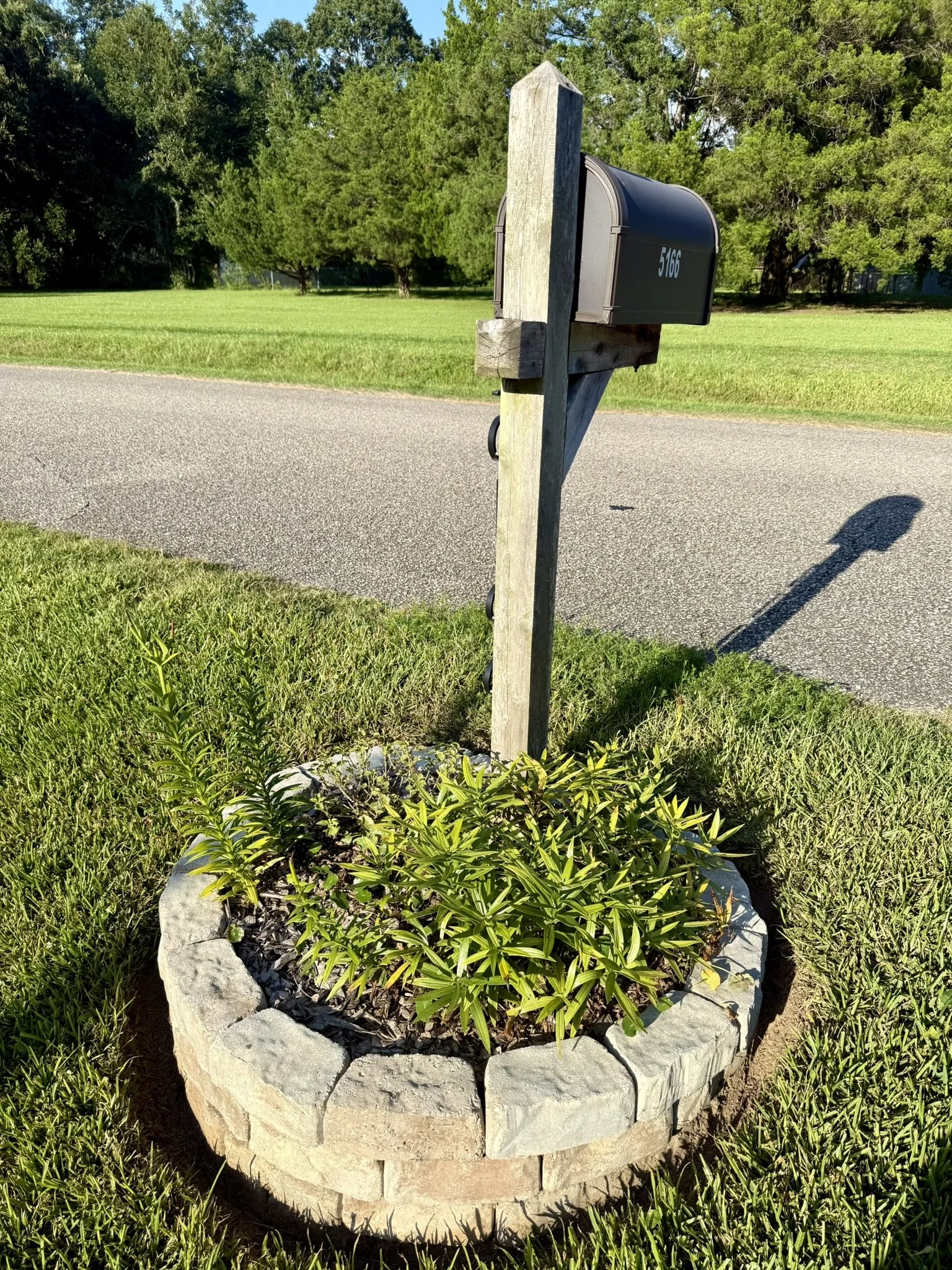
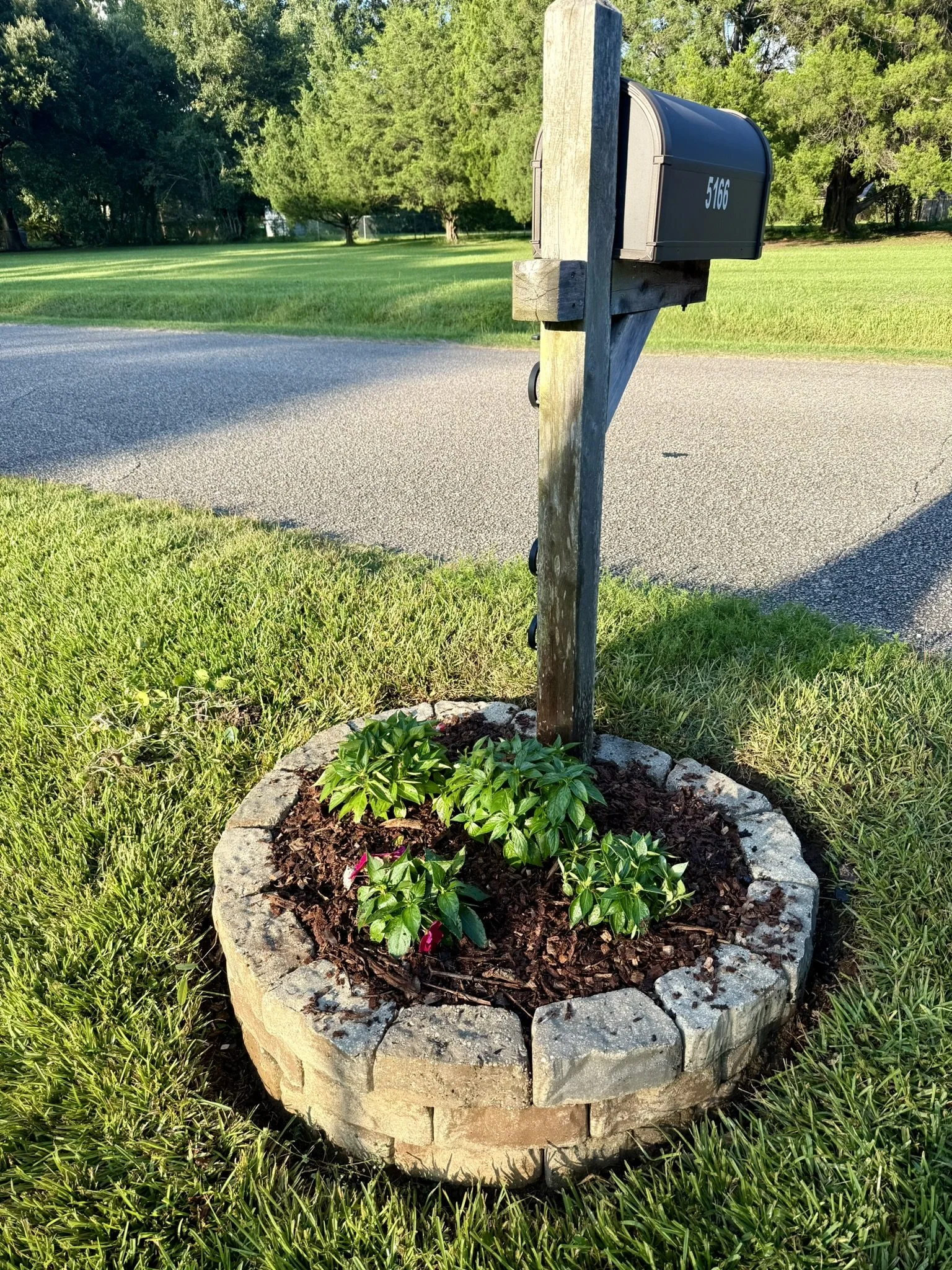
Moving to the mailbox bed, we pulled the Lantana and the struggling Lily Bulbs out as well as cleaned out the old mulch. In its place, we installed a variety of Sunpatiens from white to deep pink. Hopefully these will fill out by the end of the season and provide a mound of color near the road.
Bacillus Thuringiensis!
No, this is not another one of my Harry Potter themed made up subtitles! Bacillus Thuringiensis (known broadly as B.T.) is a niche solution to a midsummer heat problem!
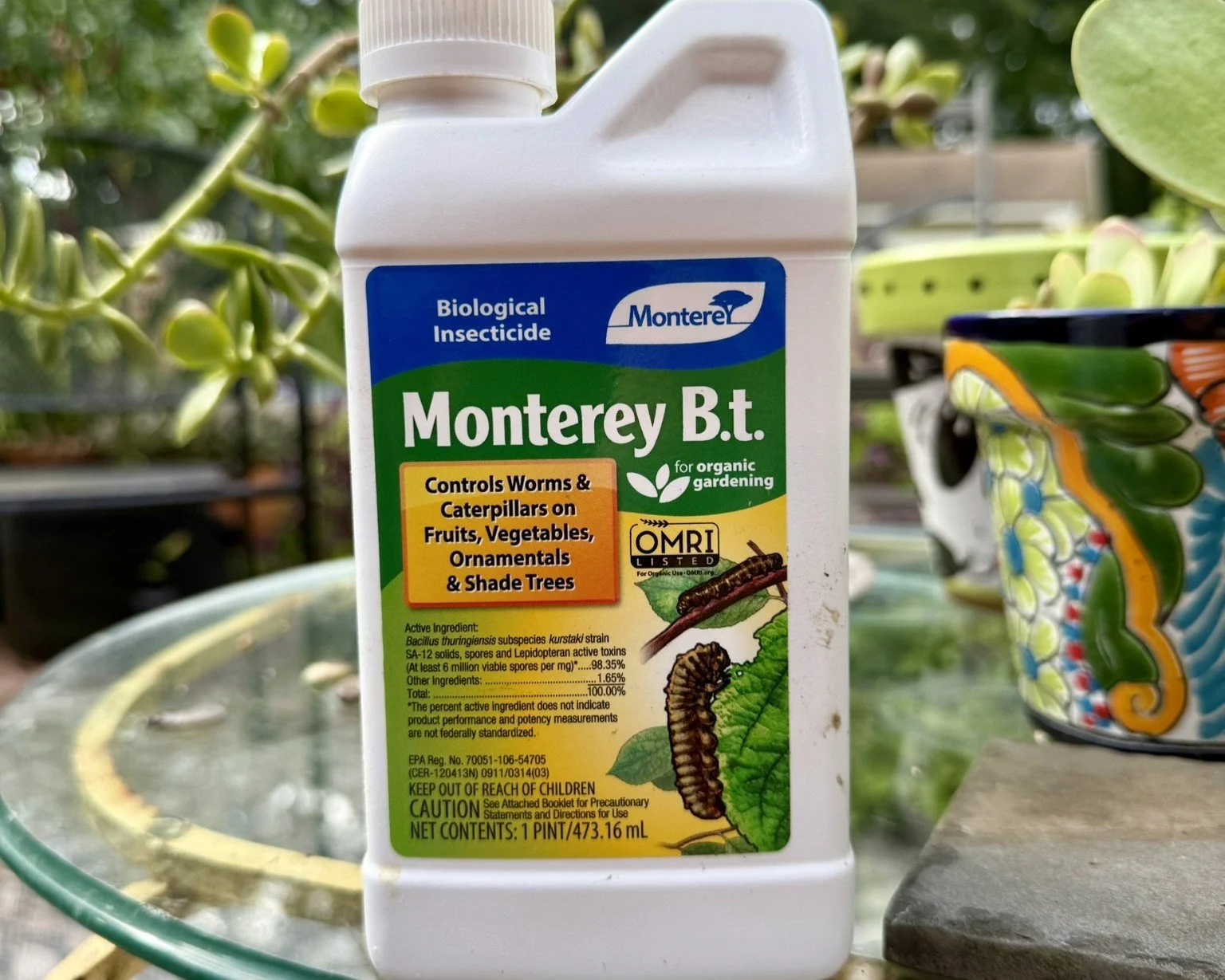
This time of year, especially when the garden remains moist with rain and cooked with the long sunny days, many of our vegetable plants fall prey to various types of caterpillars. Generally, this can be a difficult problem to combat without killing other desired insects, requiring manual removal of pests from each individual plant. Without removal, these caterpillars can wreck harvests by burrowing into fruits, destroy vining crops by boring out their stems (literally called Vine Borers), and decimating foliage.
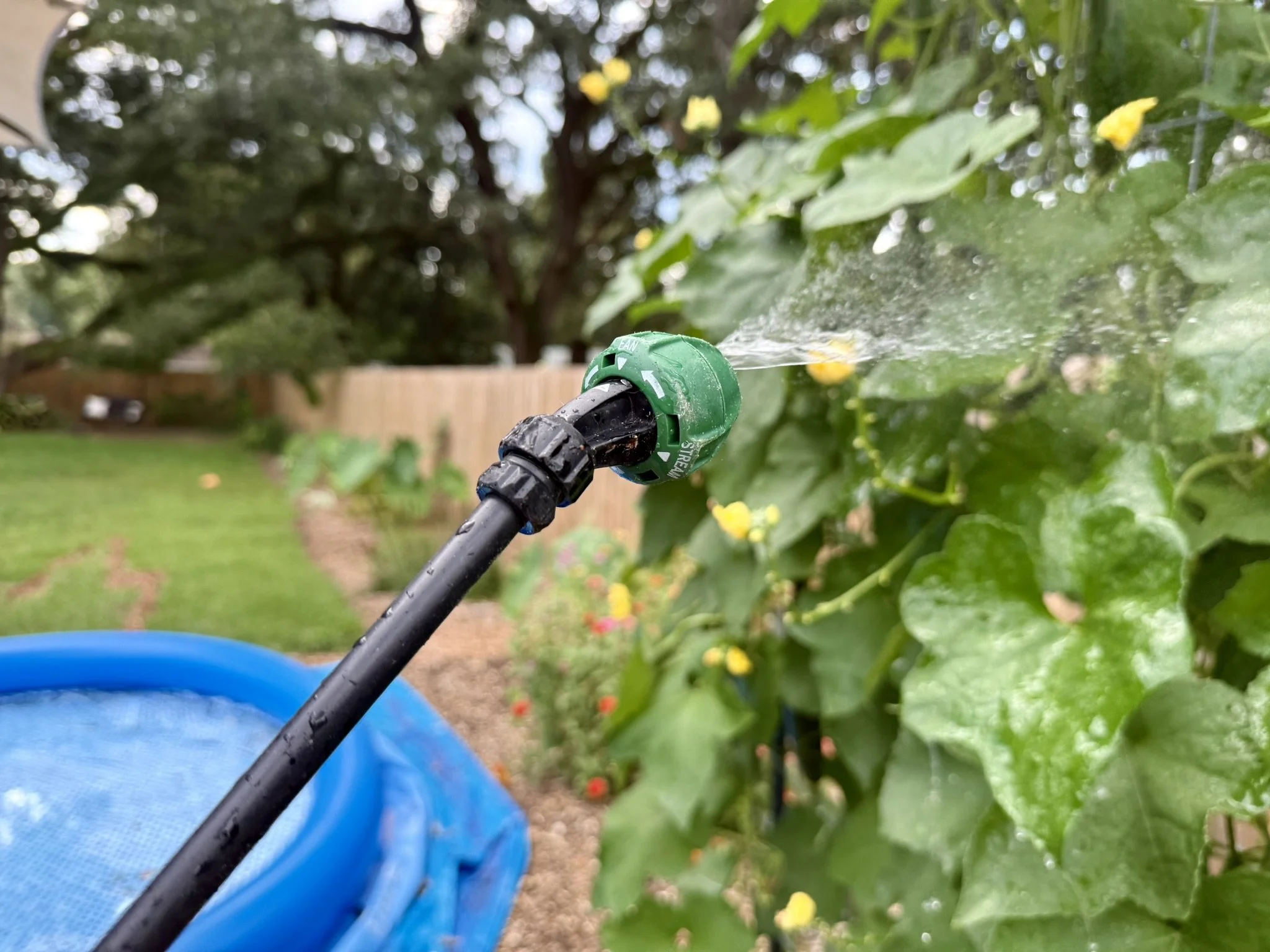
Then, in steps B.T. to save the day! This naturally occurring deterrent is not a synthetic insecticide wiping our beneficial bugs, nor is it an abrasive mechanical powder like diatomaceous earth or a harsh chemical like Sevin Dust. Instead, this is a concentrated form of a bacterial infection which only effects caterpillars and worms! Simply spray this solution onto the surface of infected plants, and the pests become infected as soon as they eat a portion of the plant that is coated. This is highly effective, minimally invasive, and cheap to maintain! The only con really is that is washes away with rain or sprinkler usage and must be re-applied. It has saved us countless fruits though!
The Engine Room of the Garden
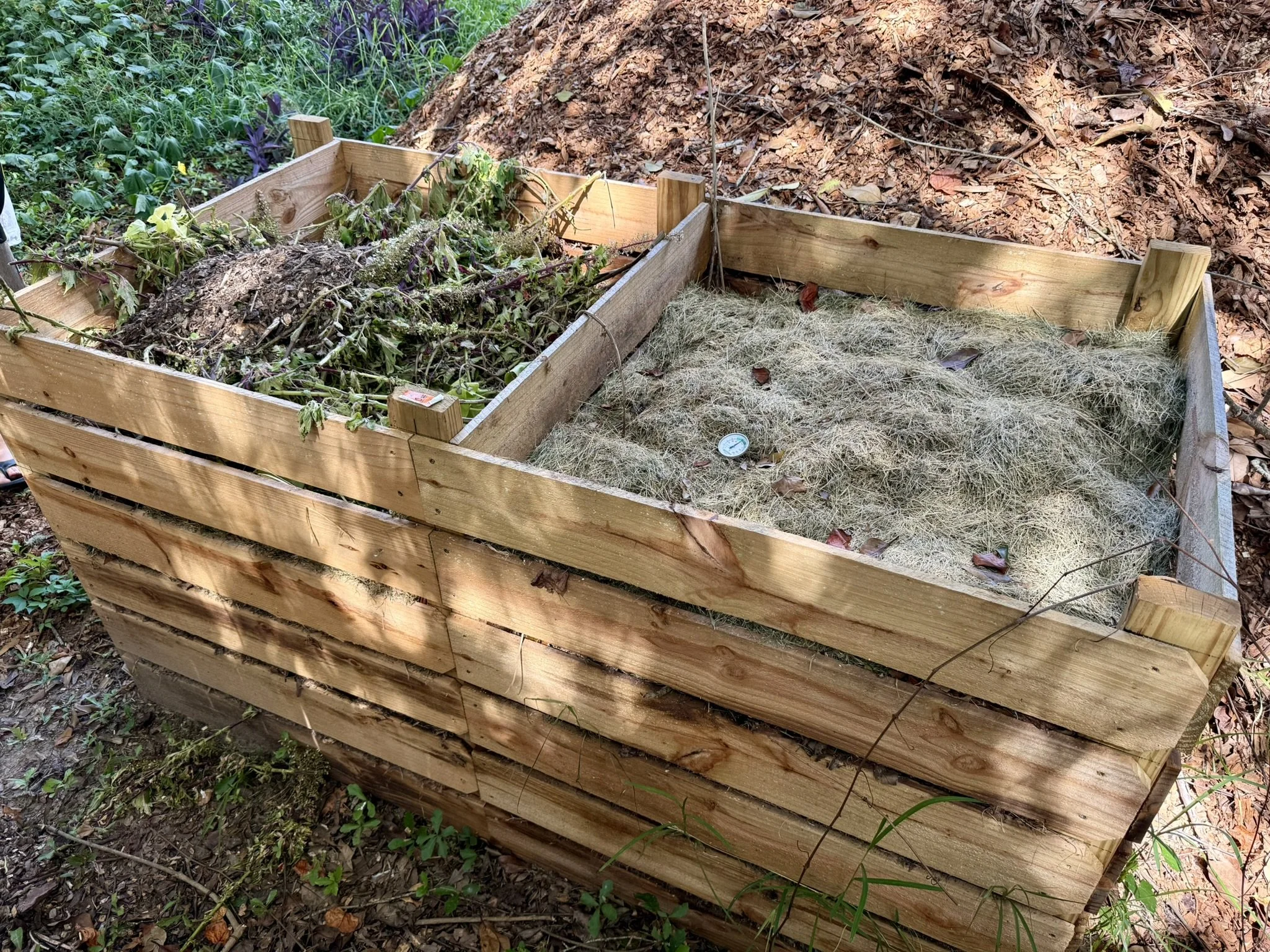
I am sure I have at least alluded to it by now, but I think I have neglected the Compost Bins up to this point in the blog’s history. These bins (built from privacy fence project scraps!) take everything we throw at them. Grass clippings. Egg Shells. Coffee Grounds. Garden Trimmings. It all finds its way into these bins, destined to become the next season’s compost!
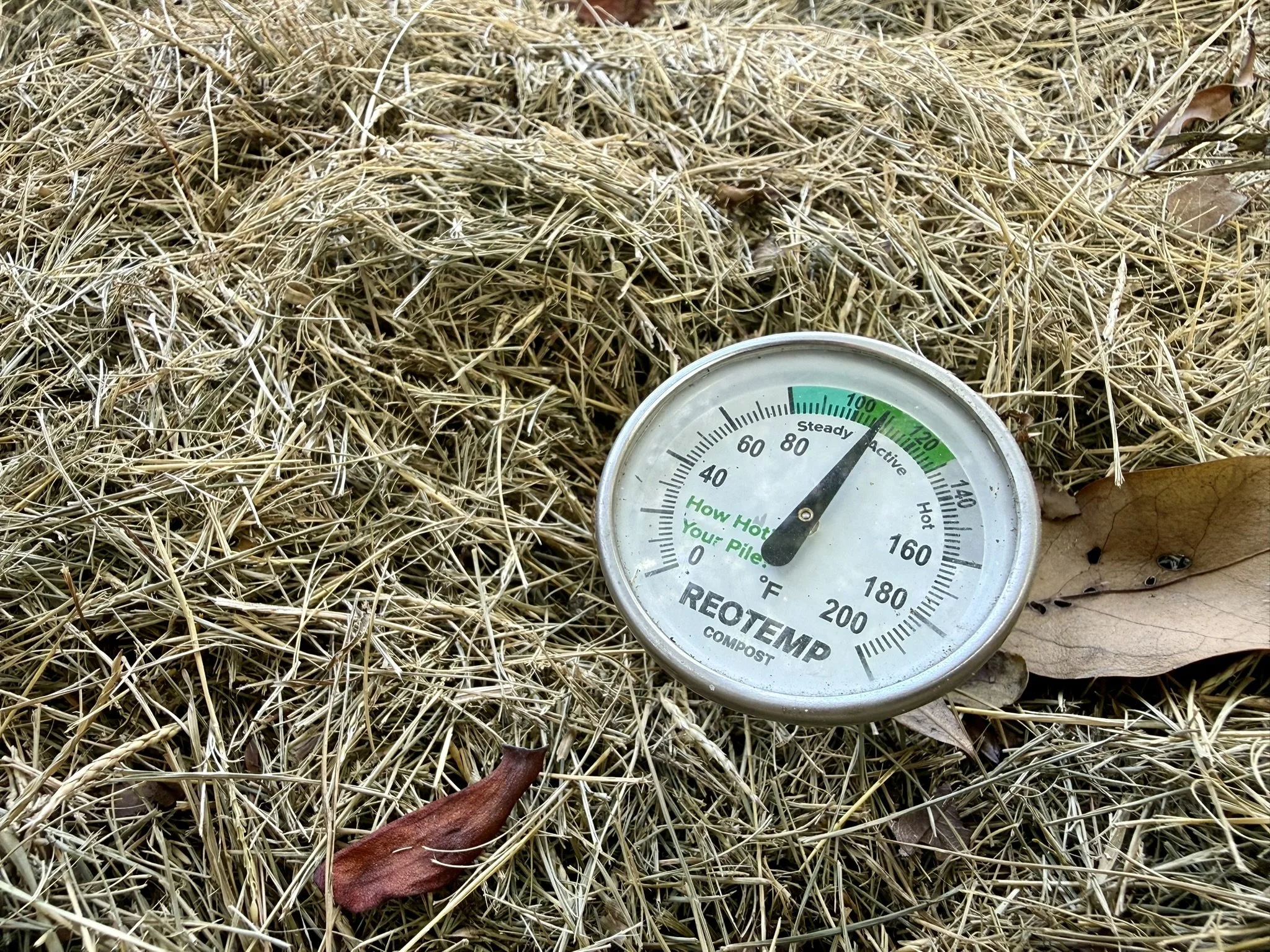
There are a lot of important metrics about a compost pile that you can track if you want to get nerdy about it, but the most important and easiest to check is certainly Temperature. I’m sure most of you know compost generates heat, but why? How much heat do you need? Can there be too much? To understand this, you have to understand the basics of composting. Ultimately, we are contributing two inputs to the composting process: Carbon (primarily in the form of “browns” such as dead leaves, carboard, and woody material) and Nitrogen (known as “Greens” such as grass clippings which generally also bring water/moisture). These two must remain in balance to compost effectively. Too much nitrogen and your compost runs hot. Too much carbon and your pile runs cold. Keep these inputs in balance and you will have an effective compost bin! In general, we aim to keep our compost at 110°F~140°F.
Snail Update!
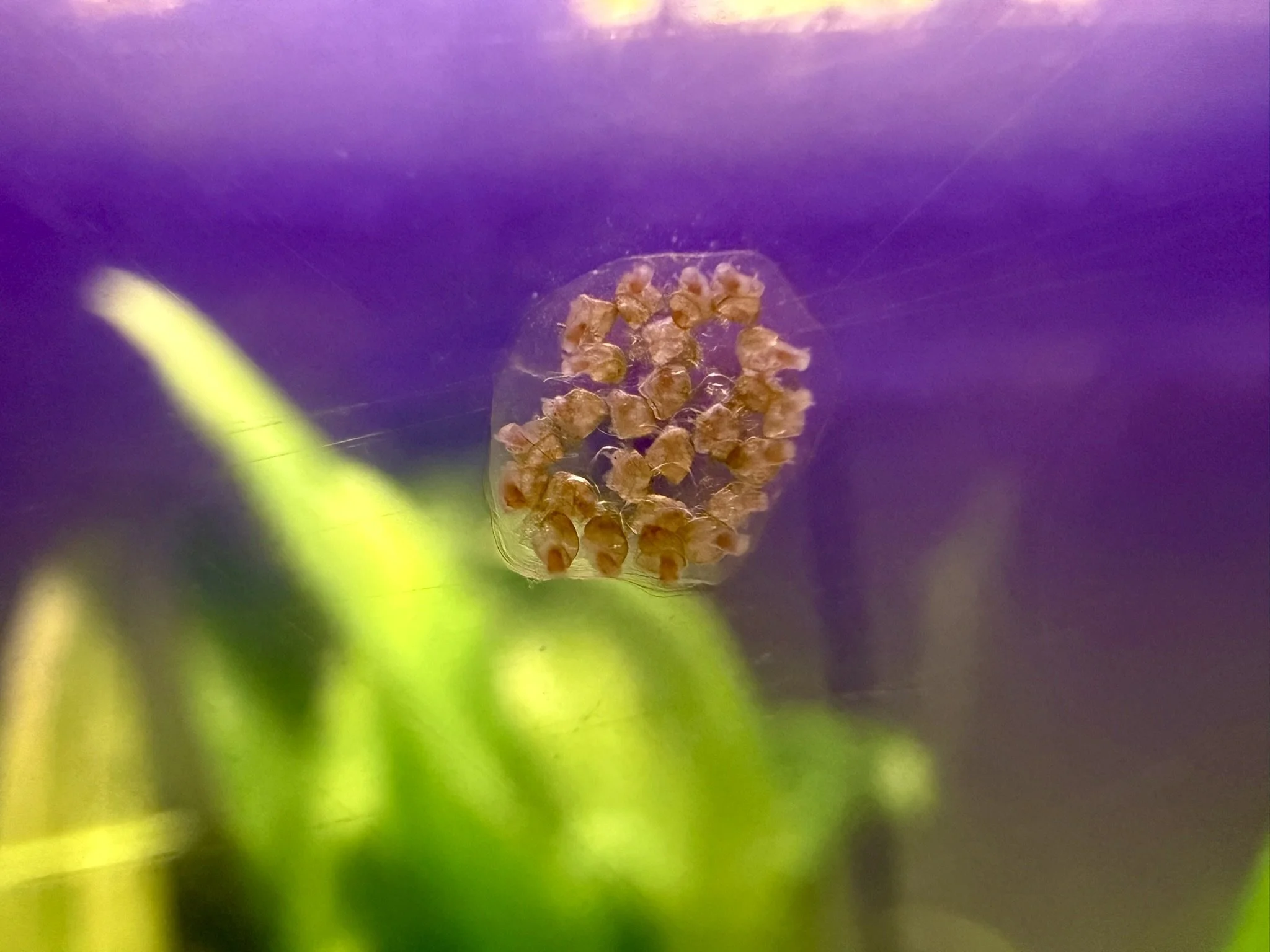
Back at the underwater garden, we check in on the progress of our Leopard Ramshorn Snail Eggs. This week I managed to capture this one last image of the eggs before they hatched and dispersed throughout the tank. We have some additions planned for this tank, so expect some updates in the coming weeks!
What’s Cooking??
What good is growing all this produce if we never eat it?!? This week we enjoyed several meals from the garden!
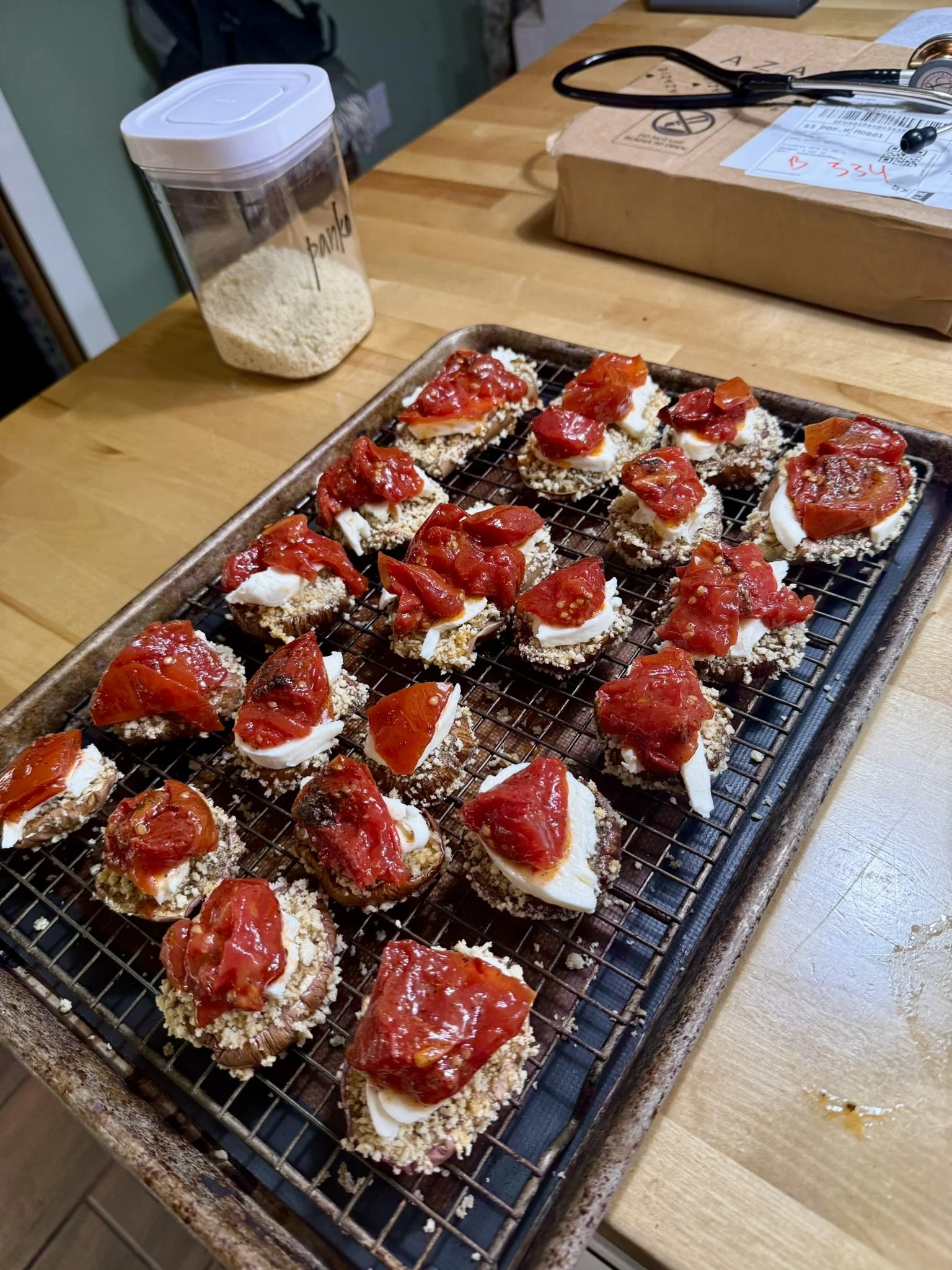
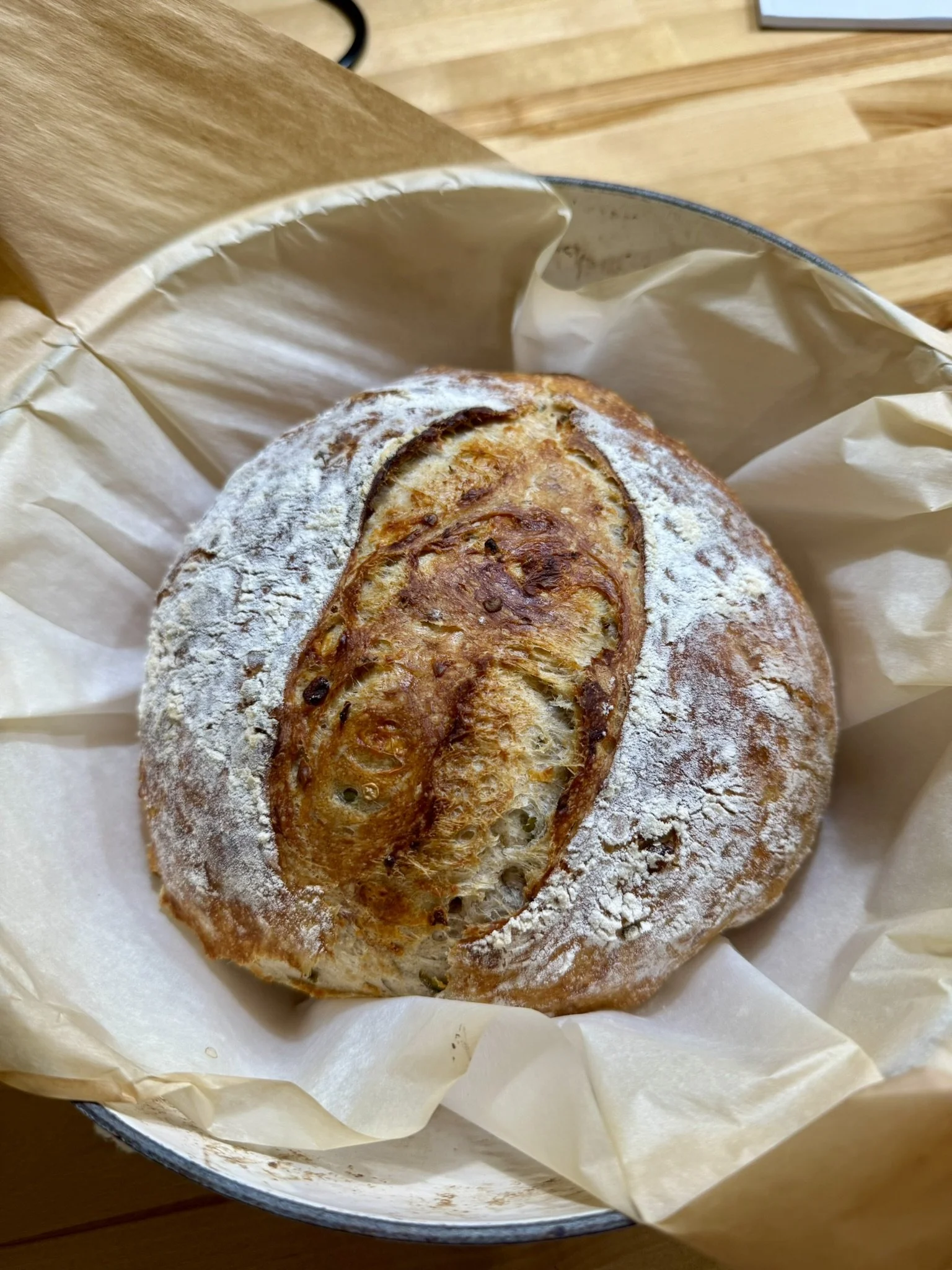
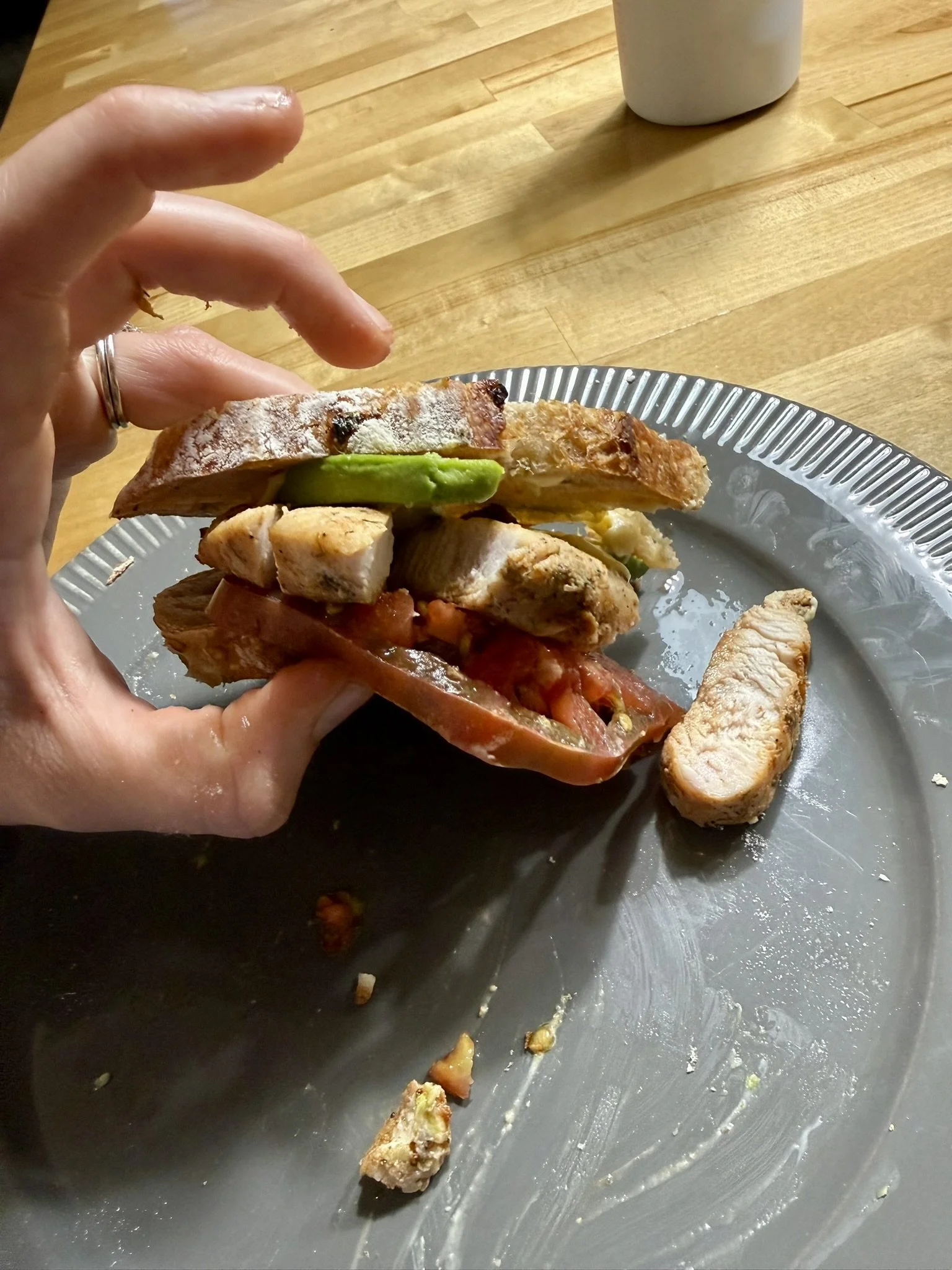
First, we have a spread of Eggplant parmesan topped with sliced Tomato. later in the week, Sara made an incredible Jalapeno Cheddar Sourdough bread loaf with our homegrown peppers! This loaf has since been put to numerous uses, but my favorite has been these delicious Chicken, Tomato, Avocado Sandwiches!
Up and Coming Veggies
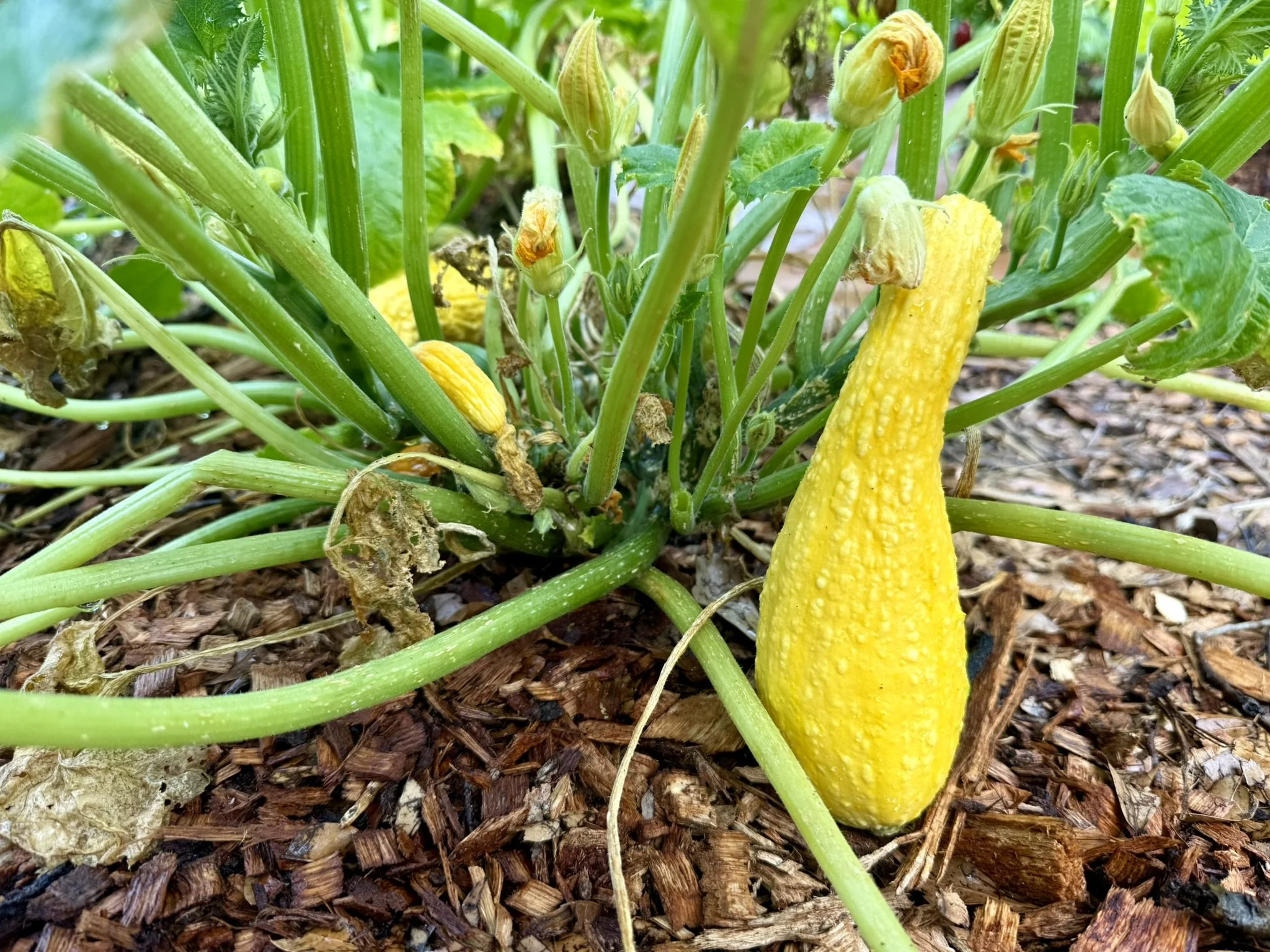
Despite the heat and renovations, there is still a lot of production happening in the vegetable garden! Even after losing several plants to vine borers (since being combatted with the B.T. shared above) we still have a steady supply of Summer Squash coming up! The smooth varieties look good in the grocery store, but I particularly enjoy these more textured fruits. They seem like an appropriate transition to fall, pumpkins, and winter squashes!
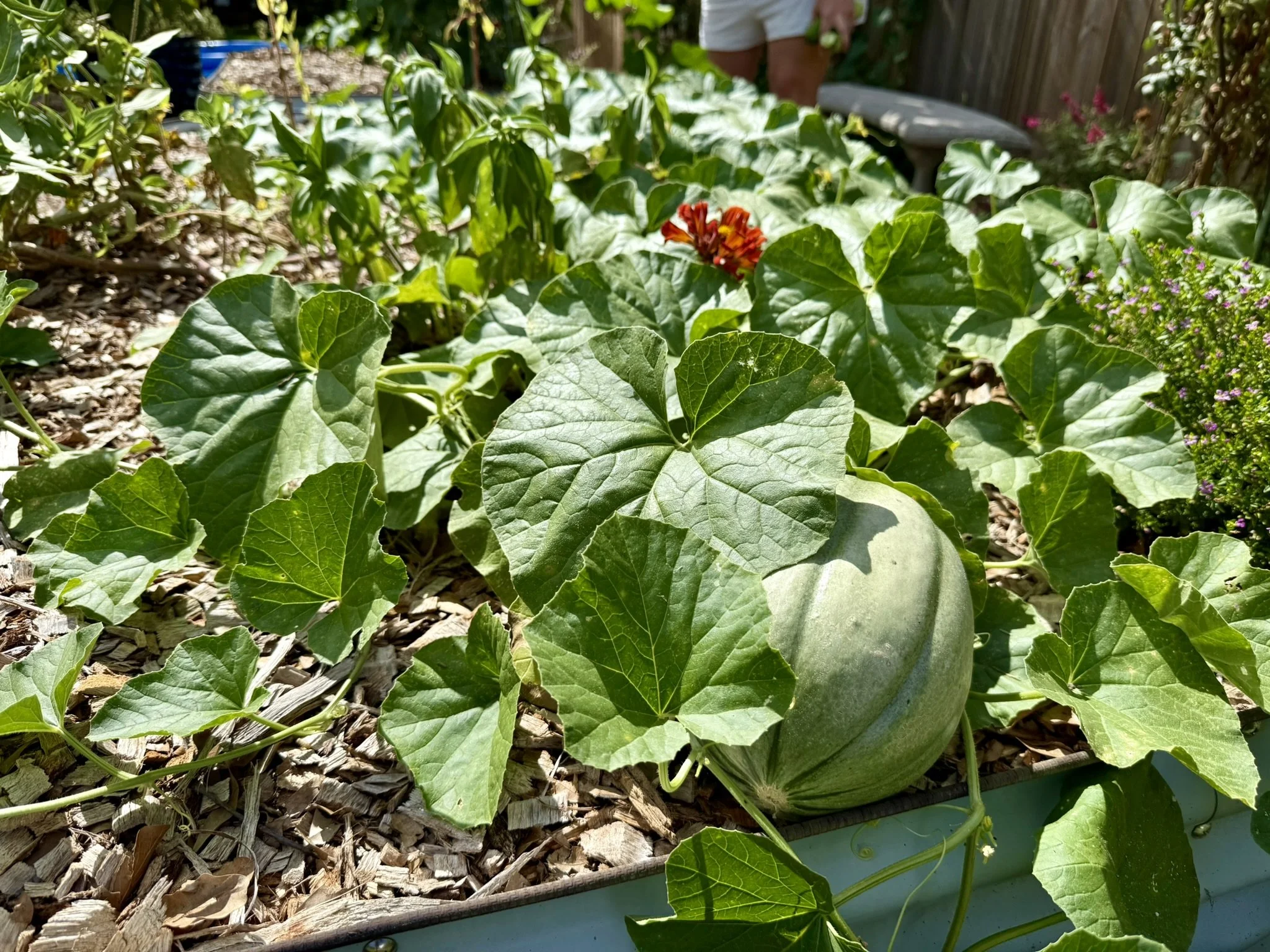
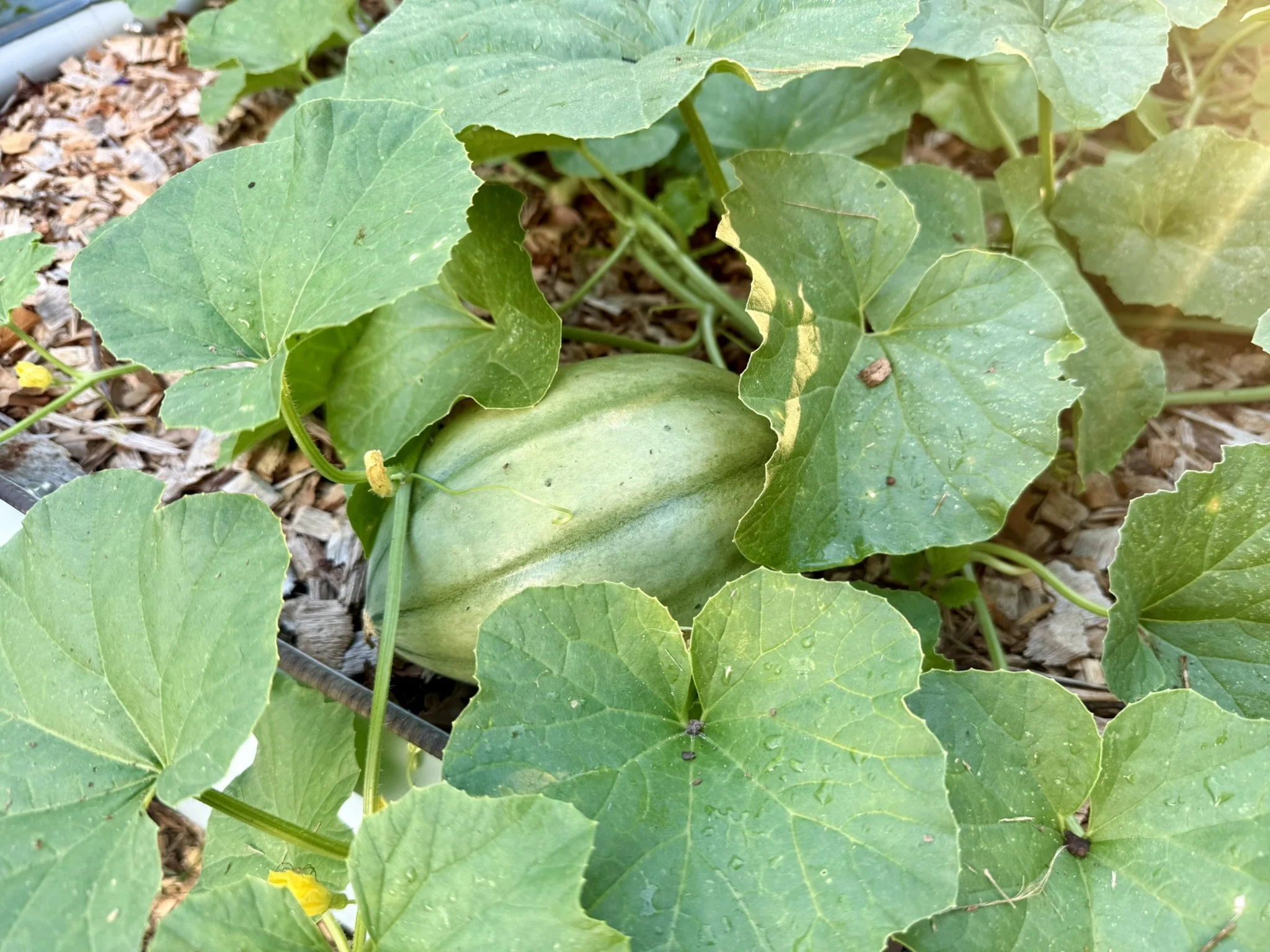
While we’re on the subject of vines, Sara’s chaos gardening has struck again! In her frantic planting earlier in the season, Sara lost track of what went where, but we are pretty certain this is a Cantaloupe vine. Only time will tell, but whatever it is is very happy and healthy!
Heavy Harvests
On the heels of the up and coming harvests, let’s take a look at what has already been harvested this week!
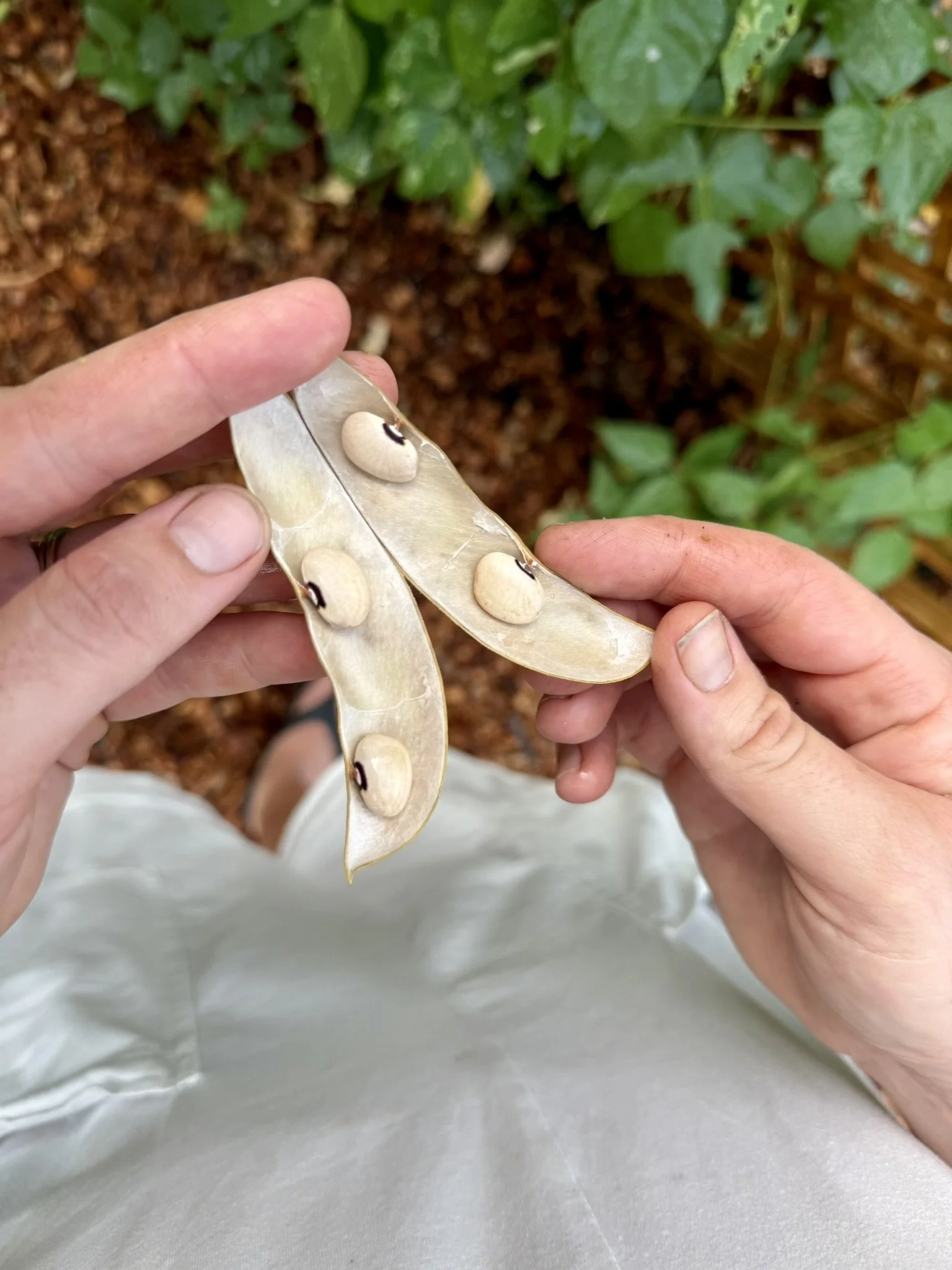
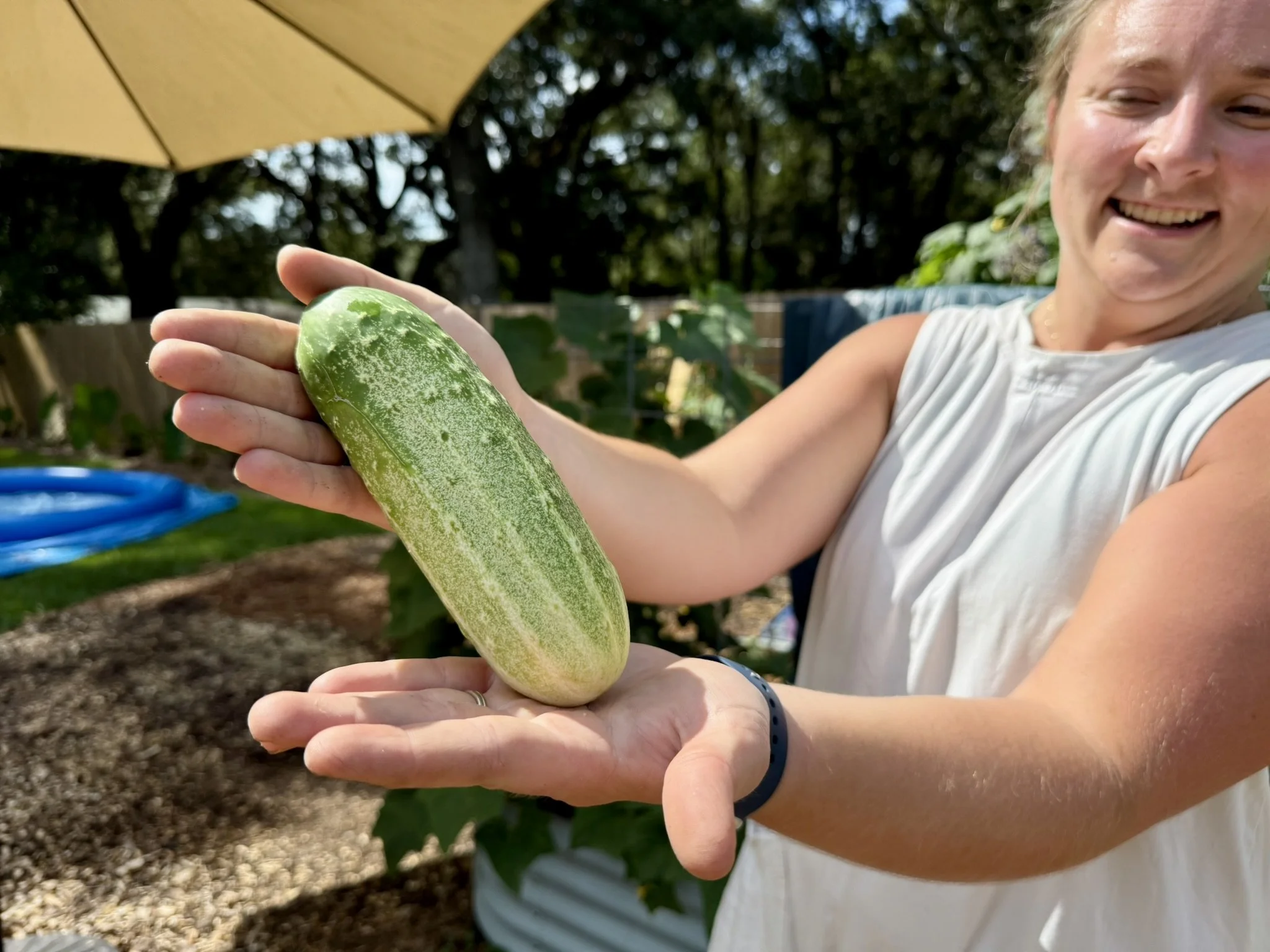
Several of Sara’s plantings have been productive this week! Here we have the first of our Lima Bean harvest. This is just the first of many many beans to come this summer! As a trellising companion to the pole beans, we also have some very strong Cucumber plants scattered throughout the yard yielding textbook fruits!
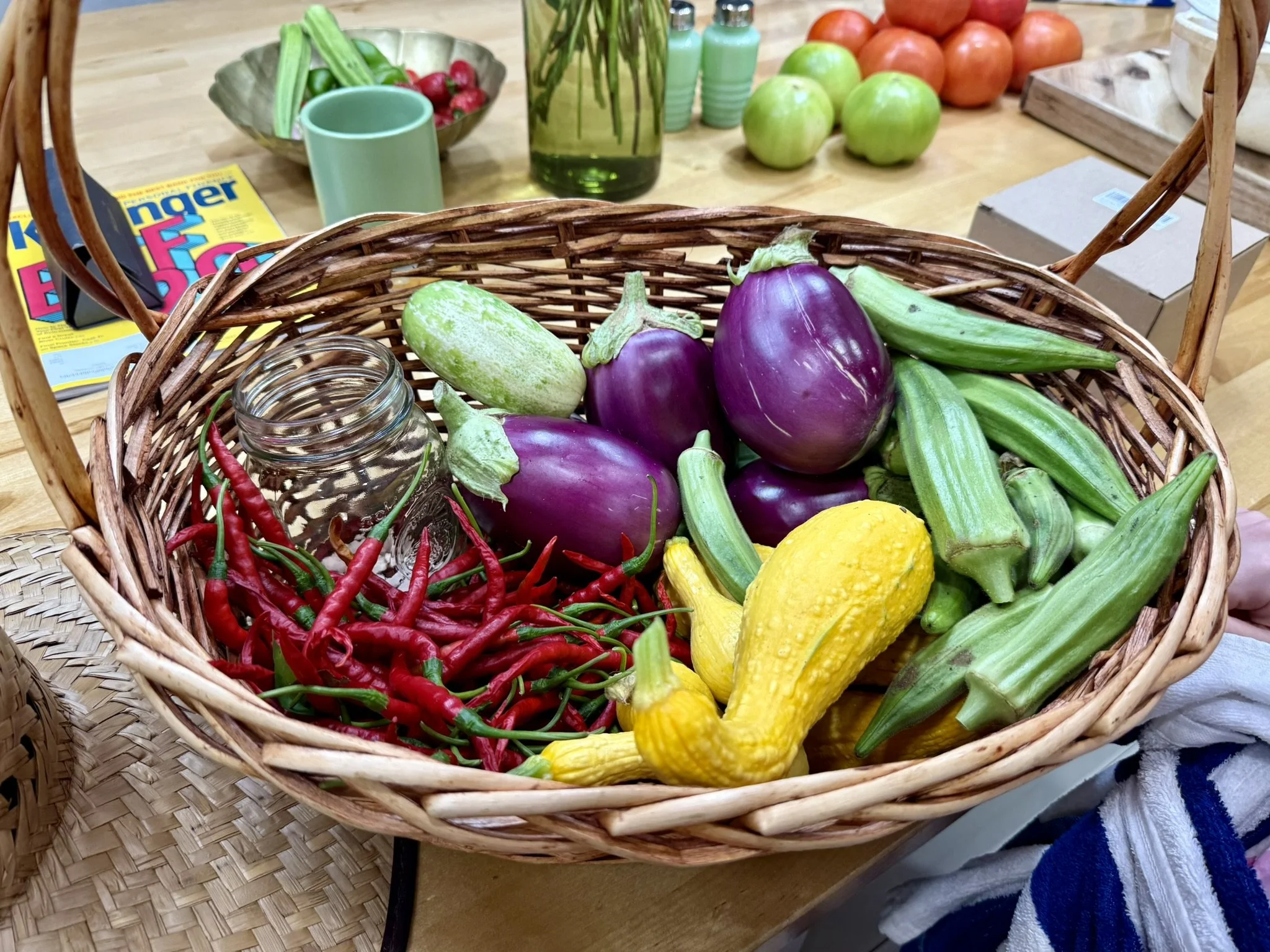
As always, we have a full basket! To complement the Lima Beans and Cucumbers we also have Okra, Eggplant, Summer Squash, and Cayenne Peppers.
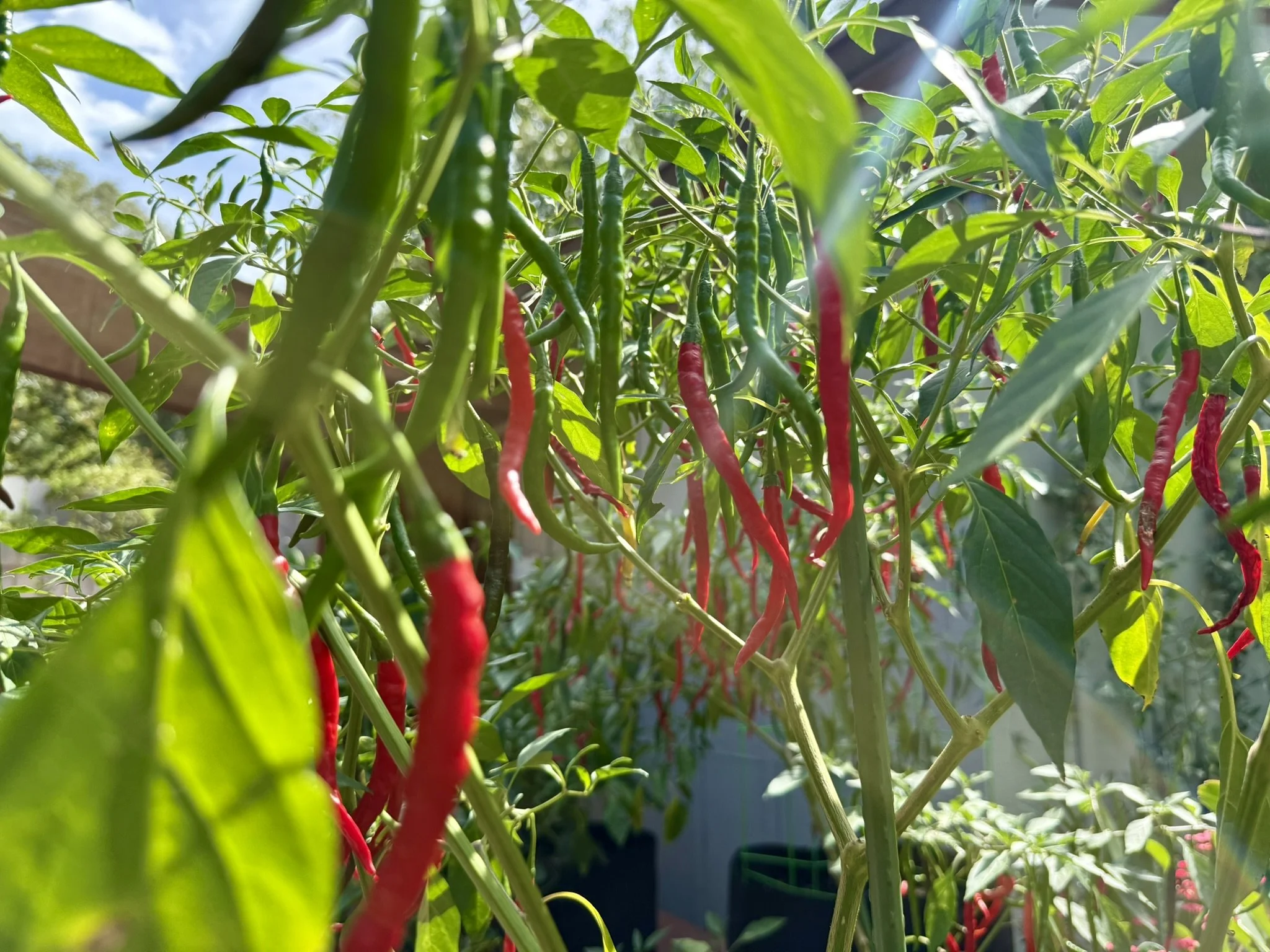
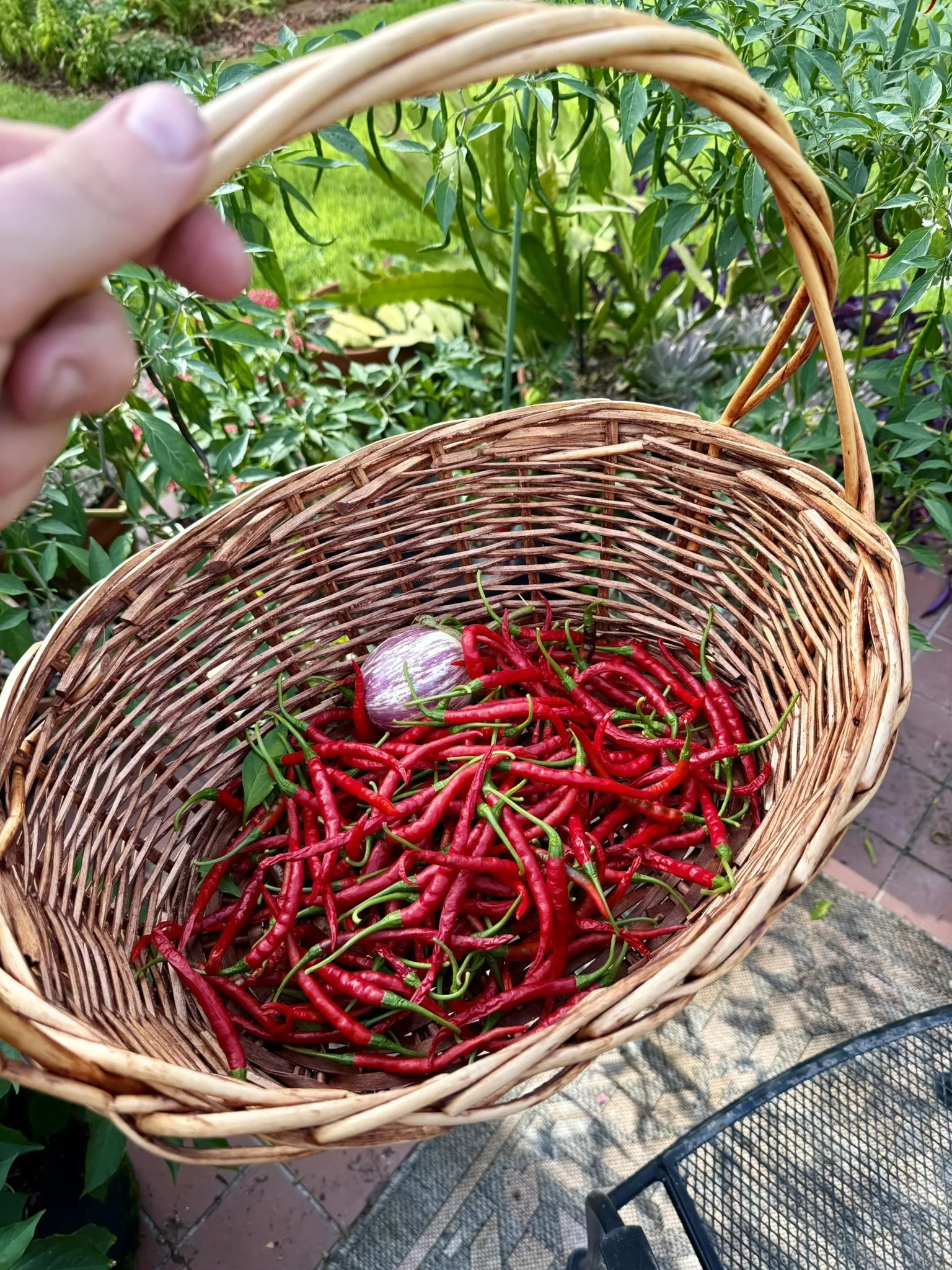
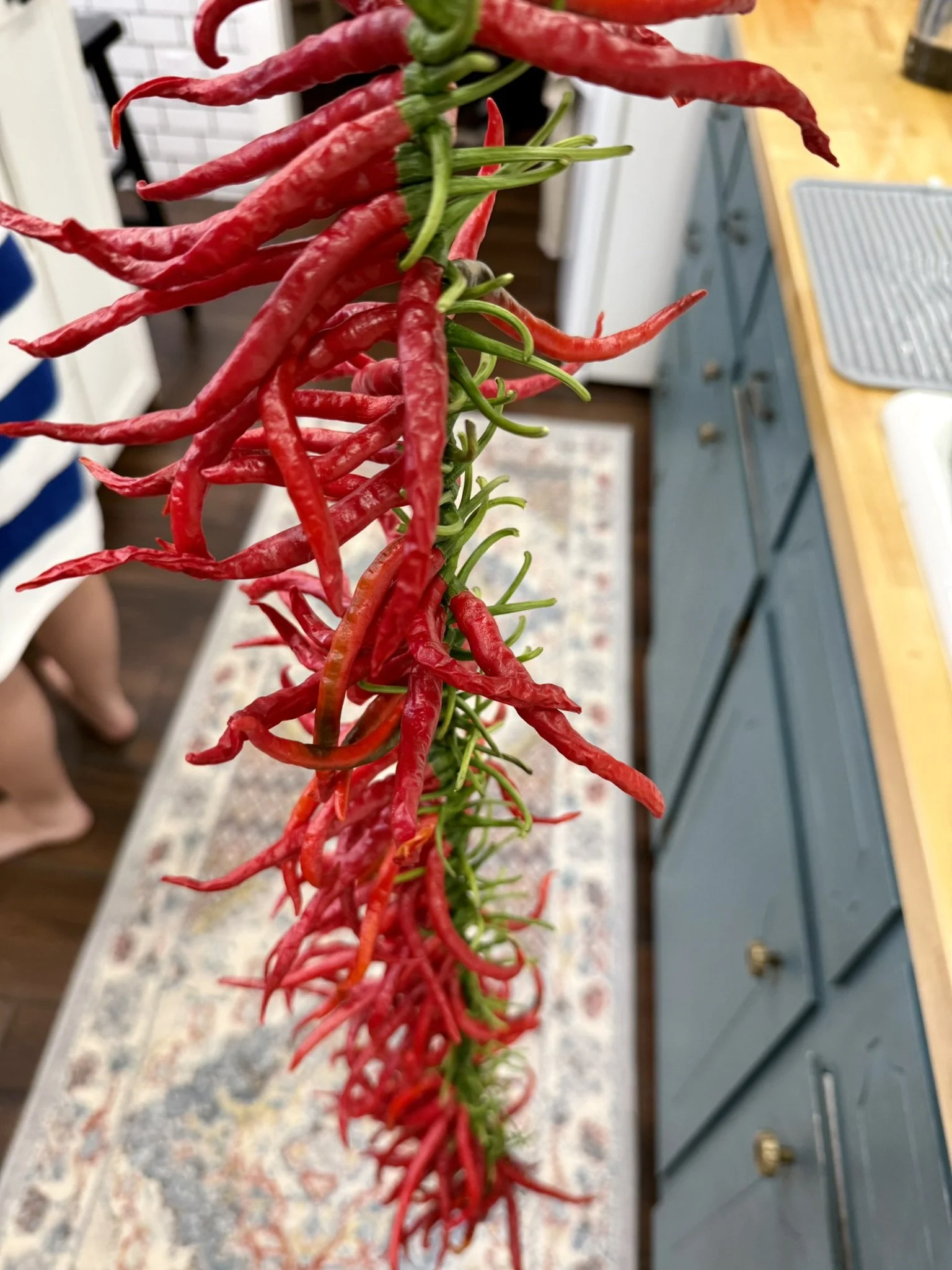
I went ahead with the preservation of the Cayenne Peppers. After harvesting the peppers, I move inside to begin stringing them up for drying. There are faster ways (such as using a dehydrator or the oven), but I prefer the simplicity of this traditional method. Simply thread a needle and pass it through the stem of each pepper. Once all peppers are strung up, tie off the thread and hang the arrangement in a cool dark area to dry out slowly! These cayennes are destined to make next year’s Cayenne Pepper Powder and Crushed Red Pepper Flakes.
Blooms Around the Garden
We’ve been focused on the renovations and the vegetables for a while, but how are the rest of the flowers around the garden doing?
Well, up front we have the Chaste Tree putting on a show with its second round of blooms. Not only are the human passersby impressed, but the pollinators absolutely love this front yard pitstop!
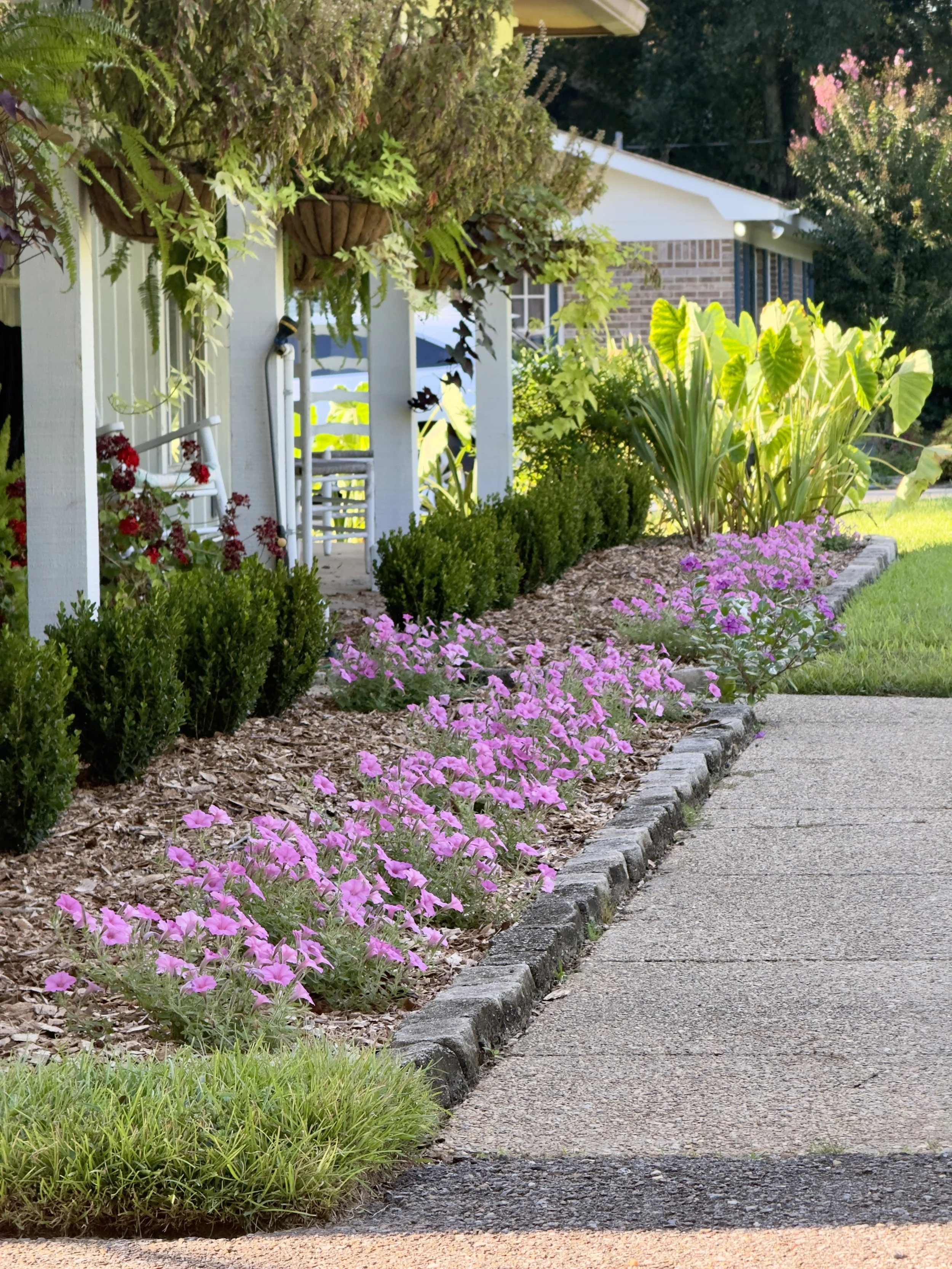
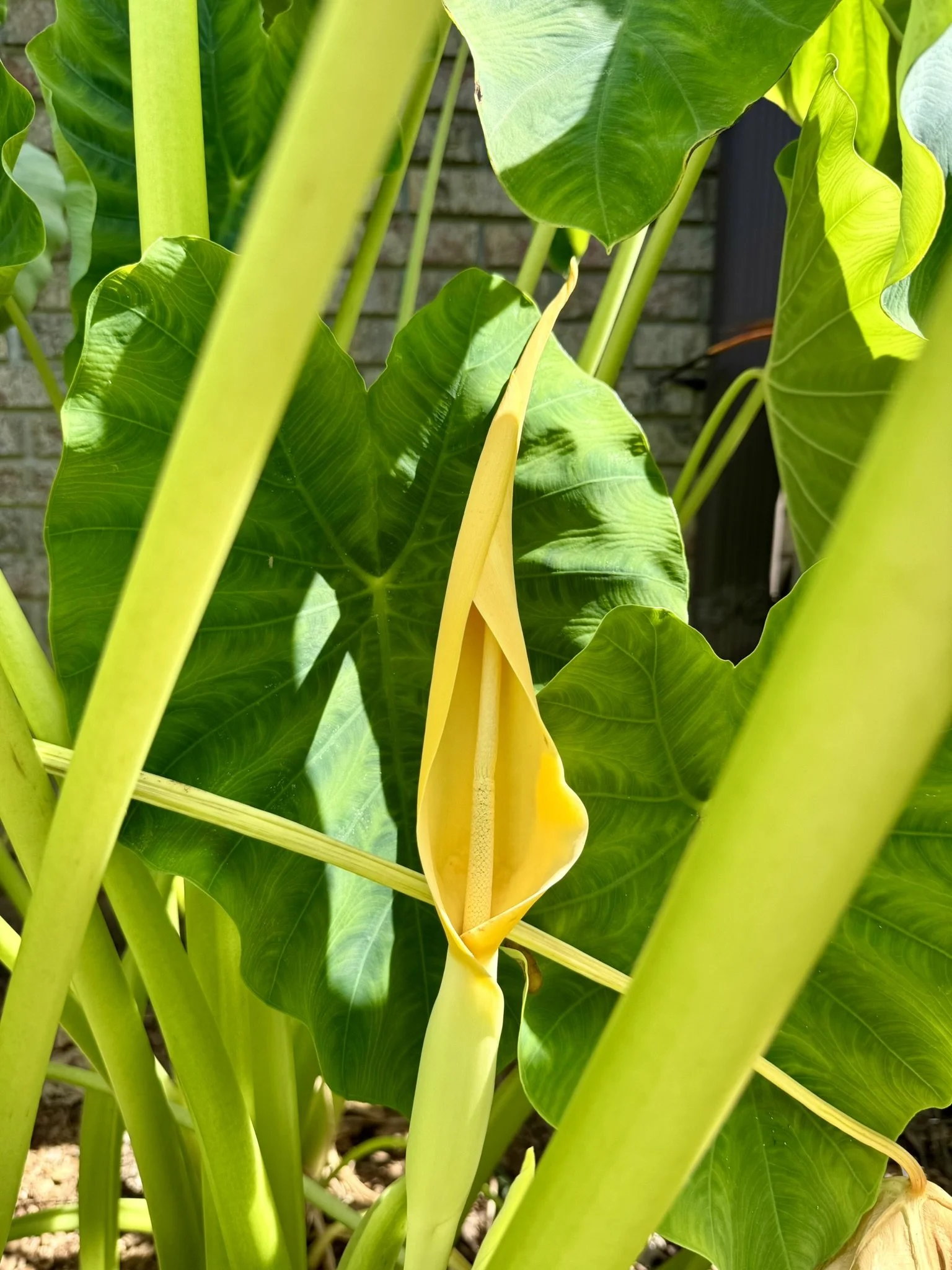
In other news up front, the Bubblegum Supertunias continue to fill out. Also up front, we have a somewhat rare appearance of an Elephant Ear bloom! These vibrant yellow spears are quite the sight, but often hide amongst the massive leaves. You have to watch the garden diligently to catch one of these at peak bloom, but the patience is worth it!
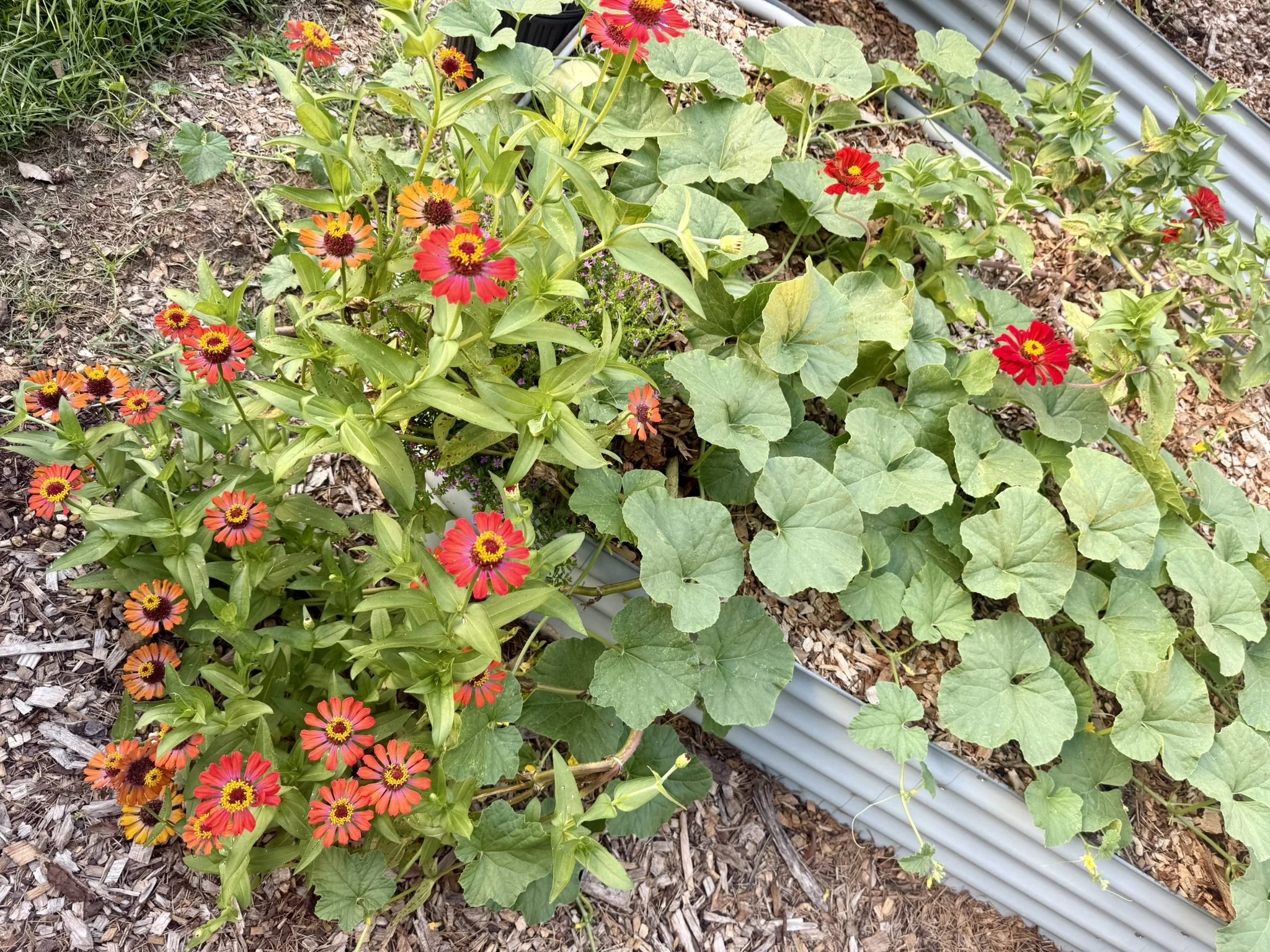
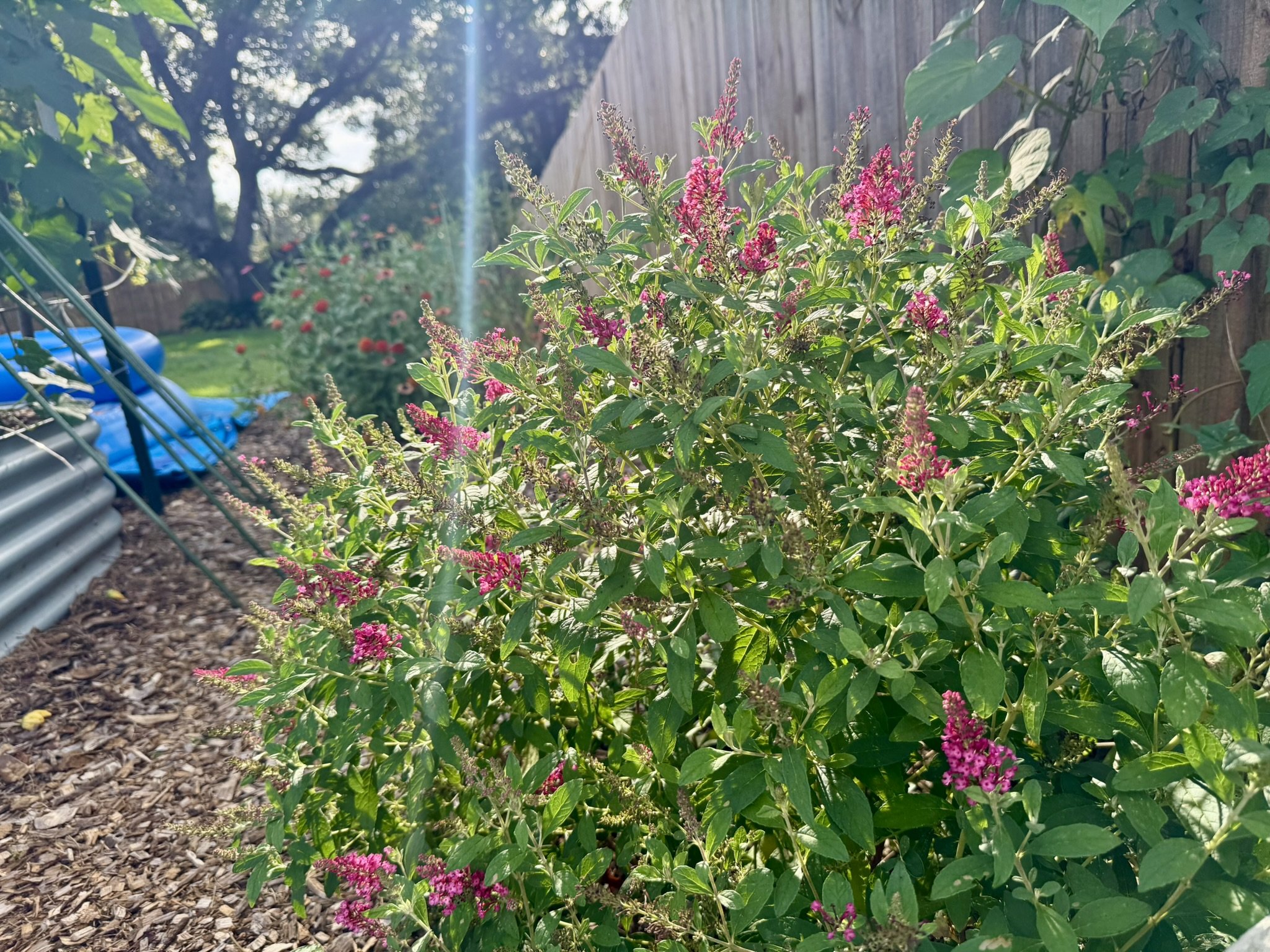
Out back the ever-productive Zinnias continue to put on a show, and the Butterfly Bushes have put on a lot of size since first being planted flanking our concrete bench in the back garden.
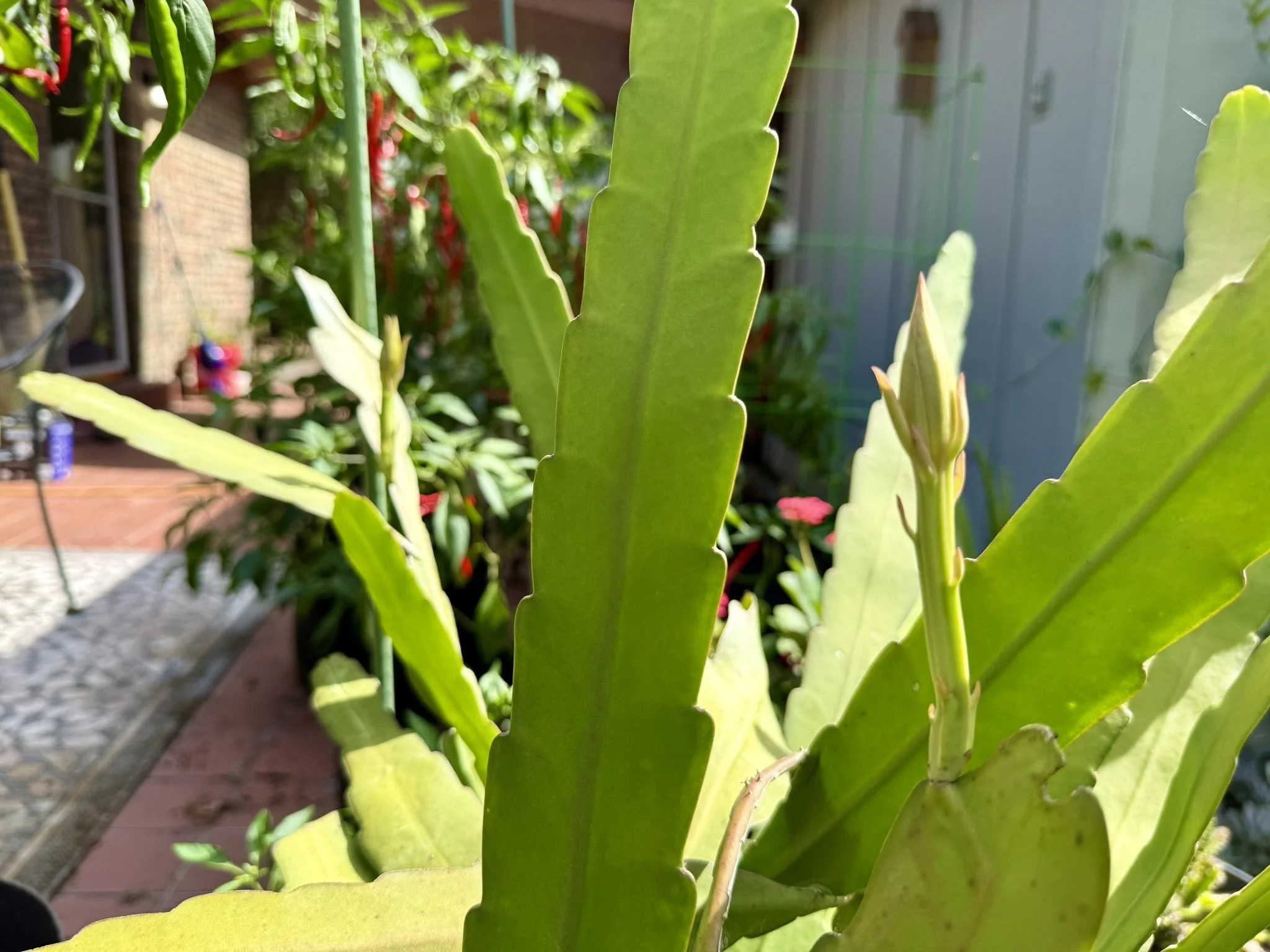
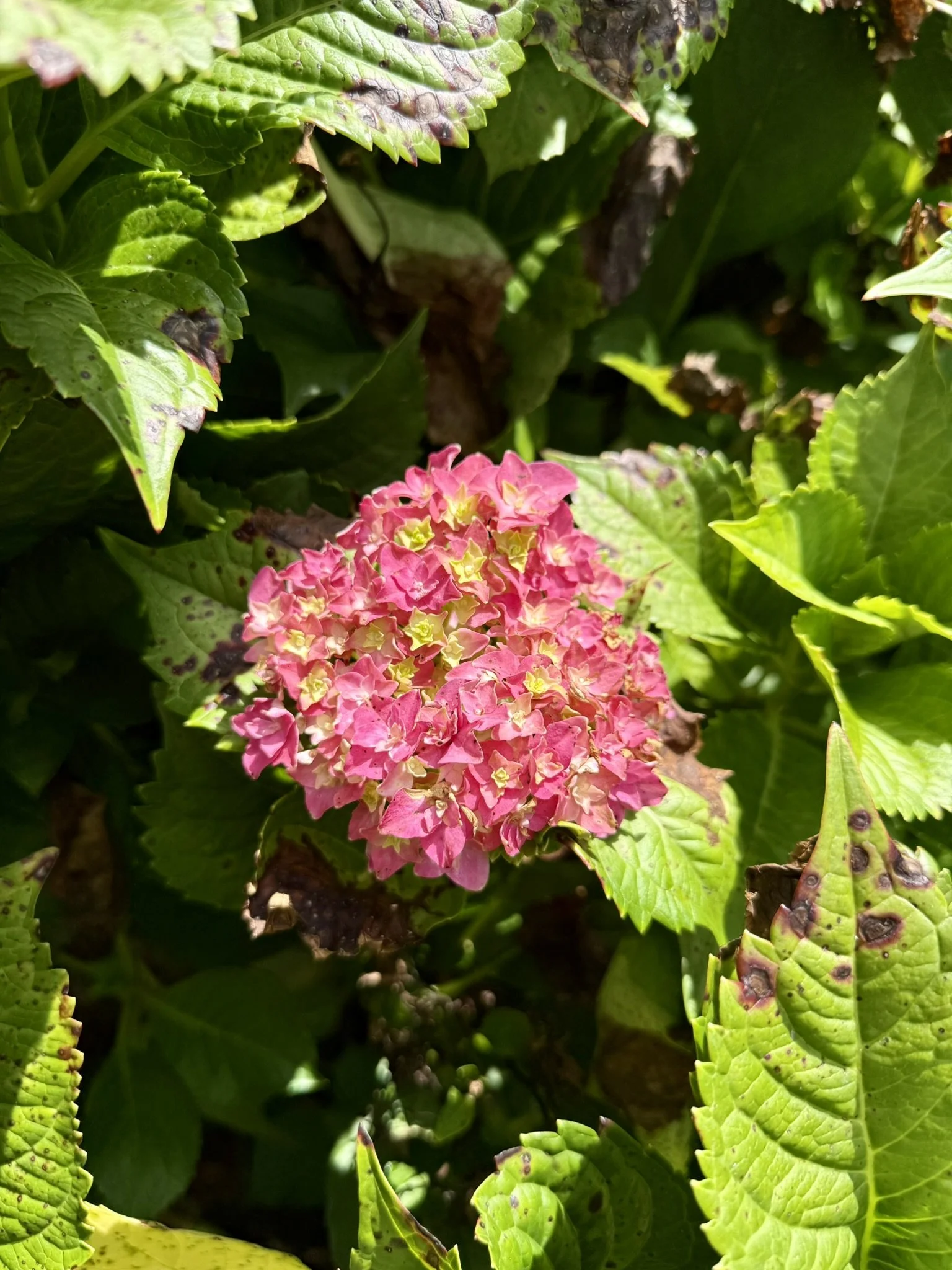
In a story of second chance, we have a few encores to talk about on the back patio! The Night-Blooming Cereus are putting out stems for their second round of blooms this year. Next to the those we have a second round of pink Hydrangea blooms coming from our mature bushes on the north side of the garage.
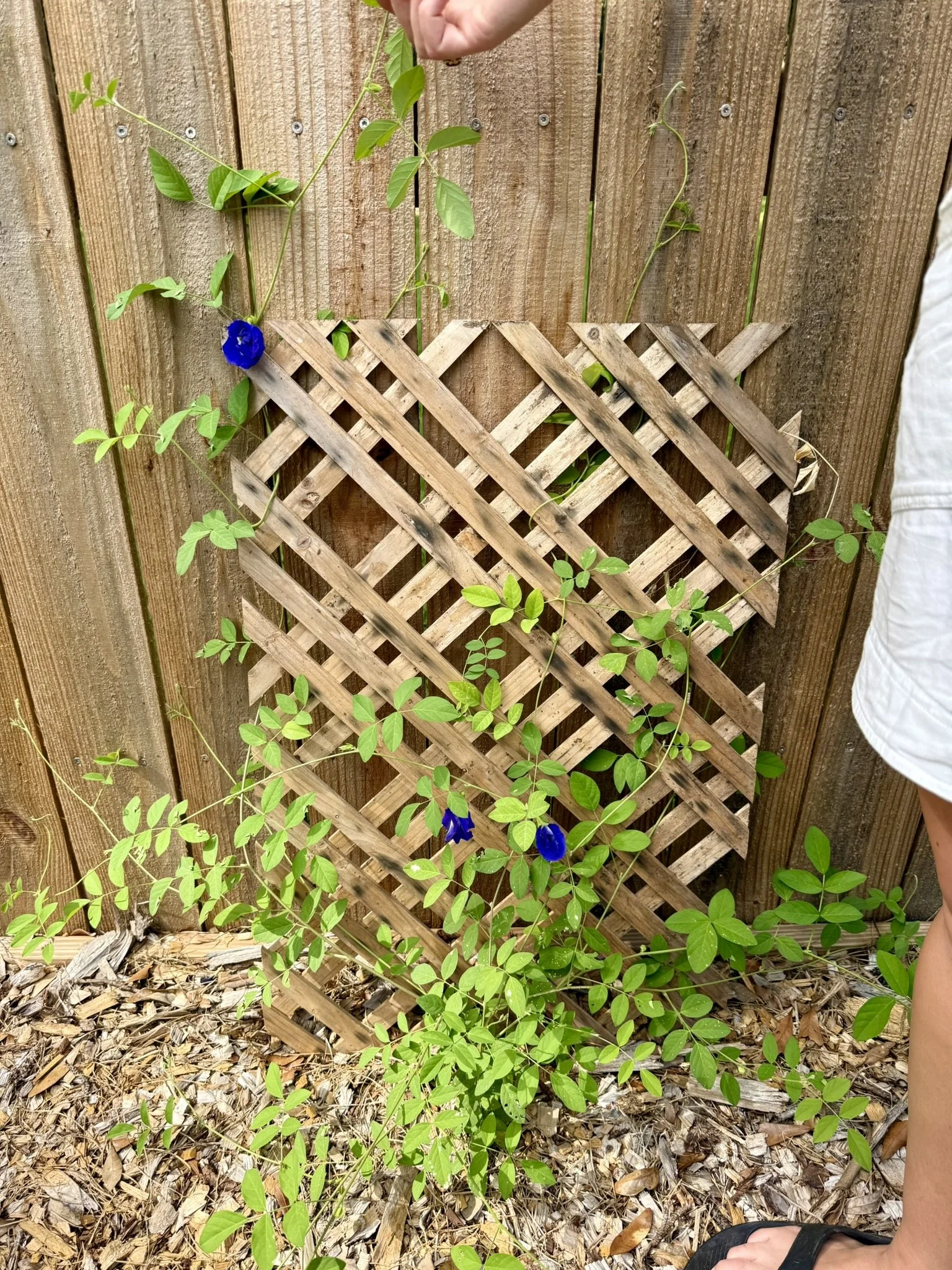
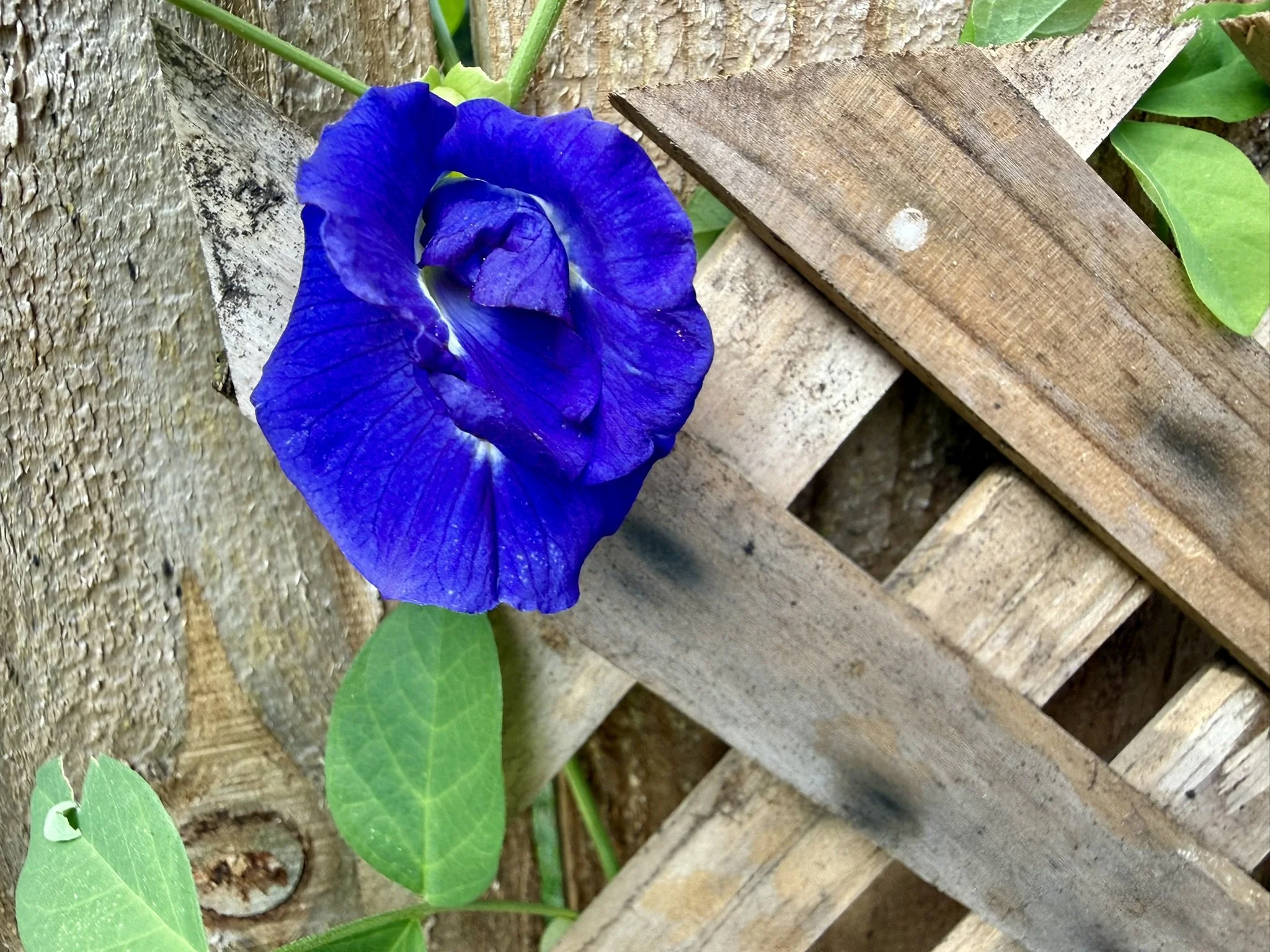
Back near the vegetable garden, this Butterfly Pea Sara recently planted and trellised is blooming!
Pests and Pets
As always, we close with an homage to the four legged, six legged, and sometimes eight legged friends of the garden!
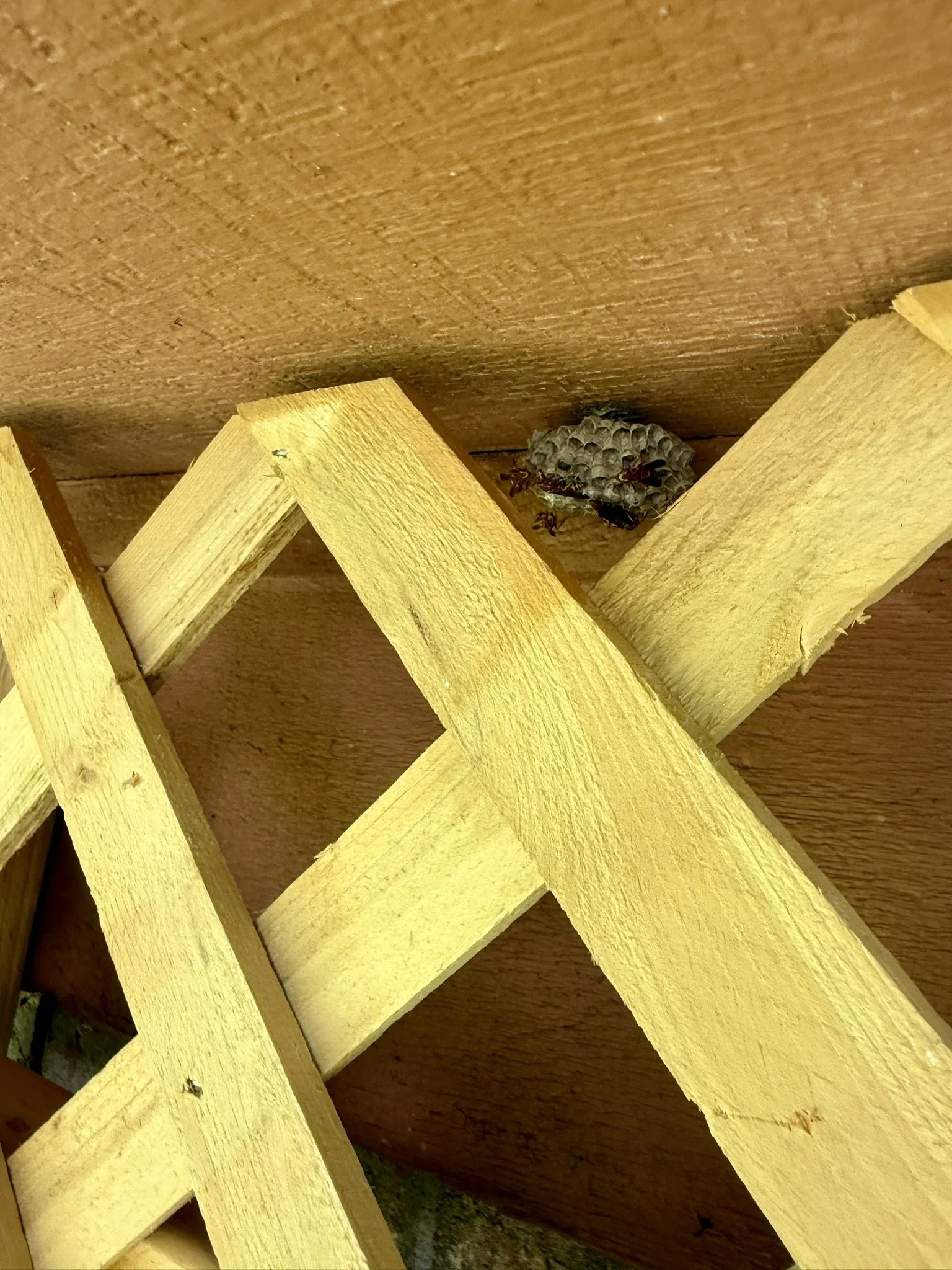
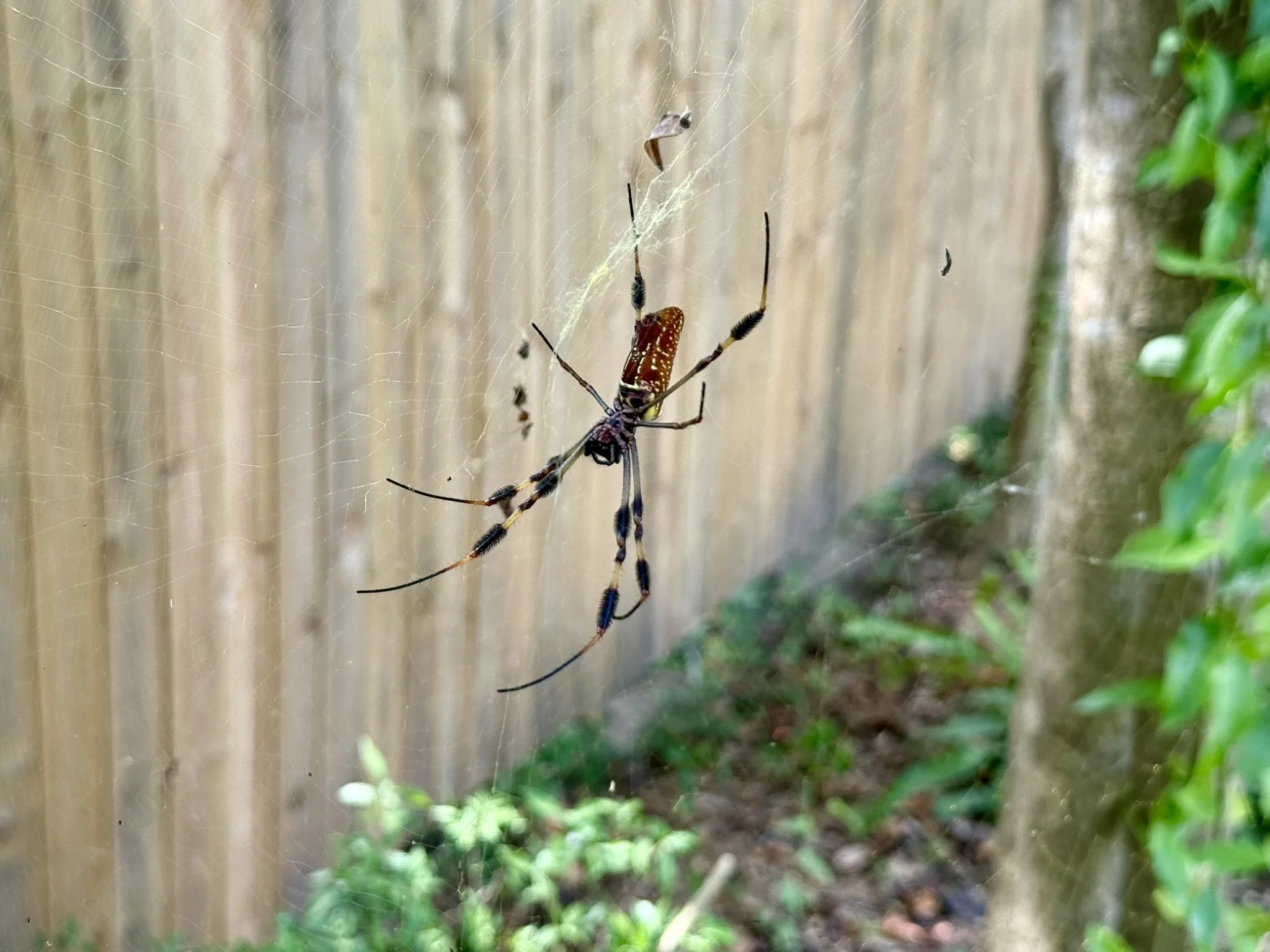
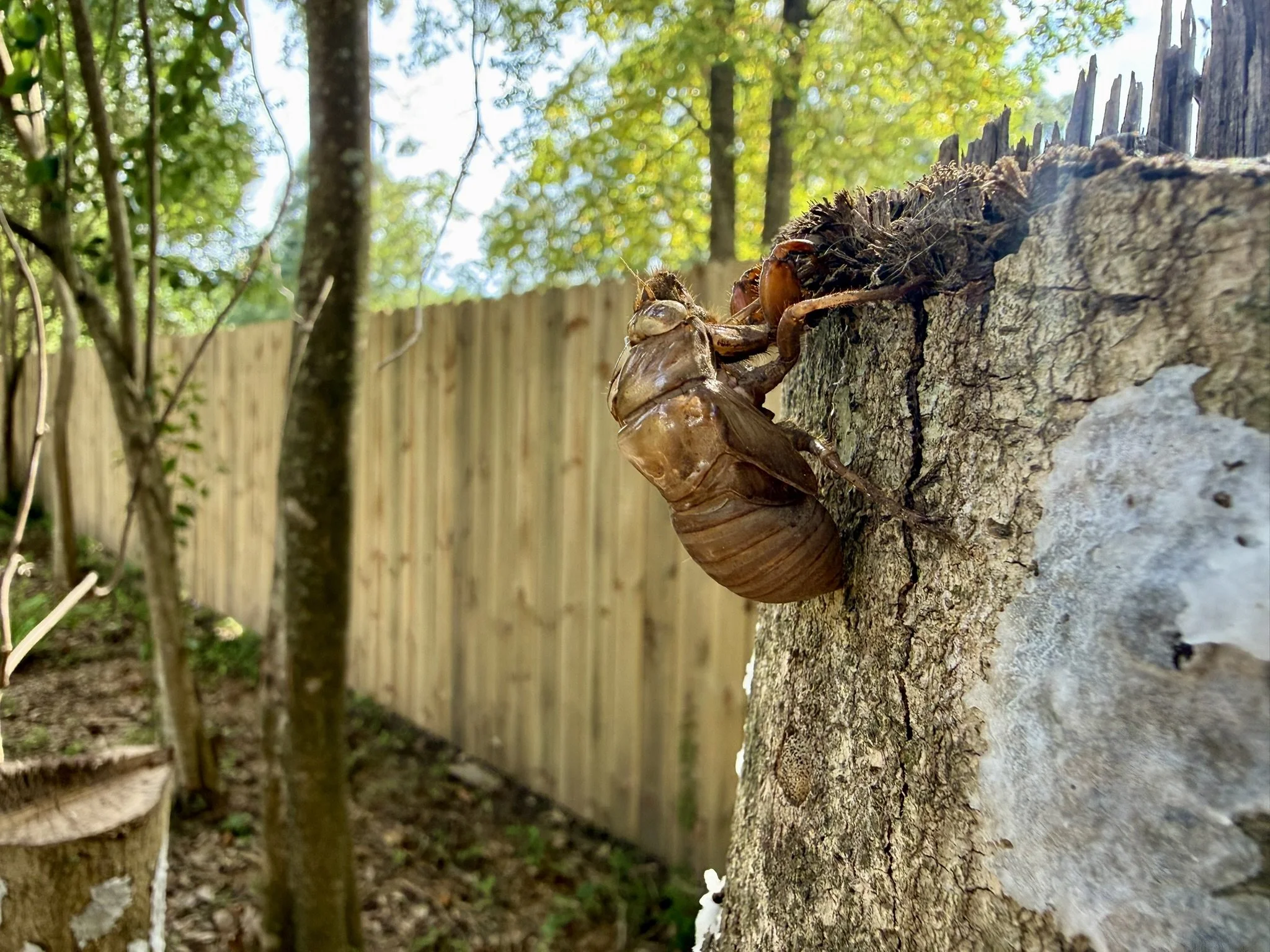
We start off with the 6+ legged ones! Here we have a small colony of Wasps nestled in behind the Madame Alfred Rose trellis, a large Banana Spider (Orb Weaver), and a shell of a recently molted Cicada.
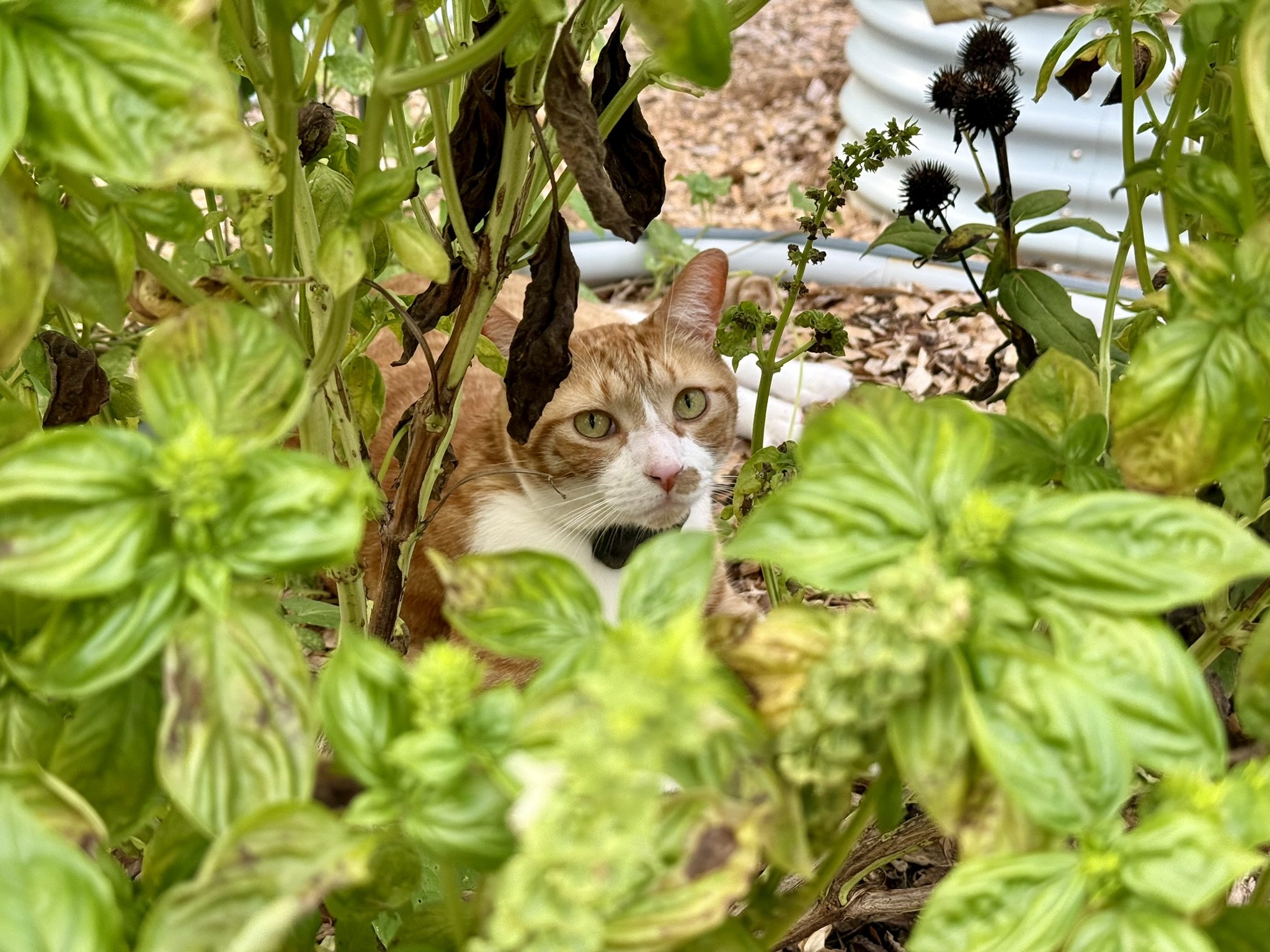
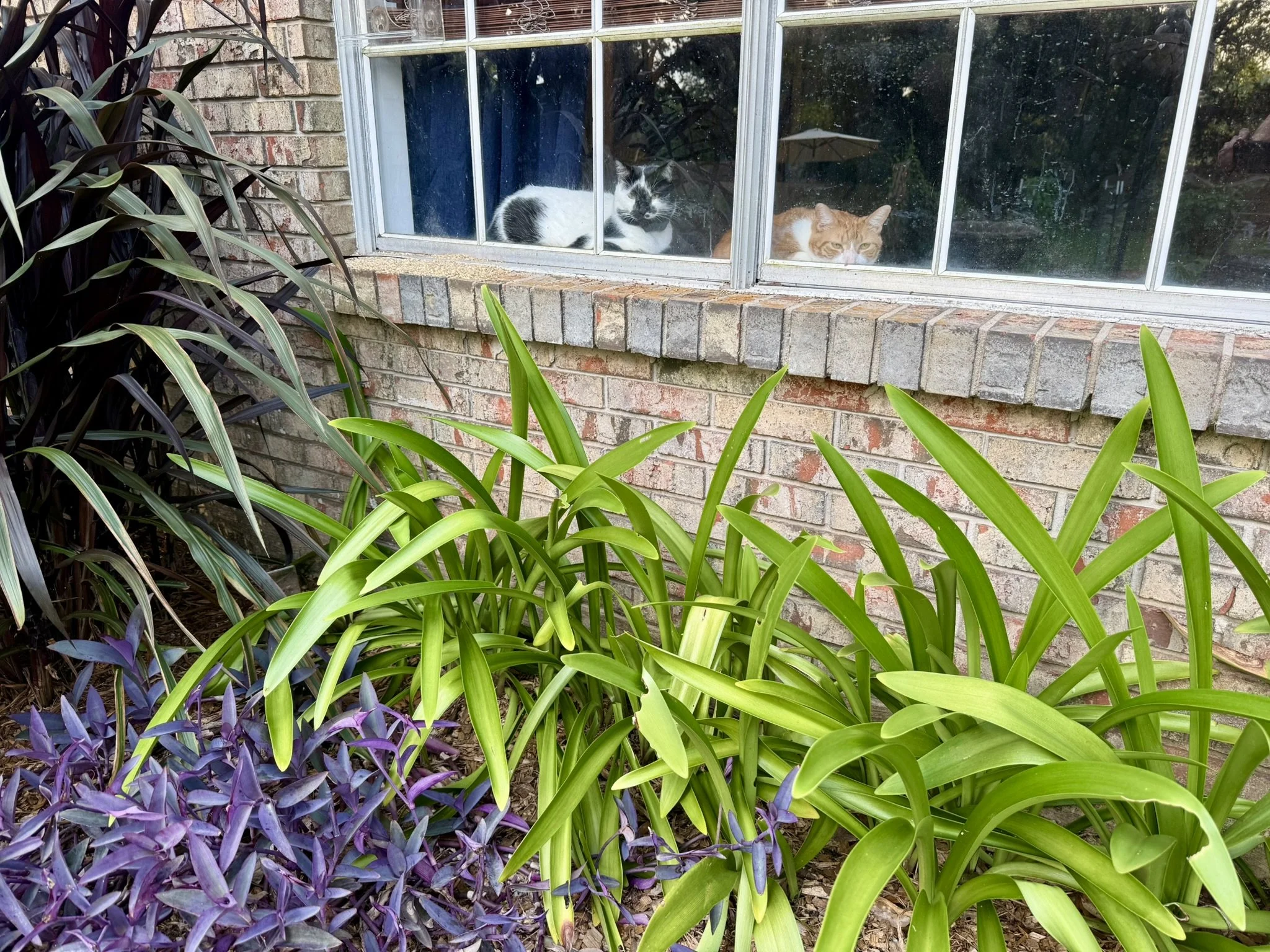
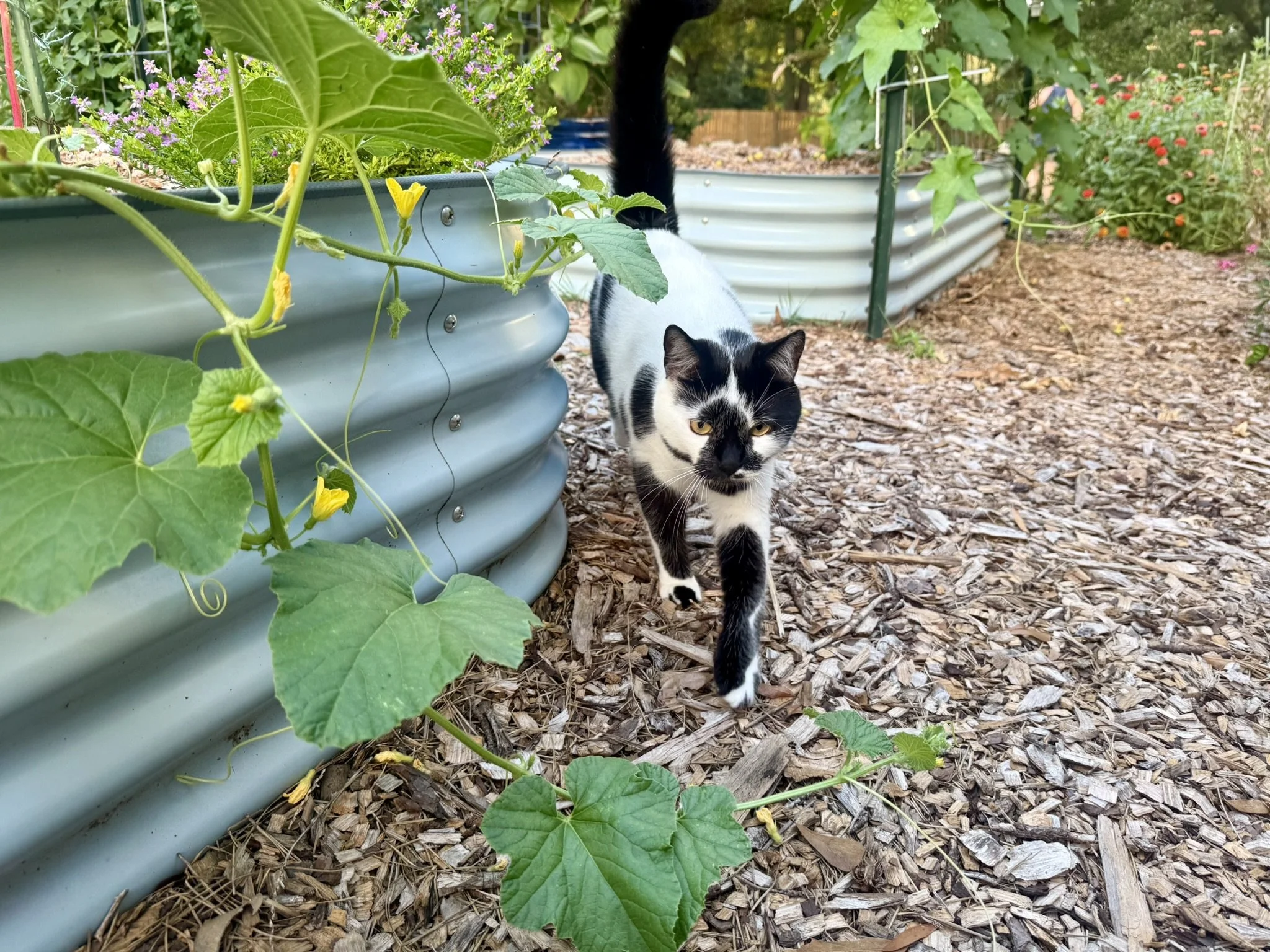
Moving on to our normal supervisors, Scout and Yoda both spent a substantial amount of time perusing the garden this week. However, even when they are restricted to the house they still spend their days overlooking the garden from the comfort of their airconditioned window seats.
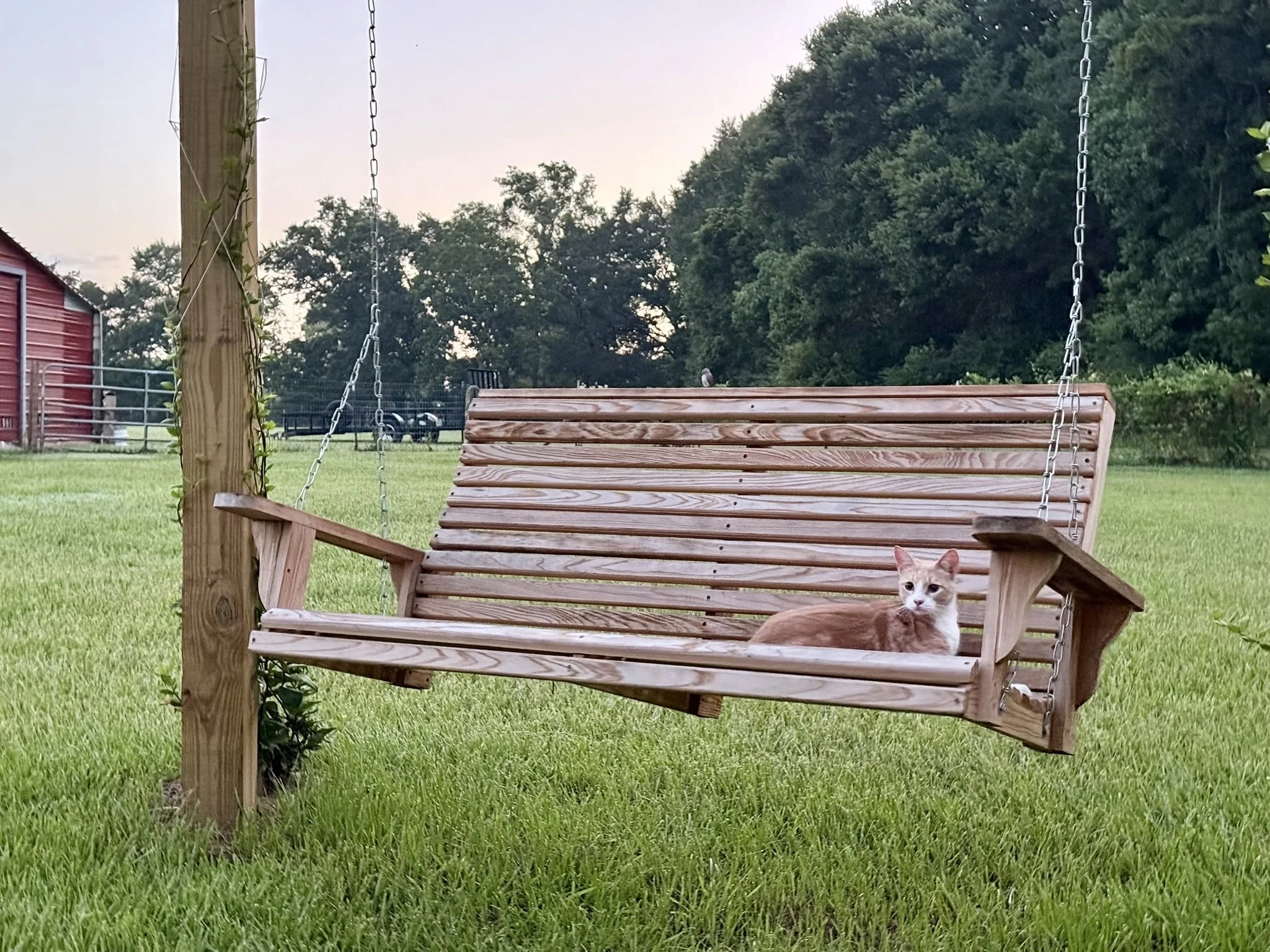
As a guest appearance, we have my parents’ outside cat Woody seen here enjoying the recently completed Jasmine Swing area (see last week’s post Garden Infrastructure for a construction update).
